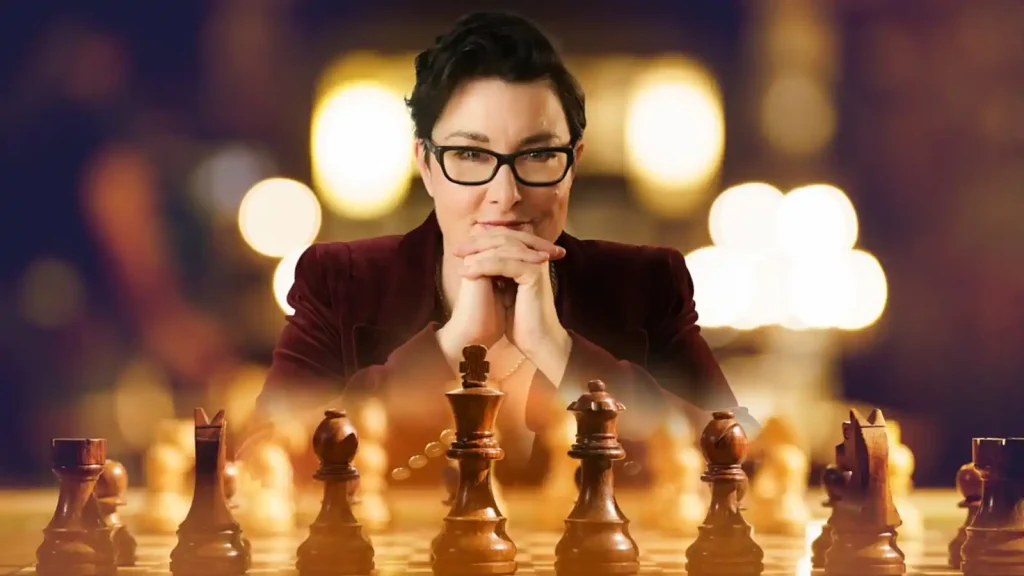
Chess Masters The Endgame episode 1 – Where Strategy Meets Psychology
In the dimly lit historic halls of Cardiff’s former coal exchange, a palpable tension hangs in the air. Six individuals sit across from one another, their faces illuminated by the soft glow of chess clocks. Their expressions remain carefully neutral, masking the intricate calculations happening behind concentrated eyes. This is the premiere episode of “Chess Masters: The Endgame,” where Sue Perkins guides viewers through a riveting journey into the world of competitive chess.
The renaissance of chess in the United Kingdom has been nothing short of remarkable. Once considered a niche intellectual pursuit, chess has exploded in popularity across demographic boundaries. Furthermore, this surge has unveiled a treasure trove of homegrown talent ready to showcase their skills on a national stage. Consequently, “Chess Masters: The Endgame” arrives at the perfect moment to capture this cultural phenomenon.
Sue Perkins, known for her quick wit and engaging presence, serves as the perfect navigator through this high-stakes competition. “Chess is far more than moving pieces on a board,” she explains in the opening sequence. “It’s a psychological battle where every decision carries weight, where a single misstep can unravel hours of careful planning.” Her enthusiasm for the game becomes immediately apparent as she introduces the format of the competition.
The structure of the competition unfolds with elegant simplicity. Twelve rising stars from the UK’s thriving chess community will compete through a series of increasingly difficult challenges. Initially, they are divided into two heats of six players each. Subsequently, the top performers will advance to face even more demanding tests of their abilities. Eventually, only one will emerge as the champion, having demonstrated exceptional tactical prowess, psychological resilience, and adaptability.

Scan smarter. Create faster. Free.
Download QR & Barcode Studio — Create and scan unlimited QR codes & barcodes.
No paywalls. No limits. 100% Free.

As the first heat begins in Cardiff, viewers are introduced to the six competitors, each bringing their unique approach to the game. Among them is a former mathematics prodigy who discovered chess in university, a self-taught player who honed her skills through online competitions during lockdown, and a strategic thinker who applies principles from his engineering background to chess theory. Their diverse backgrounds highlight how chess transcends traditional boundaries, welcoming players from all walks of life.
The first challenge tests the competitors’ problem-solving abilities through what Sue describes as a “brain-boggling puzzle.” Each player receives a chess position that appears deceptively simple. However, beneath the surface lies a complex problem requiring deep calculation and pattern recognition. “This puzzle separates those who see five moves ahead from those who see ten,” Sue explains. The cameras capture the subtle changes in the players’ expressions – furrowed brows, thoughtful nods, and occasional flashes of revelation.
One participant articulates the experience perfectly: “It’s like trying to untangle a knot while simultaneously creating one for your opponent. You have to consider not just what moves are possible, but which ones create the most challenging problems for your adversary.” This insight reveals the dual nature of chess thinking – both defensive and offensive calculations happening simultaneously.
After the puzzle round, the competition transitions to its most visually dynamic segment – speed chess. In stark contrast to the contemplative atmosphere of traditional chess, speed chess introduces a frenetic energy that transforms the game entirely. The players must make decisions in seconds rather than minutes, revealing different aspects of their chess personalities.
“Speed chess strips away the luxury of perfect calculation,” Sue observes. “Instead, it reveals a player’s intuition, their instinctive understanding of positions.” Indeed, as the chess clocks tick down mercilessly, some players thrive under pressure while others struggle to maintain their composure. The rapid movement of pieces creates a hypnotic rhythm, punctuated by the sharp sounds of players hitting their clock buttons.
Chess Masters The Endgame episode 1
The intensity of these high-stakes battles manifests physically. Some competitors lean forward, their bodies tense as though physically pushing their mental calculations forward. Others remain eerily still, conserving energy for the crucial moments that determine victory or defeat. Throughout these contests, Sue provides insightful commentary that helps viewers appreciate the invisible strategies unfolding on the board.
Perhaps most fascinating is the psychological dimension that emerges during these matches. Chess, at its core, involves reading your opponent as much as reading the board. A hesitation before moving, a slight change in posture, or an unexpected aggressive push – all become potential psychological weapons. “In chess, confidence can be as powerful as correct calculation,” one player notes after securing a narrow victory.
As this first episode builds toward its conclusion, the rankings begin to take shape. However, the competition remains wide open, with all six players demonstrating moments of brilliance. The episode concludes with Sue’s reflections on what makes chess such an enduring and compelling game: “Chess offers us a rare window into how different minds work. Each player approaches the same position with their unique perspective, revealing something profound about human thought itself.”
The stage is now set for the next episode, where six more talented players will face similar challenges, all vying for their place in the subsequent rounds. The journey to crown a champion has only just begun, but already “Chess Masters: The Endgame” has established itself as a fascinating exploration of the human mind under pressure.
For chess enthusiasts and newcomers alike, this competition offers a captivating glimpse into a world where intellectual depth meets sporting drama – a world where making the first move is just the beginning of an extraordinary mental adventure.
The Checkmate: Where Mind Meets Mastery
As the dust settles on this riveting exploration of competitive chess, we’re left with profound insights into the nature of human intellect and strategic thinking. “Chess Masters: The Endgame” has taken us beyond the 64 squares to reveal a universe where psychology, mathematics, and artistry converge in spectacular fashion. Moreover, this journey has illuminated how chess serves as a perfect mirror reflecting our cognitive processes.
The contestants we’ve witnessed throughout this series stand as testament to chess’s universal appeal. From the mathematics prodigy to the self-taught lockdown strategist, each player brought their unique perspective to the board. Furthermore, their diverse approaches remind us that there is no single path to mastery in chess—or indeed in life.
What makes chess particularly fascinating is its paradoxical nature. On one hand, it operates within rigid rules and finite possibilities. On the other hand, it offers infinite creative expression through those same constraints. Similarly, our own lives often find their most meaningful expressions within seeming limitations.
Sue Perkins’ thoughtful narration throughout the series has helped demystify the invisible mental battles occurring across the board. Through her guidance, we’ve learned to appreciate both the tactical brilliance of a well-executed combination and the psychological warfare underlying each move. Additionally, her commentary has made this intellectual pursuit accessible to newcomers and veterans alike.
The speed chess rounds, in particular, revealed how different minds operate under pressure. Some players thrived in the adrenaline-fueled rush of rapid decision-making, while others maintained composure through careful preparation and intuitive understanding. Consequently, these contrasting approaches highlight how diverse thinking styles can lead to excellence.
As this chess journey concludes, we’re reminded that the game’s enduring appeal lies in its perfect balance of accessibility and depth. Anyone can learn the basic moves in minutes, yet mastery requires a lifetime of dedication. Therefore, chess stands as both an equalizer and a differentiator of human potential.
For viewers inspired by this series, the invitation is clear: the world of chess awaits with open arms. Whether you’re drawn to the tactical puzzles, the psychological battles, or simply the elegant dance of pieces across the board, your first move might be the beginning of your own extraordinary mental adventure.
FAQ Chess Masters The Endgame episode 1
Q: What is Chess Masters: The Endgame about?
A: Chess Masters: The Endgame is a high-stakes competition hosted by Sue Perkins that follows 12 rising stars from the UK’s chess community. The contestants battle through brain-bending puzzles and elimination rounds to be crowned champion. The show explores the psychological aspects of chess, highlighting how the game combines strategy, intellect, and emotional resilience. Furthermore, it showcases diverse competitors from various backgrounds, demonstrating chess’s universal appeal across demographic boundaries.
Q: How is the competition structured in Chess Masters: The Endgame?
A: The structure of Chess Masters: The Endgame unfolds with elegant simplicity. Initially, the twelve competitors are divided into two heats of six players each. Subsequently, top performers advance to face increasingly demanding tests of their abilities. The challenges include complex problem-solving puzzles and high-pressure speed chess battles. Throughout the competition, players must demonstrate tactical prowess, psychological resilience, and adaptability. Eventually, only one competitor emerges as the champion after navigating this gauntlet of chess challenges.
Q: What role does Sue Perkins play in the show?
A: Sue Perkins serves as the perfect navigator through this high-stakes chess competition, bringing her quick wit and engaging presence to the show. She introduces the format of the competition and explains the psychological elements of chess, noting that “every decision carries weight” and “a single misstep can unravel hours of careful planning.” Throughout the matches, Sue provides insightful commentary that helps viewers appreciate the invisible strategies unfolding on the board. Moreover, her thoughtful narration demystifies the mental battles occurring across the board, making chess accessible to newcomers and veterans alike.
Q: What types of challenges do competitors face in the show?
A: Competitors face two primary challenges in the first episode. First, they tackle what Sue describes as a “brain-boggling puzzle” that tests their problem-solving abilities with chess positions that appear simple but contain complex problems requiring deep calculation and pattern recognition. The second challenge involves speed chess, which introduces a frenetic energy that transforms the game entirely. In this high-pressure format, players must make decisions in seconds rather than minutes, revealing different aspects of their chess personalities and testing their intuitive understanding of positions.
Q: How does speed chess differ from traditional chess in the competition?
A: Speed chess creates a stark contrast to the contemplative atmosphere of traditional chess by introducing a frenetic energy that transforms the game. As Sue observes, it “strips away the luxury of perfect calculation” and instead reveals a player’s intuition and instinctive understanding of positions. The chess clocks tick down mercilessly, forcing players to make decisions in seconds rather than minutes. Consequently, some competitors thrive under this pressure while others struggle to maintain composure. The rapid movement of pieces creates a hypnotic rhythm, punctuated by the sharp sounds of players hitting their clock buttons.
Q: What psychological elements of chess does the show highlight?
A: The show brilliantly highlights how chess, at its core, involves reading your opponent as much as reading the board. Subtle cues like a hesitation before moving, a slight change in posture, or an unexpected aggressive push all become potential psychological weapons. One player notably remarks that “in chess, confidence can be as powerful as correct calculation.” The physical manifestation of mental pressure is also evident as some competitors lean forward tensely while others remain eerily still, conserving energy for crucial moments. Therefore, the show reveals chess as a perfect battlefield where psychology, mathematics, and artistry converge in spectacular fashion.
Q: What types of players compete in Chess Masters: The Endgame?
A: The show features a diverse array of competitors who represent the UK’s thriving chess community. Among them is a former mathematics prodigy who discovered chess in university, a self-taught player who honed her skills through online competitions during lockdown, and a strategic thinker who applies principles from his engineering background to chess theory. This diversity highlights how chess transcends traditional boundaries, welcoming players from all walks of life. Additionally, the contestants’ varying approaches to the game demonstrate that there is no single path to mastery in chess—each player brings their unique perspective to the board.
Q: Why has chess experienced a renaissance in the United Kingdom?
A: Chess in the United Kingdom has experienced a remarkable renaissance in recent years. Once considered a niche intellectual pursuit, it has exploded in popularity across demographic boundaries. This surge in interest has unveiled a treasure trove of homegrown talent ready to showcase their skills on a national stage. The accessibility of online chess during the pandemic likely contributed to this growth, as evidenced by one contestant who developed her skills through online competitions during lockdown. Moreover, shows like Chess Masters: The Endgame arrive at the perfect moment to capture and further fuel this cultural phenomenon, presenting chess as both intellectually stimulating and dramatically entertaining.