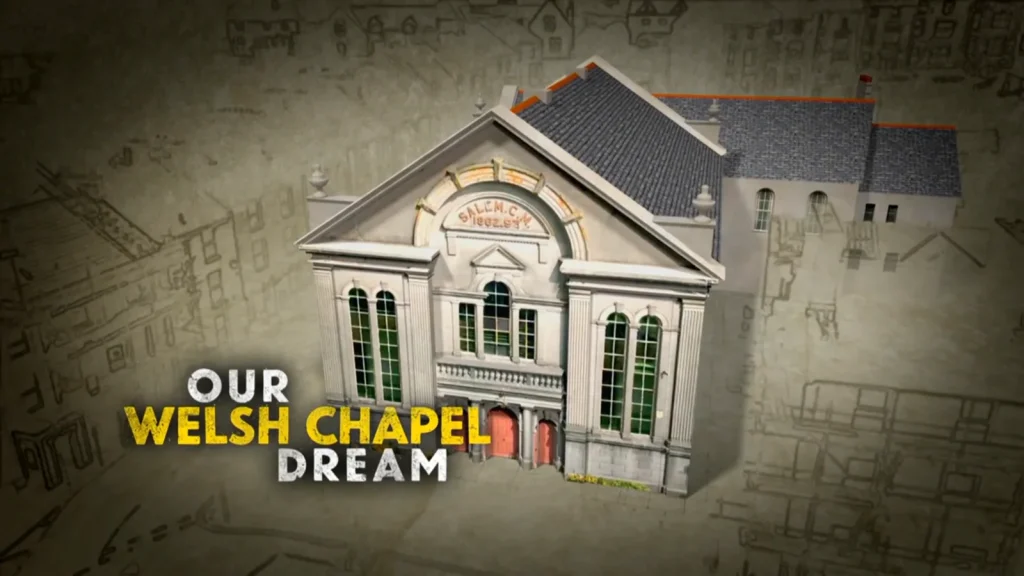
Our Welsh Chapel Dream episode 5 – A Chapel Reborn: Keith and Marj’s Welsh Restoration Journey
In the picturesque coastal town of Pwllheli in North Wales, where emerald hills meet rugged coastline, an extraordinary transformation is taking place. Keith Brymer Jones, master potter, and his partner Marj have embarked on an ambitious restoration project that many would consider madness. They’ve invested everything into a Grade II listed chapel and adjoining Sunday school that had sat abandoned for fourteen years.
“We bought a chapel,” Keith announces with a mixture of pride and trepidation. “That’s right,” Marj confirms, both fully aware of the monumental task ahead. The stunning Capel Salim, built in 1862, is a staggering 7,600 square feet of history, charm, and considerable decay. On the market for twelve years before they found it, the chapel seemed to be waiting for someone brave enough to tackle its restoration.
The couple fell in love with the building’s original features and architectural details. “We want to try and preserve as much as we possibly can,” Marj explains as they walk through the vast space, pointing out the gallery and intricate woodwork. However, their romantic vision quickly collided with reality when they discovered the extent of damage from years of neglect.
During their first year of ownership, Keith and Marj faced the unglamorous task of removing £20,000 worth of pigeon droppings from the Sunday School ceiling. They also encountered extensive dry rot that had consumed the original staircase, forcing them to completely rethink parts of their design. “It’s like we’re in some kind of weird horror movie,” Marj laments upon discovering yet another issue.

Scan smarter. Create faster. Free.
Download QR & Barcode Studio — Create and scan unlimited QR codes & barcodes.
No paywalls. No limits. 100% Free.

Nevertheless, eighteen months after purchasing the property, their vision is beginning to take shape. Their ambitious plans include transforming the downstairs of the Sunday School into their living quarters while using the chapel as a community and event space. The Sunday School Hall will become Keith’s pottery studio, complete with existing RSJs perfectly positioned for his kilns – “It was like it was waiting for you,” Marj observes.
Their unconventional approach to design is evident throughout. In the kitchen area, which was once the clergy study, Keith and Marj have opted for bold choices. The walls are painted a striking post-box red, dramatically contrasting with vintage cream-colored English Rose kitchen units from the 1940s that they’ve lovingly sourced and restored.
“It doesn’t have to be conventional. It doesn’t have to be for everyone,” Keith explains, embodying their philosophy that their home should reflect their personalities. This thinking extends to their plan for the new lobby, where they’re creating a cluster light feature using original chapel lights that date back to the 1920s. “It’s a lovely nod to the history of the building,” Keith explains while carefully arranging the vintage fixtures.
Working alongside local builder Hugh Owen and his team, Keith and Marj are gradually bringing warmth back to the cold stone building. The couple are particularly proud of their handcrafted fireclay sink, which they sourced from Darwin Terracotta in Blackburn. There, they witnessed the traditional craftsmanship involved in creating each sink, with Marj noting how special it feels “when you look at something and you think to yourself how it was made, when you know how it was made… by people.”
The restoration is as much about community as it is about creating a home. The couple has become part of the fabric of Pwllheli, with locals watching their progress with interest. “Footfall has increased over the summer, with lots of people coming to have a look at the chapel,” remarks one local shopkeeper. Keith and Marj embrace this connection, intending to share their space with the community once restored. “We really want to open it up to the community,” says Marj, while Keith adds, “I want to do apprenticeship schemes in the studio.”
As they gradually unpack their belongings in the newly finished kitchen – the first completed room – there’s a palpable sense of accomplishment. “We’re going to have a kitchen like normal people,” Marj exclaims with childlike excitement as she makes toast in their yellow toaster, a treasured possession from early in their relationship.
Our Welsh Chapel Dream episode 5
The kitchen exemplifies their approach to restoration: honoring history while adding their unique stamp. Every element tells a story, from the vintage units to the handmade sink. “If you genuinely love it, it’s not because it’s in fashion,” Marj reflects. “It’s because you love it, and if you love it, you’ll always love it.”
Despite the challenges, including financial pressures that Keith lightheartedly acknowledges (“They don’t know yet that we don’t actually have all the money for it”), the couple remains steadfastly committed to their vision. With the kitchen complete and work progressing on the snug, bathroom, and bedroom, Keith and Marj are turning Capel Salim into not just a building but a vehicle for their creative dreams.
“I do feel like it’s already home,” Marj says, “and that’s weird because there’s nothing in the building that resembles home-like qualities yet.” But as they share tea and toast in their new kitchen, looking out toward what will become Keith’s pottery studio, it’s clear that home isn’t just about completed rooms but about the journey they’re undertaking together.
Through the cracks and scars of this historic building, Keith and Marj continue to see the beauty that lies beneath, slowly bringing Capel Salim back to life with every repurposed piece and thoughtful detail.
Preserving Heritage, Creating Home: The Capel Salim Legacy
As the restoration of Capel Salim continues to unfold, Keith and Marj’s journey represents far more than a simple renovation project. Their story beautifully illustrates how passion and vision can breathe new life into forgotten spaces. Indeed, this Grade II listed chapel has transformed from an abandoned relic into a canvas for creative expression and community connection.
The couple’s approach to restoration strikes a delicate balance between honoring history and embracing innovation. Rather than erasing the chapel’s past, they have incorporated its original elements—from repurposed pews to historic light fixtures—into their contemporary design. Consequently, each room tells a story of both preservation and reinvention.
Financial challenges and structural setbacks have certainly tested their resolve throughout this process. However, these obstacles have ultimately strengthened their commitment to the project. Their willingness to adapt, particularly after discovering extensive dry rot, demonstrates remarkable resilience in the face of adversity.
The community aspect of their vision stands out as particularly meaningful. By planning to open portions of the space for public events and pottery apprenticeships, Keith and Marj are ensuring that Capel Salim will continue its legacy of bringing people together. Furthermore, their integration into the fabric of Pwllheli shows how historic buildings can remain relevant in modern contexts.
Their kitchen, with its bold red walls and vintage English Rose units, exemplifies their distinctive aesthetic sensibility. Yet beyond style, this space represents a significant milestone—the first fully functional room in their future home. Additionally, it serves as tangible proof that their ambitious vision is steadily becoming reality.
Looking forward, the completion of their snug, bathroom, and bedroom will mark the next chapter in this remarkable restoration story. Nevertheless, the true measure of success lies not in perfect finishes but in creating a space that authentically reflects their values and creative spirits.
Ultimately, Keith and Marj’s Welsh chapel project reminds us that home is created through intention, perseverance, and love. Through their dedication to craftsmanship and community, they are not merely restoring a building—they are preserving a cultural landmark while simultaneously writing their own chapter in its continuing history.
FAQ Our Welsh Chapel Dream episode 5
Q: What challenges did Keith and Marj face when renovating Capel Salim?
A: Keith and Marj encountered numerous challenges during their restoration of Capel Salim. Initially, they had to remove £20,000 worth of pigeon droppings from the Sunday School ceiling. Furthermore, they discovered extensive dry rot that had destroyed the original staircase, forcing them to completely reimagine parts of their design. Financial pressures also created obstacles, with Keith humorously acknowledging, “They don’t know yet that we don’t actually have all the money for it.” Despite these setbacks, the couple remained resilient and committed to their vision, adapting their plans while preserving the building’s historic character.
Q: How old is Capel Salim and what is its historical significance?
A: Capel Salim is a Grade II listed chapel built in 1862, making it over 160 years old. The stunning structure spans an impressive 7,600 square feet and represents an important piece of Welsh religious heritage. In 1913, the chapel suffered a catastrophic fire, but the Pwllheli community rallied together to fund its refurbishment, resulting in new fixtures including a pulpit, pews, and lights. Before Keith and Marj purchased it, the chapel had been abandoned for fourteen years and remained on the market for twelve years, awaiting someone brave enough to undertake its restoration and preserve its architectural significance.
Q: What design approach did Keith and Marj take in their restoration project?
A: Keith and Marj embraced an unconventional design approach that balances preservation with personal expression. As Keith explains, “It doesn’t have to be conventional. It doesn’t have to be for everyone.” They carefully preserved original features while making bold design choices, such as painting the kitchen walls a striking post-box red to contrast with vintage cream-colored English Rose kitchen units from the 1940s. Additionally, they repurposed original chapel elements, creating a cluster light feature using historic lights dating back to the 1920s. Their philosophy centers on creating a space that authentically reflects their personalities while honoring the building’s heritage.
Q: What are Keith and Marj’s plans for Capel Salim beyond creating their home?
A: Beyond creating their personal living space, Keith and Marj envision Capel Salim as a vibrant community resource. They plan to use the main chapel as a community and event space, opening it up to the local Pwllheli residents. Meanwhile, the Sunday School Hall will become Keith’s pottery studio, where he intends to establish apprenticeship schemes. As Marj emphasizes, “We really want to open it up to the community,” while Keith adds, “I want to do apprenticeship schemes in the studio.” This community-focused approach ensures the historic building will continue its legacy of bringing people together in new and creative ways.
Q: What unique features have Keith and Marj incorporated into their kitchen design?
A: Keith and Marj’s kitchen showcases their distinctive aesthetic through several unique features. Most noticeably, they painted the walls a bold post-box red, creating a dramatic backdrop for their vintage English Rose kitchen units from the 1940s. They sourced these cream-colored units second-hand and had them lovingly restored. The centerpiece is a handcrafted fireclay sink from Darwin Terracotta in Blackburn, displayed on a simple metal frame to showcase its craftsmanship. Complementing these elements are reclaimed 1960s steel pendant lights and personal touches like their treasured yellow toaster, which Marj bought at the beginning of their relationship.
Q: How has the local community responded to Keith and Marj’s restoration project?
A: The local Pwllheli community has shown great interest in Keith and Marj’s restoration of Capel Salim. According to one local shopkeeper, “Footfall has increased over the summer, with lots of people coming to have a look at the chapel.” The tight-knit nature of the town means that residents follow the project closely, sharing observations and sometimes gossip about the progress. This community engagement reflects the building’s historical importance to the town and demonstrates how restoration projects can revitalize local interest in architectural heritage. Keith and Marj have embraced this connection, becoming integrated into the fabric of Pwllheli’s community.
Q: What craftspeople and specialists have Keith and Marj worked with during the restoration?
A: Keith and Marj have collaborated with various craftspeople and specialists throughout their restoration journey. Local builder Hugh Owen and his team have been instrumental in the construction work, bringing warmth back to the cold stone building. For their kitchen, they worked with Carin Tawi, who specializes in restoring vintage English Rose kitchen units. They also visited Darwin Terracotta in Blackburn, where they met skilled artisans like Justina Leschinska, who creates handcrafted fireclay sinks using traditional methods. Additionally, they consulted with architect Rottery for crucial design decisions, demonstrating their commitment to working with experts who share their appreciation for craftsmanship.
Q: How are Keith and Marj honoring the chapel’s history in their renovation?
A: Keith and Marj honor Capel Salim’s history through thoughtful preservation and creative repurposing. Rather than completely modernizing, they salvaged original features where possible, such as cast-iron pillars that they sandblasted back to their former glory. In areas where original elements couldn’t be saved, like the fungus-infested staircase, they chose distinctive replacements that acknowledge the change while adding character. Moreover, they’ve repurposed chapel elements in innovative ways, such as creating a ceiling rose from a pew end and fashioning a cluster light feature from original chapel lights. Keith describes these touches as “a lovely nod to the history of the building.”
Q: What spaces are Keith and Marj creating in the Sunday School building?
A: Within the Sunday School building, Keith and Marj are creating several distinct living spaces. The 850-square-foot schoolroom is being transformed into a mid-century-inspired snug featuring a brutalist feature wall designed by Keith and upholstery crafted by Marj. The former vestry is being knocked through to connect with the Minister’s office, creating their bedroom with unique furnishings and bespoke storage. The old Sunday School kitchen is becoming a Victorian parlour-inspired bathroom, repurposing chapel pews. Meanwhile, the clergy study has been converted into their studio kitchen with its distinctive red walls and vintage fittings. Upstairs, the Sunday School Hall will become Keith’s pottery studio.
Q: What philosophy guides Keith and Marj’s approach to choosing furnishings and decorative elements?
A: Keith and Marj’s philosophy centers on authenticity and emotional connection rather than following trends. As Marj explains, “If you genuinely love it, it’s not because it’s in fashion… It’s because you love it, and if you love it, you’ll always love it.” They prioritize items with history and craftsmanship, often choosing second-hand pieces they can restore rather than buying new. Furthermore, they value understanding how things are made, with Marj noting how special it feels “when you know how it was made… by people.” This approach has resulted in a home filled with meaningful objects that tell stories, from their vintage kitchen units to Marj’s treasured yellow toaster.