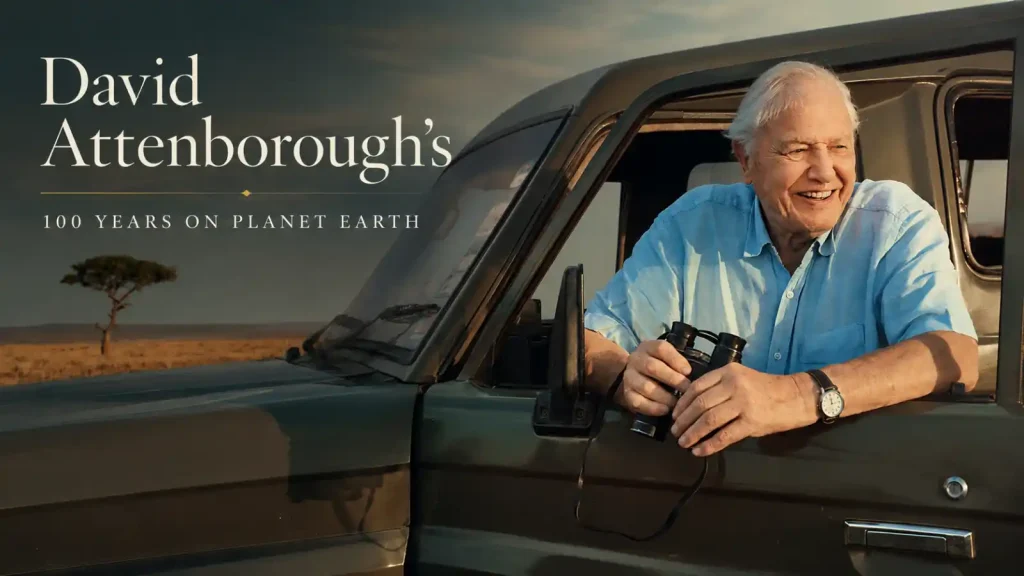
David Attenborough’s 100 Years on Planet Earth brought the Royal Albert Hall to a state of reverential silence and, moments later, to something approaching collective wonder, as one of the most remarkable evenings in British broadcasting history unfolded across ninety minutes of live celebration. On the occasion of Sir David Attenborough’s one hundredth birthday, the BBC assembled an extraordinary programme that drew together the accumulated power of a century of life devoted to the natural world. The scale of the achievement being honoured was not merely personal. It was civilisational. Few individuals in the twentieth or twenty-first century have done more to shape how human beings understand, feel about, and ultimately act towards the planet they inhabit.
The Royal Albert Hall, that magnificent domed Victorian amphitheatre in the heart of London, provided a setting entirely equal to the occasion. Its acoustics, its grandeur, and its deep association with the great cultural moments of British life made it the only credible venue for a tribute of this magnitude. The BBC Concert Orchestra filled the hall with music drawn from Sir David’s most iconic television series, weaving live performance through footage and reflection in a way that transformed the evening into something more than a retrospective. It became an experience.
Sir David Attenborough has narrated the story of life on Earth across more than seven decades of broadcasting. His voice, his curiosity, and his gift for making the distant and the strange feel intimate and urgent have accompanied multiple generations from childhood into adulthood. Planet Earth, Blue Planet, Frozen Planet — these are not simply television series. They are cultural monuments, shared experiences that altered how millions of people perceived the oceans, the ice caps, the forests, and the creatures living within them. To mark the hundredth birthday of the man at the centre of all of it was, therefore, an act of public gratitude on a scale commensurate with the debt owed.
The programme combined footage from the BBC’s natural history archive with live orchestral music, spoken reflections from public figures, and contributions from leading voices in conservation and wildlife film-making. Those who had worked alongside Sir David over the years offered personal testimony to his methods, his passions, and the particular quality of attention he brought to every subject he explored. The result was a portrait built not from biography alone but from the living evidence of what he had made possible — sequences of wildlife footage that remain, decades after their first broadcast, among the most astonishing images ever committed to film.
What emerged most powerfully from the evening was a sense of interconnection. The music, the images, and the words did not simply exist alongside each other. They reinforced and deepened one another. The BBC Concert Orchestra performed scores that audiences already carried inside them — melodies from Planet Earth, from Blue Planet, from Frozen Planet — and the effect of hearing that music live, in the presence of the images it once accompanied, was to restore those sequences to something close to their original emotional force. For many in the Royal Albert Hall, it felt like remembering something important they had been in danger of forgetting.

Scan smarter. Create faster. Free.
Download QR & Barcode Studio — Create and scan unlimited QR codes & barcodes.
No paywalls. No limits. 100% Free.

The significance of David Attenborough’s 100 Years on Planet Earth extended well beyond the personal. This was a programme about inheritance. It asked what one life spent in devoted attention to the natural world had produced, and what obligation that legacy placed on those who received it. The answers, drawn from the testimony of scientists, film-makers, and conservationists who had been shaped by Sir David’s work, pointed consistently in one direction. What he had given the world was not merely knowledge. It was the emotional architecture necessary to care about that knowledge.
Sir David’s career began at a moment when the idea of bringing the natural world into British living rooms was itself radical. Television was young, the technology was limited, and the ambitions of early natural history broadcasting were necessarily modest. What changed, across the decades that followed, was both the technology and the vision. As cameras became capable of capturing images previously impossible to obtain, Sir David’s programmes grew correspondingly more ambitious. Each landmark series pushed further into the unknown, surfaced creatures and behaviours never previously filmed, and brought the resulting footage to audiences of tens of millions.
By the time the Royal Albert Hall fell quiet for the opening of David Attenborough’s 100 Years on Planet Earth, the man being celebrated had become something genuinely rare in public life: a figure trusted across generations, across political divides, and across national boundaries. The evening acknowledged that trust and, through the quality of what it assembled, attempted to honour it worthily.
David Attenborough’s 100 Years on Planet Earth: The Setting and Ceremony at the Royal Albert Hall
The Royal Albert Hall has hosted coronation concerts, wartime fundraisers, and the annual spectacle of the Proms. It is a building accustomed to significance. Even so, the atmosphere on the evening of David Attenborough’s 100 Years on Planet Earth carried something distinctive. The audience gathered there understood they were present at a moment unlikely to be repeated. Centenary celebrations are, by definition, rare. Centenary celebrations for figures of this particular stature are almost without precedent.
The BBC Concert Orchestra occupied the stage in full, their presence a statement of intent. This would not be a modest affair. The music associated with Sir David’s most celebrated series — the sweeping, elemental scores that had accompanied images of humpback whales, migrating wildebeest, and calving glaciers — would be performed live, restoring to them the physical presence that recorded sound inevitably compresses. The decision to frame the evening around live orchestral performance was itself a recognition of how inseparable the music of these series had become from their meaning.
The programme moved between footage, live performance, and spoken reflection with considerable skill. Transitions between sections were carefully managed, ensuring that the accumulation of material never became overwhelming. Instead, each element prepared the ground for the next, so that by the close of the evening the audience had been taken on a journey structured with the same deliberate care that characterises Sir David’s own film-making.
The BBC Natural History Archive and the Power of Iconic Wildlife Sequences
The BBC’s natural history archive is one of the most extraordinary repositories of filmed material in the world. Built across decades of expeditions, commissions, and collaborations, it contains footage of animal behaviours, ecological systems, and wild landscapes that exist nowhere else on film. David Attenborough’s 100 Years on Planet Earth drew extensively on this archive, selecting sequences that represented not simply the highlights of individual series but the cumulative achievement of a way of seeing.
Specific sequences shown during the evening demonstrated the range of that achievement. Footage from Planet Earth captured landscapes of vertiginous scale — mountain ranges, desert systems, forest canopies — within which individual animals moved with a specificity and intimacy that belied the vastness of their surroundings. The camera work in these sequences, even viewed years after their original broadcast, retained its power to arrest and astonish. The natural world, filmed this carefully and this patiently, disclosed details invisible to casual observation.
Blue Planet contributed sequences from the ocean environment that remain among the most technically demanding ever achieved in wildlife film-making. The deep ocean, the coral reef systems, the open water columns through which creatures moved in formations of improbable elegance — these images had, when first broadcast, genuinely expanded public understanding of what the sea contained. Hearing the music of Blue Planet performed live by the BBC Concert Orchestra while these images played was to understand again why the series had the cultural impact it did. The combination was formidable.
Footage from Frozen Planet added a third dimension to the archive selections. The polar regions — Antarctica, the Arctic — presented film-makers with conditions of extreme physical difficulty, and the sequences obtained in those conditions reflected that difficulty in their rarity and their beauty. Ice formations, polar wildlife, and the particular quality of light found at the extremes of the planet gave Frozen Planet a visual character unlike any other series in the archive. Together, these three landmark series provided the evening with its structural spine.
David Attenborough’s 100 Years on Planet Earth and the Voices of Conservation
Among the most affecting elements of the evening were the contributions from conservationists, scientists, and wildlife film-makers who had worked alongside Sir David or been directly shaped by his example. Their testimony provided a dimension that footage alone could not supply: the human story of how one person’s work had propagated through a community of practitioners and, through them, into the wider culture.
Those who spoke described the particular quality of Sir David’s attention — his ability to observe without imposition, to listen before speaking, and to convey what he had understood in language of exceptional precision and accessibility. These are not automatic gifts. They are cultivated capacities, developed across a lifetime of practice. The conservationists and film-makers who described working with Sir David were describing, in effect, an education. His methods had become their methods. His standards had become the standards of the field.
The connection between wildlife documentary-making and conservation outcomes is a subject of genuine debate in the scientific community. What the contributors to David Attenborough’s 100 Years on Planet Earth argued, from direct experience, was that Sir David’s programmes had demonstrably shifted public attitudes. The emotional engagement produced by seeing a species filmed with care and intelligence translates, in measurable ways, into support for conservation efforts. The films had not simply reflected public concern for the natural world. In many cases, they had created it.
This argument was made not abstractly but through specific reference to the effects of particular series. The public response to sequences in Blue Planet II dealing with plastic pollution in the ocean provided one well-documented example. The images shown, and the commentary Sir David provided, generated a shift in both consumer behaviour and government policy in the United Kingdom that researchers subsequently documented. The power of natural history broadcasting to produce real-world outcomes had rarely been more clearly demonstrated.
Live Music from Planet Earth, Blue Planet, and Frozen Planet: The BBC Concert Orchestra in Performance
The decision to centre David Attenborough’s 100 Years on Planet Earth on live orchestral performance rather than simply broadcast footage was the creative choice that most distinguished the evening from a conventional retrospective. Music has always been integral to the experience of Sir David’s landmark series. The scores composed for Planet Earth, Blue Planet, and Frozen Planet were conceived as inseparable from the images they accompanied. Performing them live, in the presence of those images and of an audience assembled specifically to honour what they represented, activated something in the material that recorded versions could not replicate.
The BBC Concert Orchestra demonstrated in their performance why this decision had been correct. The dynamic range available to a live ensemble — the capacity to move from near-silence to full orchestral force within seconds — matched the dramatic range of the wildlife footage in ways that amplified both. Sequences that built slowly towards moments of revelation or conflict found those moments given additional weight by an orchestra responding in real time to the emotional logic of what was unfolding on screen.
Individual passages stood out for the precision of their execution. The underwater sequences from Blue Planet, always accompanied by music of unusual delicacy and restraint, were served particularly well by live performance. The orchestra’s ability to sustain pianissimo passages across extended durations gave these sequences a quality of suspension — of held breath — that enhanced their otherworldly quality. Conversely, the large-scale landscape sequences from Planet Earth, accompanied by music of sweeping confidence, gained further grandeur from the physical presence of the full orchestra in the hall.
The experience of hearing these scores performed live also restored to them their compositional identity. Broadcast through television speakers, even good ones, the music of these series is heard at a remove. In the Royal Albert Hall, with the BBC Concert Orchestra performing to the acoustic standards of a great concert venue, the sophistication of the composition became newly apparent. These were serious musical works, and the evening treated them as such.
David Attenborough’s 100 Years on Planet Earth: A Century of Wildlife Documentary-Making
To understand what David Attenborough’s 100 Years on Planet Earth was celebrating requires some sense of how profoundly wildlife documentary-making changed across his career. When Sir David began working in television in the early 1950s, the medium was barely a decade old in its widespread domestic form. Natural history programmes existed, but their ambitions were constrained by technology, by budget, and by an incomplete understanding of what audiences might be willing to engage with.
Sir David’s contribution to changing those constraints operated on multiple levels. As a programme-maker and later as a commissioner and executive at the BBC, he shaped the institutional culture that made ambitious natural history broadcasting possible. As a presenter and narrator, he modelled a way of engaging with the natural world that proved both intellectually rigorous and accessible to mass audiences. The combination of institutional influence and on-screen presence was unusual and, in retrospect, decisive.
The technological evolution of the form across Sir David’s career was itself extraordinary. From the limited film cameras of the 1950s and 1960s, through the video revolution of the 1980s and 1990s, to the high-definition and then ultra-high-definition systems used in Planet Earth II and beyond, each generation of technology opened new possibilities. Camera systems small enough to enter burrows and nests, underwater housings capable of operating at extreme depths, aerial platforms giving perspectives previously available only in imagination — all of these expanded what could be shown and therefore what could be understood.
Sir David’s career encompassed all of these developments and shaped how each was deployed. The series that marked his career were not merely beneficiaries of improved technology. They were expressions of a vision that the technology was recruited to serve. The question was never what the cameras could do in isolation. It was always what they could be made to reveal in the service of understanding.
The Reflections of Public Figures and the Cultural Legacy of Sir David Attenborough
Beyond the community of film-makers and conservationists, David Attenborough’s 100 Years on Planet Earth drew on reflections from public figures whose connection to Sir David’s work was more indirect but no less genuine. These contributions represented the broader cultural reach of a career that had extended far beyond the specialist audience for natural history broadcasting.
Politicians, artists, and figures from public life described what Sir David’s programmes had meant to them personally — as children watching for the first time, as adults returning to sequences in moments of difficulty, as public figures drawing on his example when attempting to communicate complex environmental realities to wide audiences. The consistency of these accounts was striking. Across very different lives and very different fields, the encounter with Sir David’s work had produced similar effects: a sharpened sense of attention, a deepened feeling of connection to the non-human world, and an altered understanding of what human beings owed to that world.
This cultural legacy is difficult to quantify but easy to observe. The vocabulary in which environmental and conservation issues are now discussed in public life — the imagery drawn upon, the emotional register employed — bears the clear imprint of natural history broadcasting at its best. Sir David did not simply describe the natural world. He gave people the means to think and feel about it.
David Attenborough’s 100 Years on Planet Earth: Conservation, Urgency, and the Question of Inheritance
The celebratory tone of David Attenborough’s 100 Years on Planet Earth did not preclude engagement with the urgency that has characterised Sir David’s public statements in recent years. The evening acknowledged, through the selection of footage and the framing provided by contributors, that the natural world Sir David had spent a century observing and celebrating is under pressures unprecedented in human history.
Several sequences included in the programme bore direct relevance to this urgency. Images of coral reef systems, filmed at intervals across decades, showed changes in bleaching and degradation that no amount of musical accompaniment could make comfortable to watch. Footage of polar ice, compared across the archive, demonstrated contraction of a kind and speed that climate scientists have described in terms that leave little room for reassurance. The archive that the BBC Concert Orchestra was celebrating was also, in part, a record of loss.
Sir David’s own statements on these matters, woven through the programme, were characteristically precise and unsparing. He has said, across many occasions, that the generation now alive is the last that can act effectively to prevent the most catastrophic environmental outcomes. The Royal Albert Hall audience heard this again, and the weight of it was not diminished by the festive context. If anything, the beauty of what the footage showed made the threat to it more legible.
The conservation voices who contributed to the programme addressed this directly. They spoke of what had been achieved by way of protected areas, species recovery programmes, and international agreements. They spoke also of what remained inadequate and what the gap between current commitments and necessary action represented in practical terms. The evening was honest about this gap, and its honesty gave the celebration a gravity that a purely congratulatory programme could not have achieved.
The Structure of the Evening and Its Emotional Architecture
The ninety minutes of David Attenborough’s 100 Years on Planet Earth were shaped with evident care for the emotional journey of the audience. The programme began in a mood of celebration and gradually deepened into something more complex — incorporating urgency, gratitude, and a quality of reckoning that reflected the full weight of what was being marked.
The BBC Concert Orchestra provided continuity across these shifts of register. Music, more readily than any other medium, can hold contradictory emotional states simultaneously. The scores of Planet Earth and Blue Planet and Frozen Planet contain both wonder and melancholy, both exhilaration and solemnity. Performed live, these qualities were fully present, giving the audience access to the emotional range of the material rather than a simplified version of it.
The contributions from speakers were positioned at intervals that prevented any single register from dominating for too long. Reflection followed footage. Music followed reflection. Archive material gave way to live performance. This alternation maintained the audience’s engagement across the full duration and ensured that each element retained its freshness rather than settling into a predictable pattern.
By the close of the evening, the cumulative effect was substantial. David Attenborough’s 100 Years on Planet Earth had succeeded in doing something genuinely difficult: honouring a great life without reducing it to sentiment, acknowledging a crisis without surrendering to despair, and celebrating a body of work without allowing celebration to become complacency. The Royal Albert Hall, that great Victorian room built for exactly these kinds of national occasions, had served its purpose magnificently.
Sir David Attenborough reaches his hundredth year as perhaps the most trusted public voice on the subject that matters most urgently to the future of all life on this planet. The evening assembled in his honour was worthy of that trust. It sent its audience back into the world — into the natural world that Sir David has spent a century bringing into focus — with their attention refreshed and their sense of obligation renewed. That, in the end, is what the finest natural history broadcasting has always done. And it is what David Attenborough’s 100 Years on Planet Earth did again, one more time, with full orchestral accompaniment.
FAQ David Attenborough’s 100 Years on Planet Earth
Q: What is David Attenborough’s 100 Years on Planet Earth and where was it broadcast from?
A: David Attenborough’s 100 Years on Planet Earth is a 90-minute BBC special celebrating Sir David Attenborough’s centenary birthday. Broadcast live from the Royal Albert Hall in London, the programme honours his extraordinary career in natural history broadcasting. It combines archive wildlife footage, live orchestral performance, and personal reflections from leading figures in conservation and wildlife film-making.
Q: Which BBC series provided the musical and visual highlights of the Royal Albert Hall event?
A: The evening drew extensively from three landmark BBC series: Planet Earth, Blue Planet, and Frozen Planet. The BBC Concert Orchestra performed iconic scores live from all three. Furthermore, archive footage from each series played alongside the music, restoring these sequences to their full emotional impact for the Royal Albert Hall audience.
Q: Why did the BBC choose the Royal Albert Hall for David Attenborough’s 100 Years on Planet Earth?
A: The Royal Albert Hall is one of Britain’s most prestigious cultural venues, with world-class acoustics and a long association with major national occasions. Its grandeur matched the scale of Sir David Attenborough’s centenary. Additionally, its capacity allowed a large live audience to experience the BBC Concert Orchestra performing alongside projected wildlife documentary footage simultaneously.
Q: What role did the BBC Concert Orchestra play in the centenary celebration?
A: The BBC Concert Orchestra performed live throughout the entire 90-minute programme. They played scores originally composed for Planet Earth, Blue Planet, and Frozen Planet. Live performance restored the full dynamic range of these compositions, moving from near-silence to full orchestral force. This gave archive wildlife footage a renewed emotional power that recorded sound alone cannot replicate.
Q: How has Sir David Attenborough’s wildlife documentary work influenced public attitudes toward conservation?
A: Sir David Attenborough’s programmes have demonstrably shifted public attitudes toward conservation across decades. Blue Planet II, for example, generated measurable changes in consumer behaviour and UK government policy regarding plastic pollution in the ocean. Contributors to David Attenborough’s 100 Years on Planet Earth argued that emotional engagement with carefully filmed wildlife translates directly into tangible support for conservation efforts.
Q: What material from the BBC natural history archive featured in the centenary programme?
A: The programme drew from the BBC’s vast natural history archive, selecting sequences that represent the cumulative achievement of Sir David’s career. Featured footage included vast mountain and desert landscapes from Planet Earth, deep-ocean and coral reef sequences from Blue Planet, and polar wildlife imagery from Frozen Planet. Together, these three series formed the evening’s structural and visual spine.
Q: Who contributed spoken reflections to David Attenborough’s 100 Years on Planet Earth?
A: The programme featured contributions from public figures, conservationists, scientists, and wildlife film-makers who had worked alongside or been inspired by Sir David Attenborough. Their accounts consistently described how his work sharpened their attention to the natural world. Additionally, public figures from politics and the arts spoke about the personal impact his wildlife documentary series had on their lives and thinking.
Q: Did David Attenborough’s 100 Years on Planet Earth address environmental concerns alongside its celebration?
A: Yes. The programme incorporated footage showing coral reef degradation and polar ice contraction documented across decades of BBC archive material. Sir David’s own statements on environmental urgency featured throughout. Conservation contributors addressed the gap between current international commitments and the action still required. The evening balanced genuine celebration with honest engagement with the crisis facing the natural world.
Q: How did technological advances shape Sir David Attenborough’s wildlife documentary career?
A: Sir David’s career spanned extraordinary technological change in film-making. Early productions used limited film cameras with modest capabilities. Subsequently, high-definition systems, deep-water underwater housings, miniature cameras, and aerial platforms transformed what wildlife documentary teams could capture. However, Sir David consistently used each new technology in service of a guiding vision rather than as a spectacle in itself.
Q: What lasting cultural legacy does David Attenborough’s 100 Years on Planet Earth identify in his broadcasting career?
A: The programme identifies Sir David Attenborough’s deepest legacy as providing the emotional architecture necessary for audiences to genuinely care about the natural world. His wildlife documentary work did not merely reflect existing public concern. In many cases, it created that concern. Furthermore, the vocabulary and imagery now standard in environmental public discourse bears the clear imprint of his seven decades of natural history broadcasting.