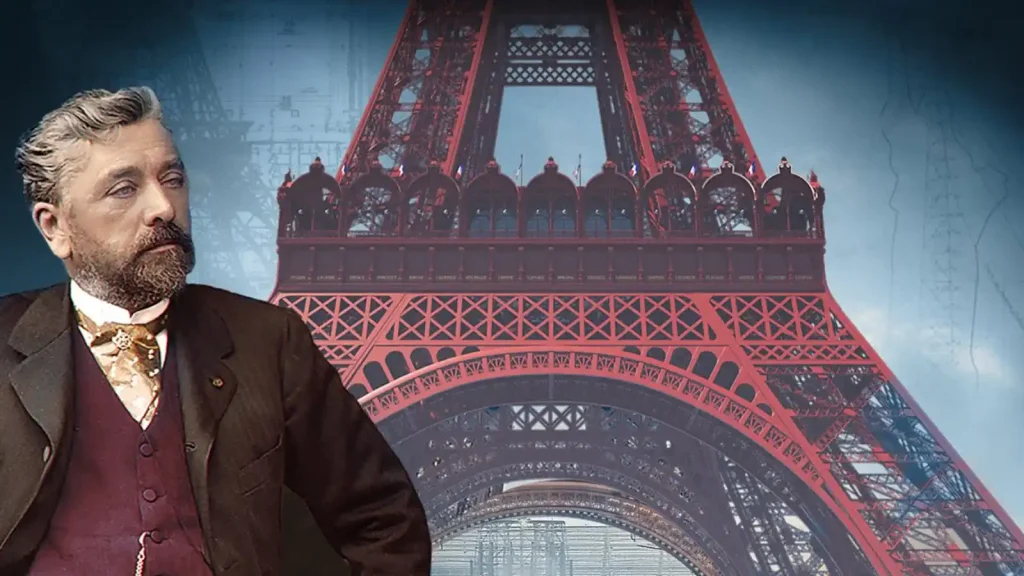
Eiffel Tower: Building the Impossible
The Eiffel Tower stands as one of humanity’s most audacious engineering achievements, a wrought-iron colossus that transformed the Paris skyline and redefined what builders could accomplish with metal, mathematics, and sheer determination. Rising 300 metres above the French capital, this structure emerged from the vision of Gustave Eiffel, a man who had spent three decades mastering the art of iron construction across four continents. When the tower opened for the 1889 World’s Fair, it represented not merely an architectural triumph but a profound statement about human progress in an age of unprecedented technological change.
The story of this iconic monument begins long before the first rivet was driven into Parisian soil. Throughout the nineteenth century, engineers across Europe and America dreamed of constructing the world’s tallest man-made structure. The challenge captivated the imagination of an era obsessed with progress, industrialisation, and the conquest of natural limitations. Yet every attempt to reach beyond conventional heights met with failure, technical obstacles, or financial collapse. Building the impossible required more than ambition; it demanded a revolutionary understanding of materials, forces, and construction methodology.
Gustave Eiffel brought precisely these qualities to the challenge. Born in Dijon in 1832, he had transformed himself from a chemistry student into the foremost iron constructor of his generation. His bridges spanned rivers across Europe, South America, and Asia. His railway stations served millions of passengers. His methods had proven themselves in conditions ranging from Portuguese mountain passes to the windswept heights of the Garabit Viaduct. By 1889, Eiffel commanded the knowledge, the workforce, and the reputation necessary to attempt what no engineer had achieved before.
The tower emerged during a specific historical moment that made its construction both possible and necessary. France sought to celebrate the centenary of its revolution with a world’s fair that would demonstrate national prestige and technological supremacy. The government announced a competition for a monument 300 metres tall, a height that seemed fantastical to most observers. More than 700 proposals flooded into the competition, yet only one possessed the combination of structural logic, aesthetic vision, and practical feasibility required for success.

Scan smarter. Create faster. Free.
Download QR & Barcode Studio — Create and scan unlimited QR codes & barcodes.
No paywalls. No limits. 100% Free.

Building the impossible demanded solutions to problems that had never before been solved at such scale. How could workers assemble millions of components with millimetre precision? How could foundations support unprecedented loads while accounting for the varied soil conditions of the Champ de Mars? How could the structure resist winds that would exert forces no previous building had confronted? The answers to these questions would reshape engineering practice for generations to come.
The construction timeline imposed extraordinary pressure on every aspect of the project. Eiffel had just two years, two months, and five days to complete his iron colossus. This deadline allowed no margin for significant errors, design changes, or unforeseen complications. Every component, every assembly sequence, every safety protocol required meticulous advance planning. The tower would rise through prefabrication and precision, not through the patient accumulation of masonry that had characterised monumental construction for millennia.
The workforce that assembled the tower represented the elite of French industrial labour. Approximately 300 workers, including specialists in riveting, assembly, and high-altitude operations, would transform 18,038 individual iron pieces into a unified structure. These men worked through winters and summers, ascending ever higher as the tower grew beneath them. Their accomplishment stands among the safest major construction projects of the industrial age, with only one fatality during the entire building process.
Understanding how Gustave Eiffel achieved this remarkable feat requires examining the technological foundations he had established over preceding decades. The tower did not emerge from nowhere; it represented the culmination of innovations developed through bridge construction, railway engineering, and scientific research into the properties of iron under stress.
Eiffel Tower
The Engineering Philosophy Behind the Eiffel Tower
The principles that made the Eiffel Tower possible evolved through Gustave Eiffel’s extensive experience with iron bridge construction. Unlike stone or masonry, iron possessed properties that enabled entirely new structural approaches. It could span greater distances with less material. It could be prefabricated in workshops and assembled on-site with precision impossible in traditional construction. Most importantly, it could be analysed mathematically, allowing engineers to calculate stresses and design members accordingly.
Eiffel had refined these principles through projects of increasing ambition. The Garabit Viaduct, completed in 1884, demonstrated his mastery of iron arch construction at unprecedented scale. This railway bridge in southern France featured a central arch spanning 165 metres and rising 122 metres above the river below. The techniques developed for Garabit—including methods for calculating wind loads, managing thermal expansion, and assembling components at height—transferred directly to the Paris tower project.
The fundamental challenge of tall tower construction differed from bridge engineering in one crucial respect: bridges distributed loads horizontally across their spans, while towers concentrated forces vertically through their foundations. Eiffel addressed this challenge through a tapered lattice design that progressively reduced cross-sectional area with height. The tower’s distinctive curved profile resulted not from aesthetic preference but from structural optimisation. Each point along the height bore only the weight above it, requiring less material as elevation increased.
Foundations for Building the Impossible
The Eiffel Tower’s foundations presented challenges that had defeated previous tall-structure attempts. The Champ de Mars, where the tower would stand, consisted of alluvial soil deposited by the Seine over millennia. This material could not support concentrated loads without extensive preparation. Furthermore, the site’s proximity to the river meant that excavations would encounter groundwater at relatively shallow depths.
Eiffel’s solution employed massive concrete foundations that distributed the tower’s weight across broad footings. Each of the four legs rested on a separate foundation block measuring approximately 25 metres on each side. Workers excavated these pits to depths of 7 to 14 metres, depending on local soil conditions. The legs nearest the Seine required deeper foundations and incorporated compressed-air caissons to allow work below the water table.
The foundation construction revealed Eiffel’s systematic approach to problem-solving. When workers encountered conditions different from initial surveys, engineers adapted their methods while maintaining the essential design principles. The caisson technique, borrowed from bridge construction, allowed crews to work in dry conditions despite surrounding groundwater. Compressed air held back the water while workers excavated soil and placed concrete, a method that would see extensive use in subsequent underwater construction projects worldwide.
Prefabrication and Precision in Eiffel Tower Construction
The Eiffel Tower’s construction depended on prefabrication to a degree unprecedented in monumental building. Eiffel’s workshop at Levallois-Perret, northwest of Paris, manufactured every component before it arrived on-site. Workers drilled rivet holes to tolerances of one-tenth of a millimetre, ensuring that pieces would align perfectly during assembly. This precision eliminated the need for on-site modification, dramatically accelerating construction pace.
The workshop employed approximately 300 workers dedicated to tower components. They traced full-scale drawings onto metal sheets, cut pieces to exact specifications, and pre-assembled sections to verify fit before shipping. Each of the tower’s 18,038 iron pieces received a unique identifying mark that corresponded to its position in the overall structure. Assembly crews could locate and install components without confusion, even as the tower’s complexity increased with height.
The riveting process exemplified the industrialised efficiency that characterised the entire project. Teams of four workers operated at each riveting station: a furnace tender heated rivets until they glowed, a runner carried them to the rivet location, a holder positioned them with tongs, and two riveters drove them home with pneumatic hammers. This choreographed operation installed approximately 2.5 million rivets during construction, a number that later increased through maintenance and reinforcement.
The Rising Structure and Construction Sequence
Construction began in January 1887 with foundation excavation and continued through increasingly complex assembly phases. The first stage erected the four inclined legs from ground level to the first platform at 57 metres. This phase presented unique challenges because the legs rose at angles rather than vertically, requiring temporary timber scaffolding to support components until they could be connected.
The geometry of this initial stage proved crucial to the entire project’s success. If the four legs failed to meet precisely at the first platform level, the accumulated error would prevent completion of the tower. Eiffel addressed this risk through hydraulic jacks incorporated into the leg bases. These adjustable components allowed workers to fine-tune each leg’s position as construction progressed, correcting minor deviations before they could compound.
Workers completed the first platform in April 1888, establishing a stable base for subsequent construction. The tower’s second stage rose from this platform to 115 metres, where the second platform provided another construction staging area. The final stage extended from the second platform to the summit at 300 metres. Each successive phase required less material but demanded increasingly specialised techniques for working at height.
Wind Resistance and the Eiffel Tower Design
The tower’s most innovative feature addressed the primary enemy of tall structures: wind. At 300 metres, wind forces would far exceed anything previous buildings had confronted. A solid structure would present enormous surface area to wind loads, requiring impossibly massive construction to resist. Eiffel’s solution employed lattice construction that allowed wind to pass through the structure rather than pushing against it.
The tower’s open framework reduced wind exposure to approximately one-ninth what a solid structure of equivalent dimensions would present. This dramatic reduction made the 300-metre height achievable with available materials and construction techniques. The lattice design also eliminated the oscillation that plagued later solid structures, keeping the tower stable even in severe storms.
Eiffel conducted extensive wind resistance research both before and after tower construction. He installed meteorological instruments at various heights, gathering data that informed engineering practice for decades. The tower itself became a laboratory for studying atmospheric phenomena, wind behaviour, and structural response to environmental forces. This scientific application transformed what might have been merely a monumental advertisement into a genuine contribution to human knowledge.
Workers and Safety During the Eiffel Tower Build
The construction workforce performed extraordinary feats of skill and courage throughout the project. Approximately 300 workers assembled the tower, labouring at heights that increased steadily over two years. These men included specialists in various trades: metalworkers who fitted components, riveters who secured connections, and labourers who transported materials through the rising structure.
Eiffel prioritised worker safety through measures unusual for the era. Safety nets, guard rails, and secure platforms reduced fall risks. Medical facilities stood ready to treat injuries. The company provided on-site canteens that offered hot meals at subsidised prices, ensuring workers remained nourished during demanding physical labour. These provisions contributed to a remarkable safety record: only one worker died during construction, a figure far below typical rates for comparable projects.
The workers themselves recognised the historic nature of their labour. They were creating something unprecedented, a structure that would outlast their own lives and represent their skills to future generations. This awareness fostered pride and careful workmanship that contributed to the tower’s precision and durability. When construction concluded, many workers had spent more than two years dedicated exclusively to this single project.
Opposition and Controversy Surrounding the Eiffel Tower
Not everyone welcomed the tower’s construction. A group of prominent artists, writers, and intellectuals published a manifesto condemning the project as an industrial monstrosity that would disfigure Paris. They described the proposed structure as a disgrace to French architecture and predicted that Parisians would spend generations living beneath its shadowy presence.
The protests reflected genuine tensions between traditional aesthetics and industrial modernity. Paris possessed monuments of classical proportion and refined detail accumulated over centuries. The tower represented something categorically different: raw industrial power expressed through exposed iron framework. Critics saw not innovation but desecration, an intrusion of factory aesthetics into a city renowned for cultural sophistication.
Gustave Eiffel responded to these objections with characteristic confidence. He defended the tower’s beauty as deriving from its structural honesty, arguing that the curves expressing mathematical optimisation possessed their own aesthetic logic. Time would vindicate his position. The initial hostility faded as Parisians and visitors discovered the tower’s appeal. Within decades, the structure had become inseparable from Parisian identity, its removal unthinkable.
Completion and the 1889 World’s Fair
Construction concluded on 31 March 1889, meeting the deadline that had seemed so improbable when work began. Gustave Eiffel personally ascended the tower to plant the French tricolour at its summit, marking completion of the world’s tallest man-made structure. The achievement came in precisely two years, two months, and five days, exactly as scheduled.
The World’s Fair that followed drew millions of visitors from across the globe. The tower served as both entrance monument and observation platform, offering unprecedented views across Paris and the surrounding countryside. Visitors paid admission to ascend by elevator or staircase, generating revenues that rapidly repaid construction costs. The tower’s success as a commercial attraction ensured its survival beyond the fair’s conclusion.
The fair celebrated French progress and the centenary of the Revolution, but the tower transcended these specific commemorations. It demonstrated what industrial civilisation could accomplish through systematic application of science, engineering, and organised labour. Visitors from countries around the world returned home inspired by what they had witnessed, carrying the tower’s influence into their own building traditions.
The Lasting Legacy of Building the Impossible
The Eiffel Tower transformed expectations about what constructed structures could achieve. Its methods influenced subsequent tall building projects worldwide, from the skyscrapers that would soon rise in American cities to communication towers that borrowed directly from its lattice design. The prefabrication techniques pioneered for its construction became standard practice across the building industry.
Gustave Eiffel continued his scientific work after the tower’s completion, using the structure as a platform for aerodynamic research, meteorological observation, and early radio transmission experiments. The tower’s height made it invaluable for wireless telegraphy, a practical application that helped justify its retention when the original concession period expired. What began as a fair monument became permanent infrastructure.
The tower endures today as both functioning structure and global symbol. It has weathered two world wars, countless storms, and the constant attention of millions of annual visitors. Maintenance crews continuously repaint its surfaces and inspect its components, preserving the work of those original 300 builders. The iron that Gustave Eiffel shaped into an impossible dream remains standing, testimony to what human ingenuity can accomplish when ambition meets expertise.
Building the impossible required not merely technical skill but comprehensive vision. Eiffel understood that every component, every process, every worker’s contribution formed part of an integrated whole. His tower succeeded because he had spent a lifetime preparing for exactly this challenge. The bridges, the viaducts, the stations—all had been preparation for the moment when someone would dare to build 300 metres into the Paris sky. When that moment came, Gustave Eiffel was ready, and the world gained an icon that continues to inspire more than 130 years after its completion.
FAQ Eiffel Tower: Building the Impossible
Q: Who designed and built the Eiffel Tower?
A: Gustave Eiffel, a French civil engineer, designed and constructed the iconic tower. He had spent three decades mastering iron construction through bridges and railway stations across four continents. His company employed approximately 300 workers who assembled the structure between 1887 and 1889. Additionally, his workshop at Levallois-Perret manufactured all 18,038 iron pieces before on-site assembly.
Q: How tall is the Eiffel Tower and why was that height significant?
A: The tower stands 300 metres tall, making it the world’s tallest man-made structure when completed in 1889. This height represented an engineering challenge that had defeated all previous attempts. Furthermore, the French government specifically required this 300-metre height for the World’s Fair competition, attracting over 700 proposals.
Q: How long did it take to build the Eiffel Tower?
A: Construction took exactly two years, two months, and five days. Work began in January 1887 and concluded on 31 March 1889. This remarkably tight deadline required meticulous advance planning for every component. Consequently, prefabrication and precision manufacturing became essential to meeting the World’s Fair opening date.
Q: What materials were used to construct the Eiffel Tower?
A: The tower consists primarily of wrought iron assembled into a lattice framework. Workers installed approximately 2.5 million rivets to secure the structure. Meanwhile, massive concrete foundation blocks measuring roughly 25 metres per side support each of the four legs. The foundations extend between 7 and 14 metres deep, depending on soil conditions.
Q: Why does the Eiffel Tower have its distinctive curved shape?
A: The curved profile results from structural optimisation rather than aesthetic preference. Each point along the height bears only the weight above it, requiring progressively less material as elevation increases. This tapered lattice design also reduces wind resistance to approximately one-ninth of what a solid structure would face. Therefore, the mathematics of force distribution created the tower’s elegant silhouette.
Q: How did workers achieve such precise construction at extreme heights?
A: Prefabrication ensured millimetre-level precision throughout construction. Workers drilled rivet holes to tolerances of one-tenth of a millimetre at the workshop. Each of the 18,038 pieces received unique identifying marks corresponding to its position. Hydraulic jacks at the leg bases also allowed fine-tuning adjustments during assembly, preventing accumulated errors.
Q: Was the Eiffel Tower construction considered safe for workers?
A: The project achieved remarkable safety standards for its era. Only one worker died during the entire construction process. Eiffel implemented safety nets, guard rails, and secure platforms throughout the site. In addition, on-site canteens provided hot meals at subsidised prices, ensuring workers remained properly nourished during demanding physical labour.
Q: Did everyone support the Eiffel Tower’s construction?
A: No, prominent artists and intellectuals initially opposed the project. They published a manifesto condemning the tower as an industrial monstrosity that would disfigure Paris. Critics viewed it as factory aesthetics intruding upon classical French architecture. However, public opinion shifted dramatically after completion, and the tower became inseparable from Parisian identity.
Q: What purpose did the Eiffel Tower serve after the 1889 World’s Fair?
A: Gustave Eiffel transformed the tower into a scientific research platform. He installed meteorological instruments and conducted aerodynamic experiments at various heights. The structure also proved invaluable for early wireless telegraphy and radio transmission. These practical applications ultimately justified retaining the tower when its original concession period expired.
Q: What engineering innovations from the Eiffel Tower influenced later construction?
A: The tower’s prefabrication techniques became standard practice across the global building industry. Its lattice design influenced subsequent communication towers worldwide. Similarly, the compressed-air caisson method used for foundations saw extensive adoption in underwater construction projects. American skyscrapers and tall structures globally drew inspiration from Eiffel’s systematic approach to iron construction.