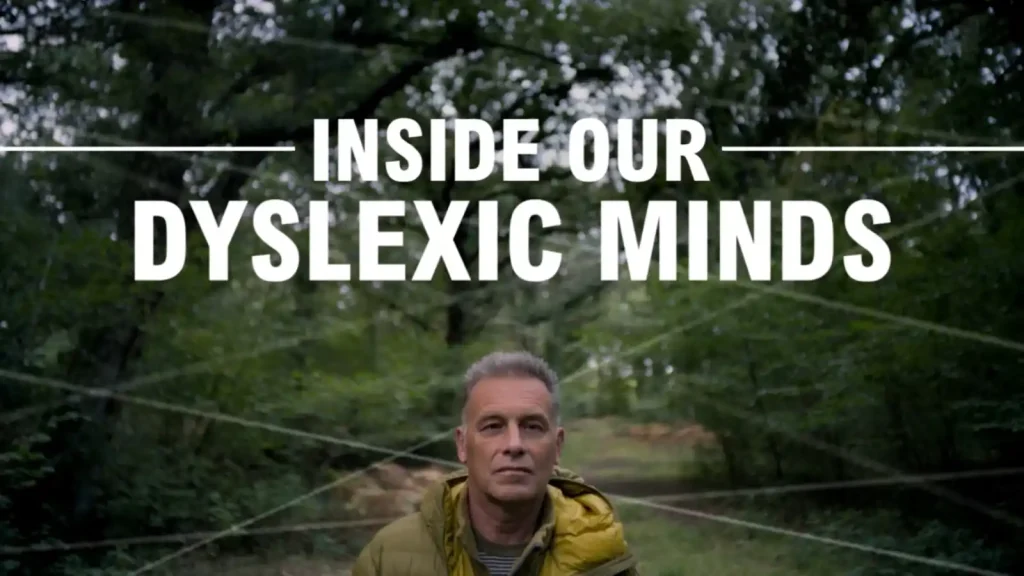
Unveiling the Inner Worlds: A Look at ‘Inside Our Dyslexic Minds’
The documentary “Inside Our Dyslexic Minds” offers a poignant exploration into a frequently misunderstood neurodivergence. It is thought that as many as one in ten people in the UK are dyslexic. This makes it the most diagnosed type of neurodivergence. Despite this prevalence, host Chris Packham, himself autistic, observes that dyslexia is often ignored. Furthermore, it is frequently misunderstood. The program aims to rectify this. It does so by providing a platform for dyslexic individuals to share their authentic experiences. Teaming up with filmmakers, animators, and graphic designers, the documentary empowers two dyslexic people. They create evocative short films. These films explain to family and friends their true feelings and what really happens inside their dyslexic minds.
“Inside Our Dyslexic Minds” centers on the personal narratives of Lee, a 53-year-old construction site manager, and Suiki, a 35-year-old school counsellor. Both were diagnosed with dyslexia as adults. Consequently, they navigated much of their lives without understanding the root of their challenges. The documentary meticulously unpacks the multifaceted nature of dyslexia. It extends far beyond the common perception of difficulties with reading and spelling. Indeed, it impacts memory, organization, navigation, and even emotional regulation.
Lee’s story is one of quiet struggle and eventual self-acceptance. He candidly shares how dyslexia affected his schooling. He hated English classes. The fear of being asked to read aloud led him to act out. This often resulted in him being sent out of class. He recalls, “I just thought I was thick.” This internalised belief shaped his career path. He became a builder, a profession he initially described with the self-deprecating phrase, “I’m just a builder.” The documentary reveals the daily anxieties Lee faces.
For instance, reading risk assessment method statements can take him days. This induces significant stress. His coping mechanisms include meticulous planning and, at times, needing to take time off work to reset. However, Lee also possesses a passion for singing. He is part of a male voice choir. Yet, even here, dyslexia presents hurdles in learning lyrics. He relies on lip-reading the conductor and visual cues.

Scan smarter. Create faster. Free.
Download QR & Barcode Studio — Create and scan unlimited QR codes & barcodes.
No paywalls. No limits. 100% Free.

Suiki’s experience highlights the often-hidden efforts of high-achieving dyslexics. As a psychotherapist and school counsellor, she operates in a demanding professional environment. Her dyslexia remained undiagnosed throughout her school years. She compensated by dedicating lunchtimes and evenings to her studies. This was a bid to disguise her difficulties. Today, literacy and organisation remain challenging. She describes scheduling appointments as “terrifying.” She often double-books or forgets appointments entirely.
Short-term memory is another significant hurdle. She likens her thoughts to “slippery fish.” They are hard to grasp and articulate. This can lead to misunderstandings and internal feelings of inadequacy. Even simple tasks, like navigating to a new location, induce considerable anxiety. Suiki’s narrative also touches upon the emotional toll. The constant effort to keep up can be exhausting. Moreover, the fear of judgment is pervasive.
The documentary skillfully interweaves these personal stories with expert insights. Professor Joel Talcott, a neuroscientist, provides a scientific framework for understanding dyslexia. He explains that reading is a learned skill, not a naturally emerging human capacity. Our brains, evolutionarily speaking, have only recently been applied to this task. Therefore, the dyslexic brain uses the same areas as typical readers. However, there is “lesser coordination and lesser connectivity between these areas.”
This explains why the task of reading and processing written information is so challenging. Importantly, Professor Talcott emphasizes that these coordination differences can explain other challenges. These include difficulties with working memory, map reading, following instructions, and sustaining attention. His commentary underscores the profound and widespread impact of dyslexia. It affects many aspects of an individual’s life.
Furthermore, the documentary explores the societal implications of undiagnosed or unsupported dyslexia. Professor Talcott notes that around 60% of children with dyslexic difficulties are not identified in primary school. This can lead to frustration, school dropouts, and longer-term social consequences. Disturbingly, he cites reports indicating that about 30% of the prison population has dyslexia. This highlights a critical need for early identification and support. In a particularly insightful segment, the documentary visits GCHQ, the UK’s intelligence service. GCHQ actively recruits dyslexic individuals.
They recognize that dyslexic brains often possess unique strengths. These include pattern recognition and big-picture thinking. This is a powerful counter-narrative to the deficit-focused view of dyslexia. A GCHQ analyst, Charlotte, who is dyslexic, demonstrates her ability to spot anomalies in data sets. She does this much faster than her neurotypical colleagues. This segment champions the idea of neurodiversity as a strength. It showcases how different ways of thinking can be invaluable.
One of the documentary’s most significant strengths is its innovative approach to communication. Instead of merely describing the dyslexic experience, it empowers Lee and Suiki to show it. Lee collaborates with West End composers to create a musical number. The song, “Just A Builder,” articulates his lifelong struggle with self-worth. It also charts his journey towards recognizing his own value. The lyrics capture his frustration: “Somewhere there’s a song never to be heard / Oh, I can feel frustration stirring each and every word.”
The process of creating and performing this song is visibly transformative for Lee. He confronts the “dull builder” label, a term his uncle used, which deeply affected him. The premiere of his musical film to his community is a deeply emotional climax. It allows him to reframe his identity, not just for others, but crucially for himself.
Similarly, Suiki works with an animator, Chaz Golding, to create a short film. This film visualizes her internal world. Her “slippery fish” metaphor for thoughts is brought to life. She walks through a magical forest representing her mind. Thoughts, depicted as ethereal, jellyfish-like sprites, float around her. Some are easy to grasp, while others slip away. The film beautifully conveys the feeling of being overwhelmed. It also shows the difficulty of ordering and articulating thoughts.
Sharing this film with her brothers, particularly her older brother Roy, opens up a new level of understanding within her family. Roy admits his previous skepticism. He had not witnessed her struggles. The film provides a window into her reality. It fosters a deeper empathy and connection. Her brothers’ heartfelt reactions underscore the power of this creative expression.
Inside Our Dyslexic Minds
The documentary’s professional assessment of strengths is clear. Its primary strength lies in its human-centered storytelling. Lee and Suiki are compelling individuals. Their vulnerability and honesty are deeply moving. The creative filmmaking process is another major asset. It elevates the documentary beyond a standard informational piece. It becomes an immersive, empathetic experience. The use of music and animation provides a unique language for expressing internal states that words alone might fail to capture. This approach is particularly effective in conveying the often-invisible struggles associated with dyslexia. Furthermore, the program successfully balances personal narratives with expert commentary and broader societal context. This provides a well-rounded and informative viewing experience.
If there are areas that could be explored further, they are minor. Perhaps a deeper dive into the specific educational interventions available for dyslexic children and adults could be beneficial for viewers seeking practical solutions. Additionally, while GCHQ offers a positive example, exploring a wider range of professions where dyslexic strengths are recognized could further broaden the message of neurodiversity’s value. However, these are not significant weaknesses. They are merely potential avenues for future exploration. The documentary’s focused approach on the personal and emotional impact is its core strength.
The societal impact of “Inside Our Dyslexic Minds” is potentially profound. By demystifying dyslexia and challenging stereotypes, it fosters greater understanding and acceptance. It educates the public about the true nature of dyslexia. It emphasizes that it is not an indicator of intelligence. Instead, it is a different way of processing information. For individuals with dyslexia, the documentary can be validating and empowering. It shows them they are not alone in their struggles.
Moreover, it highlights their potential strengths. For families, friends, educators, and employers, it offers valuable insights into how to support dyslexic individuals effectively. It encourages patience, empathy, and a willingness to embrace different ways of learning and working. The film powerfully advocates for creating environments where neurodivergent individuals can thrive.
Compared to other documentaries on neurodiversity, “Inside Our Dyslexic Minds” stands out for its creative and deeply personal approach. Many documentaries explain conditions from an observational or expert-led perspective. This film, however, prioritizes the lived experience. It does this by actively involving its subjects in the creative process of telling their own stories. This collaborative method gives an authenticity and emotional resonance that is particularly impactful.
While other programs might focus heavily on challenges or treatments, this documentary also celebrates the unique perspectives and strengths that can accompany dyslexia. It aligns with a growing movement to view neurodiversity not as a collection of deficits, but as a spectrum of human variation with inherent value. The use of artistic expression as a tool for communication is a distinctive feature. It sets it apart from more traditional documentary formats.
Ultimately, the documentary succeeds in its mission to help neurodivergent people share their inner worlds. It paints a vivid picture of the challenges and triumphs associated with dyslexia. The journeys of Lee and Suiki are testaments to human resilience and the power of self-understanding. Their willingness to share their vulnerabilities, coupled with the creative expression facilitated by the filmmakers, provides a powerful educational and emotional experience. The program highlights that understanding and acceptance are crucial.
They are key to unlocking the potential of all minds. It powerfully illustrates that when we take the time to truly listen and see from another’s perspective, the world becomes a richer and more compassionate place. The films created by Lee and Suiki are not just personal testaments; they are bridges to understanding. They invite viewers to step inside minds that, while different, are full of insight, creativity, and emotion.
Illuminating Dyslexic Perspectives: A Journey Beyond Words
“Inside Our Dyslexic Minds” transcends the boundaries of traditional documentary filmmaking. Like a lighthouse cutting through fog, it illuminates a path toward understanding neurodiversity with remarkable clarity. Through Lee and Suiki’s journeys, viewers witness the daily challenges of dyslexia while simultaneously discovering its hidden gifts.
The documentary skillfully dismantles misconceptions about dyslexia. Moreover, it reframes our understanding by showcasing how dyslexic minds process information differently rather than deficiently. This shift in perspective transforms our societal approach to neurodiversity. Consequently, we move away from deficit-focused thinking toward appreciation of cognitive differences.
Each creative expression within the film serves as a window into previously unseen worlds. Lee’s musical composition, for instance, transforms decades of silent struggle into a powerful anthem of self-acceptance. Meanwhile, Suiki’s animated forest vividly portrays her internal landscape where thoughts float like ethereal jellyfish—sometimes within reach, often slipping away.
The ripple effects of these revelations extend far beyond the individuals featured. When employers like GCHQ actively recruit dyslexic minds for their unique pattern-recognition abilities, we glimpse a future where neurodiversity becomes valued for its strengths. Furthermore, these positive examples provide hope for the estimated one in ten people living with dyslexia in the UK.
What makes this documentary particularly impactful is its commitment to authentic storytelling. Instead of speaking for dyslexic individuals, it empowers them to craft their own narratives. This approach creates bridges of understanding between neurotypical and neurodivergent experiences.
Looking forward, the lessons from “Inside Our Dyslexic Minds” offer a blueprint for inclusive education and workplace environments. Early identification and appropriate support can transform potential frustration into fulfillment. Additionally, recognizing the unique contributions of dyslexic thinking enriches our collective human experience.
The journey through dyslexic minds resembles exploring an unfamiliar forest—initially disorienting yet ultimately revealing unexpected beauty and alternative pathways. As viewers, we emerge with expanded perspectives and deeper empathy. Most importantly, we gain the insight that neurodiversity isn’t something to fix but rather a natural variation to embrace.
In the end, “Inside Our Dyslexic Minds” doesn’t just document difference—it celebrates it. Through this celebration, it invites us all to look beyond conventional thinking and discover the extraordinary potential that exists in every mind.
FAQ Inside Our Dyslexic Minds
Q: What exactly is dyslexia and how common is it?
A: Dyslexia is a neurodivergent condition that affects far more than just reading and spelling abilities. In fact, it impacts memory, organization, navigation, and emotional regulation. According to statistics, approximately one in ten people in the UK are dyslexic, making it the most diagnosed type of neurodivergence. Despite this prevalence, dyslexia remains frequently misunderstood and often ignored in educational and professional settings.
Q: How does dyslexia affect daily life beyond reading difficulties?
A: Dyslexia creates challenges that extend well beyond reading. For instance, many dyslexic individuals struggle with short-term memory, likening their thoughts to “slippery fish” that are difficult to grasp and articulate. Additionally, organizational tasks can become overwhelming, leading to difficulties like double-booking appointments or forgetting commitments entirely. Furthermore, navigation to new locations often induces considerable anxiety, while emotional regulation can be affected by the constant effort required to keep up with neurotypical expectations.
Q: Why do many dyslexic individuals remain undiagnosed until adulthood?
A: The late diagnosis phenomenon stems from several factors, particularly inadequate screening in educational systems. Professor Joel Talcott notes that around 60% of children with dyslexic difficulties are not identified in primary school. Consequently, many individuals develop elaborate coping mechanisms to mask their struggles, often at great personal cost. Moreover, the multifaceted nature of dyslexia means that some symptoms may be misattributed to laziness, carelessness, or even behavioral issues rather than recognized as signs of neurodivergence.
Q: What are the emotional impacts of living with undiagnosed dyslexia?
A: The emotional toll of undiagnosed dyslexia can be devastating. Many individuals internalize negative beliefs about their intelligence, as exemplified by Lee who recalled, “I just thought I was thick.” This self-perception often shapes career choices and limits potential. Furthermore, the constant fear of judgment creates persistent anxiety in situations where reading or organizational skills might be exposed. Additionally, the exhaustion from maintaining facades and compensatory strategies can lead to burnout, decreased self-esteem, and even depression in some cases.
Q: What unique strengths do dyslexic minds often possess?
A: Dyslexic minds often excel at pattern recognition and big-picture thinking. For example, at GCHQ, the UK’s intelligence service, dyslexic analysts like Charlotte demonstrate exceptional abilities to spot anomalies in data sets much faster than their neurotypical colleagues. Additionally, many dyslexic individuals develop extraordinary creativity, problem-solving abilities, and spatial reasoning skills. Furthermore, their different cognitive approaches frequently lead to innovative solutions and perspectives that might otherwise remain undiscovered in conventionally thinking environments.
Q: How does the dyslexic brain process information differently?
A: According to neuroscientist Professor Joel Talcott, the dyslexic brain uses the same areas as typical readers but with “lesser coordination and lesser connectivity between these areas.” Essentially, reading is a learned skill that our brains have only recently evolved to handle. Therefore, dyslexic individuals process written information differently, which explains challenges with working memory, map reading, and following sequential instructions. This different neural wiring represents not a deficit but rather an alternative way of processing information that comes with both challenges and unique advantages.
Q: What are effective ways to support dyslexic individuals in educational settings?
A: Early identification marks the first crucial step in supporting dyslexic learners. Following diagnosis, multisensory teaching approaches that engage visual, auditory, and kinesthetic learning channels prove particularly effective. Additionally, providing alternative ways to demonstrate knowledge beyond written assessments can unlock potential and build confidence. Furthermore, creating judgment-free environments where asking for clarification or additional time is normalized helps reduce anxiety. Finally, highlighting dyslexic strengths rather than focusing solely on challenges fosters a positive learning identity.
Q: What connections exist between unaddressed dyslexia and social outcomes?
A: Disturbing statistics reveal that approximately 30% of the prison population has dyslexia, highlighting the serious social consequences of inadequate support. When dyslexic challenges remain unaddressed, they frequently lead to frustration, school dropouts, and diminished career prospects. Moreover, the psychological impact of feeling misunderstood or labeled as unintelligent can trigger behavioral issues. Consequently, early intervention and appropriate support systems are essential not just for individual well-being but also for positive societal outcomes and reduced social inequality.
Q: How can workplaces become more dyslexia-friendly environments?
A: Creating dyslexia-friendly workplaces begins with understanding and acknowledging different cognitive styles. Practical accommodations might include providing text-to-speech software, allowing additional time for document review, or offering verbal rather than written instructions when possible. Furthermore, emphasizing and utilizing dyslexic strengths, such as GCHQ’s approach of recruiting dyslexic analysts for their pattern recognition abilities, transforms neurodiversity from a challenge into an asset. Additionally, fostering open communication about needed accommodations without judgment creates psychologically safe spaces where everyone can thrive.
Q: Why are creative expressions particularly powerful for communicating dyslexic experiences?
A: Creative expressions like music, animation, and visual arts provide powerful alternatives to text-based communication. For instance, Suiki’s animated forest with jellyfish-like thoughts illustrates her internal experience more effectively than words alone could convey. Similarly, Lee’s musical composition transforms decades of struggle into an emotionally resonant performance. These creative avenues bypass linguistic challenges while simultaneously highlighting dyslexic creativity. Additionally, artistic expressions often evoke emotional responses that foster deeper empathy and understanding between neurodivergent and neurotypical individuals, building bridges where words might create barriers.