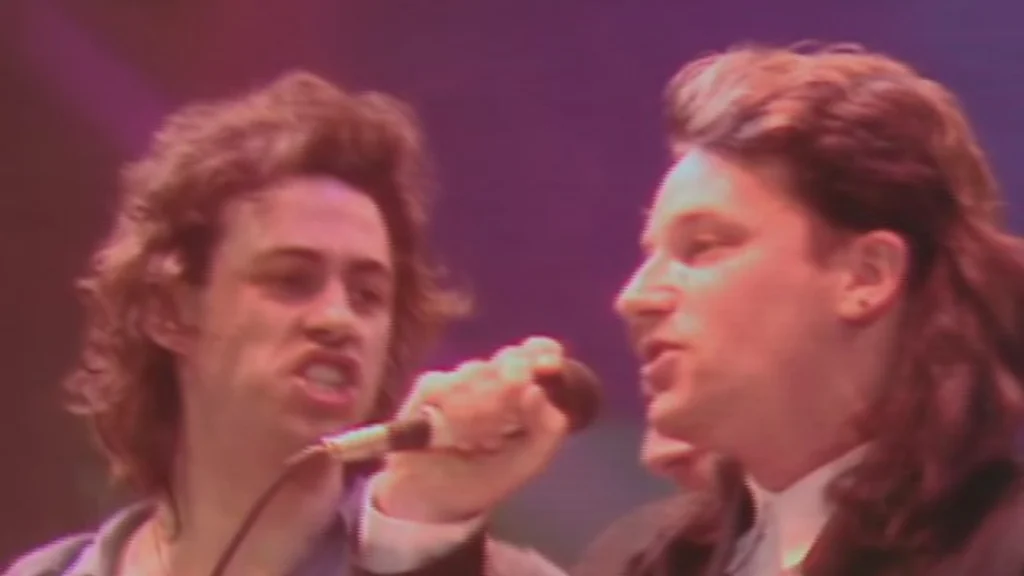
The story of Live Aid at 40 episode 3 reveals a critical evolution in celebrity activism, moving from heartfelt charity to calculated political justice. It chronicles how a new generation of challenges required a far more complex strategy than simply raising money. Twenty years after a song united the world to fight a famine, the architects of that movement realized that lasting change required dismantling the very systems that perpetuated poverty. This required a direct and sustained engagement with the world’s most powerful political leaders.
The initial impulse for this new chapter began with a sobering return to reality. The devastating Ethiopian famine of the 1980s was the catalyst for the original Live Aid, but two decades later, the underlying problems persisted. In 2003, Bob Geldof found himself back in Ethiopia, witnessing a new hunger crisis where 12 million people faced starvation. This frustrating realization sparked a fresh wave of anger. It became clear that one-off injections of humanitarian aid were not enough; the core issues of international debt and trade policies were strangling African nations’ ability to grow.
This journey from charity to justice is the central theme of Live Aid at 40 When Rock ’n’ Roll Took on the World – Series 1 Episode 3. The narrative explores the intricate campaign to pivot from public fundraising to political lobbying. It details the ambitious goal of placing Africa’s systemic problems at the top of the global agenda. To achieve this, activists had to secure a meeting with the G8, the group of the world’s wealthiest nations, and convince them to enact sweeping policy changes. The mission was no longer just to feed the world, but to change its economic rules.
The legacy of the original 1985 charity concert provided a powerful foundation. That historic event, broadcast via satellite broadcast from Wembley Stadium and Philadelphia, had proven that music could mobilize a global audience. Icons like Queen delivered legendary performances that captured the world’s attention. However, Bob Geldof and his allies understood that a repeat performance for global fundraising would miss the point. The new goal was not to get money from the public, but to get commitments from their governments.
This new crisis demanded a new approach. After witnessing the renewed suffering in Ethiopia, Geldof’s immediate instinct was to engage the highest level of political power. During the 2003 G8 summit in Evian, he secured an urgent phone call with UK Prime Minister Tony Blair. Shouting down the line, Geldof insisted that the cycle of famine and poverty would not be broken until the fundamental issue of national debt was addressed. Many African countries were spending vast sums servicing interest on loans, crippling their ability to fund basic services like healthcare and education.

Scan smarter. Create faster. Free.
Download QR & Barcode Studio — Create and scan unlimited QR codes & barcodes.
No paywalls. No limits. 100% Free.

This pivotal conversation planted the seed for a new kind of political instrument. Geldof proposed a commission that would thoroughly examine the root causes of poverty in Africa and recommend concrete solutions. Blair agreed to this initiative, which became the Commission for Africa. This was a critical step, moving the conversation from emergency relief to long-term economic strategy. The commission’s primary objective was clear: to convince world leaders to eliminate the crushing debt held by the world’s poorest nations.
Live Aid at 40 episode 3
From Charity to Justice: The Political Awakening of Live Aid at 40
The creation of the Commission for Africa marked a significant strategic shift. It was, as one observer noted, a report card for the Live Aid generation, transforming the public’s emotional response into a political agenda. The commission itself was a unique entity. It comprised 17 members, including African politicians and business leaders alongside representatives from G8 governments. This structure was designed to ensure the recommendations were both credible and politically viable. The initiative was Geldof’s idea, but having Prime Minister Blair as its chair gave it immense political weight, especially as the UK was set to host the G8 summit in 2005.
Blair’s motivation was twofold. He saw a noble cause worth fighting for, but his involvement also drew skepticism. Some viewed it as a good-faith effort, while others saw it as a narrative that suited Blair’s political image as a global savior. Regardless of the interpretation, his commitment was crucial. He had a track record and the political capital to push the agenda forward. As Blair himself noted, he wouldn’t have reacted so decisively to just anyone; it was Geldof’s unwavering commitment and deep knowledge of the issues that made the plan compelling.
The commission’s work culminated in a radical report. It laid out a clear road map for the upcoming G8 meeting at Gleneagles. The central demands were a 100% cancellation of debt for the poorest countries, a doubling of aid to £26 billion per year, and the removal of unfair trade barriers. This was the “bible” for what Blair and the activists hoped to achieve. It was an ambitious plan that would require immense political will to implement. Blair understood that he could not secure this deal alone. He needed public pressure to counter the inevitable political resistance.
The Dual-Pronged Attack: Engaging London and Washington
While Bob Geldof focused on leveraging his relationship with Tony Blair in the UK, another rock star was forging a parallel path in the United States. U2’s Bono had co-founded an organization called DATA, an acronym for its three main targets: Debt, Aids, and Trade. This group took a different approach. Instead of loud public campaigns, DATA focused on quiet, substantive, and data-driven lobbying. Their initial operation was small, described by one insider as “rinky-dink,” but their strategy was genius. Bono, the global superstar, would avoid public performances in Washington, focusing instead on becoming a policy expert.
The primary target was the administration of President George W. Bush. Bono’s team worked to secure a meeting with National Security Advisor Condoleezza Rice, a prospect that was initially met with skepticism. However, Rice, a U2 fan, agreed to the meeting. She and others were quickly impressed by Bono’s deep knowledge. He came armed not with rhetoric but with facts and figures, determined to know more than the political staffers he was meeting. This approach shocked people in Washington, who did not expect a celebrity to have such a firm grasp of policy details.
The most urgent issue Bono brought to the White House was the devastating HIV/Aids pandemic in Africa. At the time, an estimated 6,000 Africans were dying every day from a preventable and treatable disease. He made the case that while treatments existed, they were not accessible or affordable for those who needed them most. This moral argument resonated deeply with President Bush. The president, who had campaigned on the principle that all life is precious, was struck by the sin of omission—the failure to act when one has the power to do so. This conversation, rooted in shared faith and a sense of moral duty, proved to be a critical turning point in the campaign for humanitarian aid.
Live 8: Mobilizing the Public for Political Pressure
With political groundwork being laid in London and Washington, the campaign needed a massive public face. Tony Blair had made a deal with Geldof: “I’ll do the politics, you do the public.” This led to the creation of the Make Poverty History movement, a coalition of organizations dedicated to raising awareness. To launch the campaign with global authority, the organizers brought in Nelson Mandela, whose presence provided powerful African leadership. He delivered a stirring speech, declaring that the world’s poorest people were trapped in a prison of poverty and that it was time to set them free.
However, to truly capture the world’s attention and apply maximum pressure on the G8 leaders, a grander gesture was needed. Richard Curtis, a key organizer, suggested a second Live Aid. Geldof was initially a staunch refusenik, having sworn never to stage such an event again. But Bono found the perfect argument to change his mind. He pointed out that Paul McCartney could open the show by singing the line, “It was 20 years ago today,” from “Sgt. Pepper’s Lonely Hearts Club Band.” The poetry of that moment was undeniable, as it was almost exactly 20 years since the original Live Aid. Geldof was sold.
This new event was named Live 8. The concept was to hold a charity concert in every G8 capital city on the same day, a plan designed to ensure that no political leader could ignore the public’s demand for action. The goal was not global fundraising but to create a political mandate. As Geldof explained, nobody ever paid attention to G8 summits. Live 8 would ensure that journalists and the public were intensely focused on the agenda at Gleneagles. This time, the show was a tool for political leverage, a global spectacle with a very specific, non-monetary aim.
Gleneagles: The Climactic Deal in Live Aid at 40
The Live 8 concerts on July 2, 2005, were a monumental success in mobilizing the public. Millions gathered in cities from London to Philadelphia, and a worldwide audience estimated at over five billion tuned in. The event, however, was not without controversy. It drew criticism for the dominance of celebrities in the public space, a phenomenon dubbed “celebrocracy.” More pointedly, there was a significant lack of African musicians on the main stages, a failing Geldof later admitted by saying, “We fucked up.” Despite this, a concert was added in Johannesburg, where Nelson Mandela again lent his moral authority to the cause.
With the world watching, the G8 leaders gathered at Gleneagles in Scotland. The atmosphere was tense. The deal was not yet secured, and there was significant opposition. Bob Geldof and Bono were present, walking the corridors of power in a way that bemused President Bush. The final negotiations were intense, with German Chancellor Gerhard Schroeder proving to be a major obstacle. Geldof had previously confronted him at the Berlin Live 8 concert, publicly calling on him to support the deal. In the final hours at Gleneagles, Blair reportedly had Schroeder “up against a wall” until he finally gave in.
The summit was dramatically interrupted by the July 7th terrorist bombings in London. Blair immediately returned to the capital, and for a moment, it seemed the summit might collapse. However, President Bush urged him to go while the other leaders carried on, arguing that to stop would be to hand a victory to the terrorists.
The leaders agreed. When Blair returned, the deal was pushed across the line. The G8 committed to an extra $50 billion in aid by 2010, with $25 billion designated for Africa, alongside the cancellation of debt for the 18 poorest countries. It was a landmark achievement, one of the last great moments of global solidarity. The outcome, explored in Live Aid at 40 When Rock ’n’ Roll Took on the World – Series 1 Episode 3, represented the culmination of a two-decade journey from a simple song to a seismic shift in global politics.
When Rock Stars Became Diplomats: The Enduring Power of Purpose-Driven Fame
The journey from Wembley Stadium to the corridors of Gleneagles represents more than just the evolution of a movement—it’s a masterclass in how passion can mature into policy. What began as an emergency response to human suffering transformed into something far more sophisticated: a blueprint for leveraging celebrity influence to create lasting systemic change.
The genius of this transformation lies in recognizing that good intentions, no matter how well-funded, couldn’t break cycles that were fundamentally political in nature. Bob Geldof’s angry phone call to Tony Blair wasn’t just about another crisis—it was about admitting that two decades of charity had treated symptoms while the disease festered. The shift from “Feed the World” to “Change the World’s Rules” required abandoning the comfortable territory of moral clarity for the messy complexity of international economics and debt restructuring.
Perhaps most striking is how Geldof and Bono rewrote the celebrity activist playbook entirely. Instead of relying solely on star power and emotional appeals, they became policy wonks. Bono’s transformation from rock god to Washington insider—arriving at meetings armed with spreadsheets rather than just good intentions—revealed something profound about effective advocacy. Celebrity opens doors, but credibility keeps you in the room where real decisions get made.
The Live 8 concerts demonstrated this evolved approach brilliantly. Rather than asking audiences to open their wallets, organizers asked them to open their voices. The message was clear: your government has the power to end this suffering, and you have the power to make them act. This wasn’t charity theater—it was democracy in action, using the universal language of music to create political pressure at precisely the right moment.
The Gleneagles achievement—$50 billion in new aid commitments and debt cancellation for the world’s poorest nations—proved that this hybrid model could deliver tangible results. But perhaps more importantly, it established a template that continues to influence how causes gain traction in our interconnected world. The combination of grassroots mobilization, celebrity amplification, and insider political strategy has become the gold standard for modern advocacy movements.
Today, as we face challenges from climate change to global inequality that dwarf even the crises of the 1980s, the Live Aid evolution offers crucial lessons. The most effective change-makers understand that viral moments must be coupled with strategic thinking, that emotional resonance needs policy precision, and that sustainable progress requires changing systems, not just hearts and minds.
The story also serves as a reminder that influence—whether from fame, wealth, or platform—comes with the responsibility to use it wisely. The transformation from Live Aid to Live 8 shows what becomes possible when celebrities move beyond using their platforms for personal brand building and instead become genuine students of the issues they champion.
In an era where every cause competes for attention in an increasingly noisy digital landscape, the Live Aid legacy reminds us that lasting change still requires the ancient art of building coalitions, understanding power structures, and having the patience to play the long game. Sometimes the most revolutionary act isn’t staging another concert—it’s picking up the phone and demanding that those in power finally do their jobs.
FAQ Live Aid at 40 episode 3
Q: What was Live Aid at 40 episode 3 about?
A: Live Aid at 40 episode 3 chronicles the remarkable evolution of celebrity activism from heartfelt charity concerts to calculated political justice. Additionally, it explores how Bob Geldof and Bono transformed their approach after realizing that one-off humanitarian aid couldn’t break the cycles perpetuating African poverty. Furthermore, the episode details their strategic campaign to secure $50 billion in aid commitments and debt cancellation at the 2005 G8 summit.
Q: How did Live Aid evolve from charity to political activism?
A: The transformation began when Bob Geldof returned to Ethiopia in 2003, witnessing 12 million people facing starvation despite decades of charitable efforts. Consequently, he realized that international debt and unfair trade policies were strangling African nations’ growth potential. Therefore, the movement shifted focus from emergency relief to dismantling systemic barriers, requiring direct engagement with world leaders rather than public fundraising campaigns.
Q: What role did Bob Geldof play in this transformation?
A: Geldof became the driving force behind the political awakening, leveraging his Live Aid credibility to access world leaders. Notably, he secured an urgent phone call with UK Prime Minister Tony Blair during the 2003 G8 summit, demanding action on debt cancellation. Subsequently, he proposed the Commission for Africa, which became the blueprint for the Gleneagles agreement. Moreover, his unwavering commitment and deep policy knowledge convinced Blair to champion the cause.
Q: How did Bono’s approach differ from traditional celebrity activism?
A: Bono co-founded DATA, focusing on quiet, data-driven lobbying rather than loud public campaigns. Instead of relying solely on star power, he became a genuine policy expert, arriving at Washington meetings armed with facts and figures. Remarkably, he impressed National Security Advisor Condoleezza Rice and President Bush with his deep knowledge of HIV/AIDS statistics and debt structures. Essentially, he proved that celebrity opens doors, but credibility keeps you in decision-making rooms.
Q: What was the Commission for Africa and why was it important?
A: The Commission for Africa was a unique 17-member entity comprising African politicians, business leaders, and G8 government representatives. Importantly, it served as a report card for the Live Aid generation, transforming emotional public response into concrete political agenda. Furthermore, the commission’s radical report demanded 100% debt cancellation, doubled aid to £26 billion annually, and removal of unfair trade barriers. Ultimately, it became the “bible” for the Gleneagles negotiations.
Q: How did Live 8 differ from the original Live Aid concert?
A: Live 8 represented a fundamental strategic shift from fundraising to political pressure. Unlike Live Aid’s goal of raising money from the public, Live 8 aimed to secure commitments from governments. Additionally, concerts were held in every G8 capital city simultaneously, ensuring no political leader could ignore public demands. However, the event faced criticism for “celebrocracy” and lack of African musicians on main stages, which Geldof later acknowledged as a significant oversight.
Q: What were the key achievements at the Gleneagles G8 summit?
A: The Gleneagles summit delivered historic commitments despite dramatic interruptions from the July 7th London terrorist bombings. Ultimately, G8 leaders agreed to an extra $50 billion in aid by 2010, with $25 billion specifically designated for Africa. Moreover, they committed to canceling debt for the 18 poorest countries worldwide. Nevertheless, securing these achievements required intense final-hour negotiations, with German Chancellor Gerhard Schroeder proving the most resistant until Blair’s persistent pressure.
Q: Why did the focus shift from fundraising to political pressure?
A: The shift occurred because charitable donations couldn’t address the root causes of African poverty. Specifically, many African countries were spending vast sums servicing loan interest, crippling their ability to fund healthcare and education. Therefore, activists realized that systemic change required government-level policy reforms rather than individual generosity. Additionally, the scale of required investment—$50 billion annually—far exceeded what charitable campaigns could realistically achieve through public donations alone.
Q: What challenges did the activists face in securing political commitments?
A: Activists encountered significant resistance from G8 leaders concerned about economic implications and domestic political costs. Particularly challenging was overcoming skepticism about celebrity involvement in serious policy discussions. Furthermore, they needed to balance public spectacle with behind-the-scenes diplomacy, requiring careful coordination between grassroots mobilization and insider political strategy. Additionally, the July 7th terrorist attacks nearly derailed the summit entirely, threatening to overshadow poverty discussions with security concerns.
Q: What lessons does Live Aid at 40 offer for modern advocacy movements?
A: The Live Aid evolution demonstrates that sustainable change requires moving beyond viral moments to strategic long-term thinking. Essentially, effective advocates must combine emotional resonance with policy precision, understanding power structures rather than just public sentiment. Moreover, celebrities must become genuine students of their causes, developing credibility through expertise rather than relying solely on fame. Finally, successful movements require patience for coalition-building and the wisdom to engage decision-makers where real power resides.