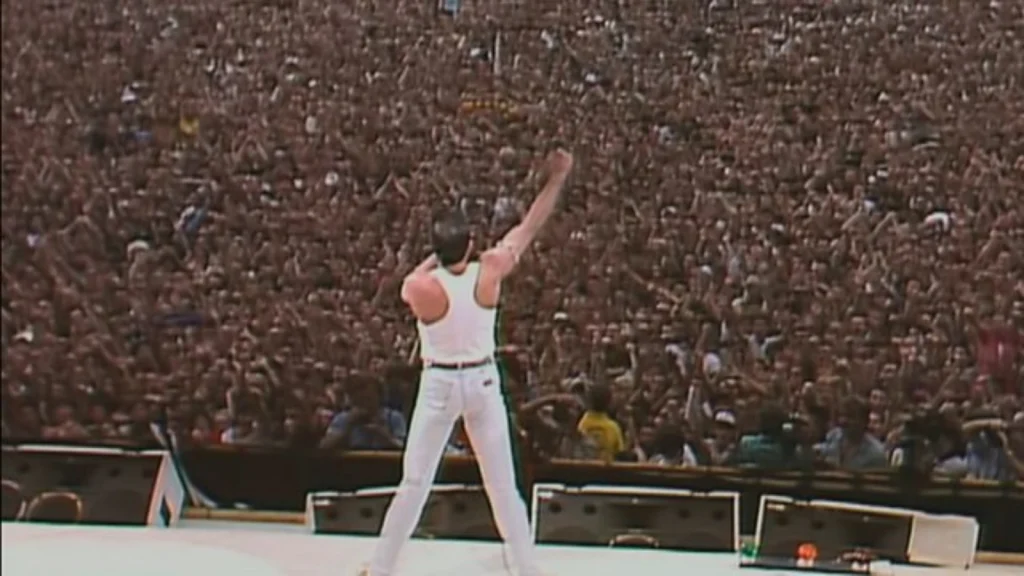
The groundbreaking global broadcast detailed in Live Aid at 40 episode 2 began not as a concert, but as a desperate, ambitious escalation of a charity single. After the phenomenal success of Band Aid’s “Do They Know It’s Christmas?”, organizer Bob Geldof realized the money raised, while significant, was a temporary fix for the sprawling famine in Ethiopia. Consequently, he conceived of a much grander scheme: a live, global concert designed to capture the world’s attention and unlock its generosity on an unprecedented scale. The idea was to create a moment so large it could not be ignored.
This new vision aimed to address the devastating famine in Ethiopia by leveraging the universal language of music. The core concept was a spectacular, 16-hour show held simultaneously on two continents. This dual-venue approach, linking London and Philadelphia, was a strategic move to unite the efforts of Band Aid in the UK and USA for Africa in the United States. Geldof envisioned a “global jukebox” that would be broadcast to nearly every television set on the planet, creating a shared experience that transcended borders and cultures. The goal was not just to raise money, but to forge a moment of global unity.
The scope of the project, as explored in Live Aid at 40 episode 2, was breathtakingly audacious for its time. In 1985, the technology to link two massive concerts and broadcast them live to over 150 countries was largely untested. It required coordinating seven locations and 16 satellites, a logistical feat that dwarfed even the Olympic Games. According to broadcast director Mike Mitchell, the team was venturing into uncharted territory. No one had ever attempted a continuous 16-hour live television broadcast before, making the entire enterprise a monumental gamble.
Initially, the idea was met with intense skepticism. Members of the Band Aid Trust considered the plan technically impossible and financially reckless. One trustee reportedly called Geldof “mad” and urged others to stop him, citing their complete lack of experience in promoting concerts. To overcome this, Geldof enlisted Harvey Goldsmith, one of the era’s most successful music promoters. Goldsmith recalled being brought into a trustees’ meeting where Geldof simply announced, “We’re doing the concert. Harvey’s doing it,” effectively steamrolling any opposition with sheer force of will.
Securing the star-studded lineup presented its own set of challenges. Geldof famously announced a roster of artists at a press conference before many had officially confirmed. He admitted to “winging it,” banking on the moral pressure from the success of the Band Aid and USA for Africa records to ensure performers would show up. Pete Townshend of The Who described Geldof’s recruitment method as “blackmail,” acknowledging the organizer’s passionate belief that made it impossible to refuse. This high-risk strategy ultimately paid off, assembling one of the greatest collections of musical talent ever seen.

Scan smarter. Create faster. Free.
Download QR & Barcode Studio — Create and scan unlimited QR codes & barcodes.
No paywalls. No limits. 100% Free.

However, the event was not without controversy. Organizers faced criticism for the lack of black performers, particularly on the London bill. A journalist pointed out that only 10% of the acts were black, prompting a defensive response from Geldof. He argued that the primary goal was to raise money by booking artists who were selling millions of records at that specific time. Others, however, contended that prominent black British artists could have been included. This debate highlighted the cultural and racial dynamics of the era, adding a layer of complexity to the humanitarian effort.
Live Aid at 40 episode 2
The Global Jukebox: Uniting the World Through Music
On July 13, 1985, the ambitious vision became a reality. At 12 noon in London, Status Quo walked onto the stage at Wembley Stadium and launched into “Rockin’ All Over the World.” For Geldof, that moment marked the end of his panic and the true beginning of the event. The concert was a unique hybrid of entertainment and philanthropy. While fans flocked to see their idols, the underlying charitable cause was ever-present. The broadcast seamlessly cut between performances, on-stage appeals, and updates on the fundraising totals, constantly reminding the global audience of the day’s urgent purpose.
The technological aspect of the concert was a marvel. Using a complex network of satellites, the broadcast connected Wembley Stadium in London with JFK Stadium in Philadelphia. This allowed for a continuous stream of music, alternating between the two venues. Viewers around the world, from Japan to the Soviet Union, were part of a single, massive audience estimated at 1.5 billion people. The production involved revolving stages to minimize downtime between acts and miles of cabling to support the sound and video feeds. It was, as one participant noted, a logistical nightmare that miraculously came together.
Despite the global scale, the fundraising started slowly. In the early hours, donations trickled in. The presenters and artists continually urged viewers to contribute, providing addresses and phone numbers. It took a combination of powerful performances and raw emotional appeals to truly open the floodgates. The initial figures, while substantial, were far from the staggering amounts that would eventually be raised. The event needed a catalyst, a moment that would transform the audience from passive viewers into active participants in the cause.
Defining Moments and Tipping Points in Live Aid at 40 episode 2
Several key performances became defining moments that elevated the concert from a music festival to a historic event. U2’s set became legendary when Bono, during an extended version of “Bad,” jumped off the stage and into the crowd to dance with a fan. While the rest of the band was furious—the move meant they had to cut their planned hit song, “Pride (In The Name Of Love)”—the spontaneous act of connection created an unforgettable television moment. Bono later admitted he was consciously looking for a way to break through the screen and connect with the global audience.
Another pivotal performance came from Queen. According to the transcript, Geldof was initially hesitant to include the band, viewing them as “overblown” and out of step with his post-punk sensibilities. However, their tight, 18-minute set of back-to-back hits was a masterclass in showmanship. Freddie Mercury held the entire stadium, and the global audience, in the palm of his hand. The performance is now widely regarded as one of the greatest in rock history and demonstrated the power of music to unify a massive crowd, becoming a standout memory of Live Aid at 40 episode 2.
The true emotional and financial tipping point, however, came from a combination of raw anger and shocking imagery. Frustrated by the slow pace of donations, Bob Geldof went on the BBC broadcast and delivered a now-famous, expletive-laden demand for money. Shortly after, David Bowie made a crucial decision. He cut one of his own songs to make time for a powerful, stark film from CBC showing the brutal reality of the famine. The video, set to the song “Drive” by The Cars, brought the horror of the situation directly into living rooms worldwide. The impact was immediate and profound; the phone lines for donations instantly collapsed under the surge of calls.
From London to Philadelphia: A Transatlantic Spectacle
As the day progressed in London, the American leg of the concert kicked off at JFK Stadium in Philadelphia. The event maintained its momentum, featuring a lineup of American music royalty. Madonna, then at the height of her fame, delivered a fiery performance. When a crowd member yelled for her to “take it off,” referencing a recent nude photo scandal, she famously retorted, “I ain’t taking shit off today! You might hold it against me ten years from now!” The moment captured her defiant and commanding stage presence.
A poignant moment occurred during Paul McCartney’s set. As he began to perform “Let It Be” at the piano, his microphone failed for the first two minutes, rendering his vocals inaudible to the stadium and global audience. In a display of spontaneous solidarity, Pete Townshend, David Bowie, and Alison Moyet rushed back onto the stage to sing backup, helping him carry the song until the technical issues were resolved. The mishap became an endearing memory, underscoring the collaborative and often chaotic spirit of the day.
Perhaps the most symbolic act of the transatlantic effort was Phil Collins’ journey. After performing his set with Sting at Wembley, he boarded a Concorde jet, flew to America, and took the stage in Philadelphia just hours later. This remarkable feat physically connected the two concerts and became a powerful metaphor for the event’s global ambition. Upon his arrival in Philadelphia, he sat at a piano and declared, “I was in England this afternoon. Funny old world, isn’t it?” before launching into his set, gluing the two halves of the concert together in the public imagination.
The American show culminated in an emotional finale with the performance of “We Are the World,” the anthem of the USA for Africa project. The stage filled with a sea of artists, a powerful visual representation of the music industry’s united front. The combination of iconic performances in both London and Philadelphia, linked by the unprecedented global broadcast, solidified the concert’s place in history as a truly transatlantic spectacle that harnessed the power of rock and roll for a humanitarian cause.
The Aftermath and Complexities of Humanitarian Aid
By the end of the 16-hour broadcast, Live Aid had raised an estimated $40 million, a figure that would grow substantially in the following weeks. The event was hailed as the greatest fundraising effort in history, and Bob Geldof was nominated for a Nobel Peace Prize. However, the success of raising the money marked the beginning of a new, more complex challenge: how to spend it effectively. The Band Aid Trust established a plan to allocate 60% of the funds to long-term development, with the remainder split between emergency relief and transportation.
Geldof embarked on a tour of sub-Saharan Africa to oversee the distribution of the humanitarian aid. He met with heads of state and aid officials, transforming from a rock star into an international figure in the world of relief work. The Band Aid organization made a strategic decision not to become an operational agency like Oxfam. Instead, it funded existing NGOs and agencies on the ground, providing them with resources like trucks and supplies. This approach allowed the funds to be deployed by experienced professionals already working in the affected regions.
The relief effort, however, soon became entangled in the complex and brutal politics of Ethiopia. The country’s Marxist government was conducting a forced resettlement program, which critics, including the French organization Doctors Without Borders (MSF), alleged was a violent campaign that had killed an estimated 100,000 people. MSF publicly condemned the program and called for a halt to food aid until it was modified, arguing that the aid was being used to support these deadly relocations. They were subsequently expelled from the country for their outspoken criticism.
This created a significant moral dilemma. Geldof and other established NGOs, like Oxfam and Save The Children, adopted a more pragmatic stance. They argued that their primary mandate was the “humanitarian imperative” to save lives, which required working within the existing political structures, however flawed. Geldof publicly defended trusting the government’s relief commission, stating that the experts on the ground did so. This position drew sharp criticism from those who believed that remaining silent made them complicit in the government’s atrocities. The controversy revealed the profound challenges of delivering aid in a conflict zone and the difficult compromises that often accompany such work.
When Rock Stars Meet Reality: The Enduring Paradox of Live Aid’s Legacy
Forty years later, Live Aid remains one of those rare cultural moments that managed to stop the world in its tracks. What began as Bob Geldof’s “mad” vision—dismissed by trustees and deemed technically impossible—transformed into a 16-hour global phenomenon that reached 1.5 billion people across seven time zones. The sheer audacity of linking London and Philadelphia through untested satellite technology, while coordinating the biggest names in music, seems almost quaint in our hyper-connected age. Yet perhaps that’s exactly why Live Aid’s achievement feels so remarkable: it was built on pure determination and the radical belief that music could move mountains.
The concert’s greatest triumph wasn’t just the $40 million raised or even those unforgettable performances—Bono leaping into the crowd, Queen’s masterful 18 minutes, Phil Collins’ transatlantic dash on the Concorde. It was the demonstration that popular culture could serve as a powerful catalyst for global consciousness. When David Bowie made space for that stark CBC famine footage set to “Drive,” he reminded everyone why they were watching. The phone lines collapsed not because of another guitar solo, but because the world’s living rooms suddenly filled with uncomfortable truth.
But Live Aid’s story doesn’t end with the final encore. If anything, the real drama began when the cameras stopped rolling and the hard work of distributing aid commenced. Geldof’s journey from rock star to reluctant diplomat reveals the thorny reality that good intentions must navigate: corrupt governments, forced relocations, and the agonizing choice between perfect principles and pragmatic life-saving. The clash between Doctors Without Borders and the broader aid community over Ethiopia’s brutal resettlement program exposed a fundamental tension that persists today—when does working within a flawed system become complicity with that system’s crimes?
This tension illuminates why Live Aid matters beyond its historical significance. In our current era of hashtag activism and viral fundraising campaigns, the concert’s legacy offers both inspiration and caution. Yes, popular culture can mobilize unprecedented global attention and resources. But the hard work begins when the spotlight fades and complex geopolitical realities intrude on our desire to help.
Today’s digital activists might learn from Geldof’s approach: his willingness to evolve from passionate organizer to pragmatic operator, even when that meant accepting uncomfortable compromises. The Band Aid Trust’s decision to fund existing NGOs rather than create their own operational agency showed strategic wisdom—recognizing that good intentions require experienced execution.
Live Aid proved that when music and moral urgency align, extraordinary things become possible. But it also revealed that saving lives often requires navigating moral gray areas that resist simple solutions. Perhaps that’s the concert’s most valuable lesson: authentic change demands both the soaring ambition to believe we can unite the world through song and the patient humility to work within the world as it actually exists. Forty years on, that balance between idealism and pragmatism remains as challenging—and as necessary—as ever.
FAQ Live Aid at 40 episode 2
Q: What was Live Aid?
A: Live Aid was a dual-venue benefit concert held simultaneously in London and Philadelphia on July 13, 1985. Additionally, it served as a groundbreaking fundraising effort to combat the devastating Ethiopian famine. The event transformed from Bob Geldof’s ambitious vision into a 16-hour global broadcast that reached an estimated 1.5 billion viewers worldwide through satellite technology.
Q: When did Live Aid take place?
A: Live Aid took place on July 13, 1985, beginning at 12 noon in London when Status Quo opened with “Rockin’ All Over the World.” Furthermore, the concert continued for 16 continuous hours, alternating between Wembley Stadium in London and JFK Stadium in Philadelphia. This unprecedented duration made it the longest live television broadcast ever attempted at that time.
Q: Who organized Live Aid?
A: Bob Geldof, the Irish musician and activist, conceived and organized Live Aid following the success of Band Aid’s “Do They Know It’s Christmas?” charity single. However, he enlisted Harvey Goldsmith, one of the era’s most successful music promoters, to handle the logistical complexities. Moreover, Geldof famously steamrolled opposition from skeptical Band Aid Trust members who considered the plan technically impossible.
Q: How many people watched Live Aid?
A: Live Aid reached an estimated 1.5 billion viewers across more than 150 countries, making it one of the most-watched events in television history. Consequently, this massive global audience represented roughly one-third of the world’s population at the time. The broadcast connected viewers from Japan to the Soviet Union through a complex satellite network spanning seven locations.
Q: Where were the Live Aid concerts held?
A: Live Aid featured two primary venues: Wembley Stadium in London and JFK Stadium in Philadelphia. Additionally, the dual-venue approach strategically united Band Aid efforts in the UK with USA for Africa initiatives in the United States. This transatlantic connection created Geldof’s vision of a “global jukebox” that transcended borders and cultures through satellite technology.
Q: What was the technological challenge of Live Aid?
A: Live Aid required coordinating seven locations and 16 satellites to broadcast live to over 150 countries—a logistical feat that surpassed even Olympic Games complexity. Furthermore, no one had previously attempted a continuous 16-hour live television broadcast, making the entire enterprise a monumental technological gamble. Broadcast director Mike Mitchell described the team as venturing into completely uncharted territory.
Q: How much money did Live Aid raise?
A: Live Aid raised an estimated $40 million by the end of the 16-hour broadcast, with additional funds growing substantially in subsequent weeks. However, fundraising started slowly in the early hours before powerful performances and emotional appeals opened the floodgates. The event was subsequently hailed as the greatest fundraising effort in history, earning Bob Geldof a Nobel Peace Prize nomination.
Q: What were some of the most memorable performances?
A: Queen delivered what many consider the greatest rock performance in history during their tight 18-minute set, with Freddie Mercury commanding the global audience. Additionally, Bono’s spontaneous leap into the crowd during U2’s “Bad” created an unforgettable television moment. Phil Collins’ remarkable Concorde journey from London to Philadelphia symbolized the event’s global ambition and physically connected both concerts.
Q: What controversies surrounded Live Aid?
A: Live Aid faced criticism for featuring only 10% black performers, particularly on the London bill, despite addressing African famine relief. Furthermore, Geldof defended this decision by arguing the primary goal was booking artists selling millions of records at that time. Critics contended that prominent black British artists could have been included, highlighting the cultural and racial dynamics of the era.
Q: What happened to the money raised by Live Aid?
A: The Band Aid Trust allocated 60% of funds to long-term development, with the remainder split between emergency relief and transportation. However, the relief effort became entangled in Ethiopia’s brutal politics, including forced resettlement programs that critics alleged killed 100,000 people. Consequently, this created moral dilemmas about working within flawed political structures versus maintaining the humanitarian imperative to save lives.