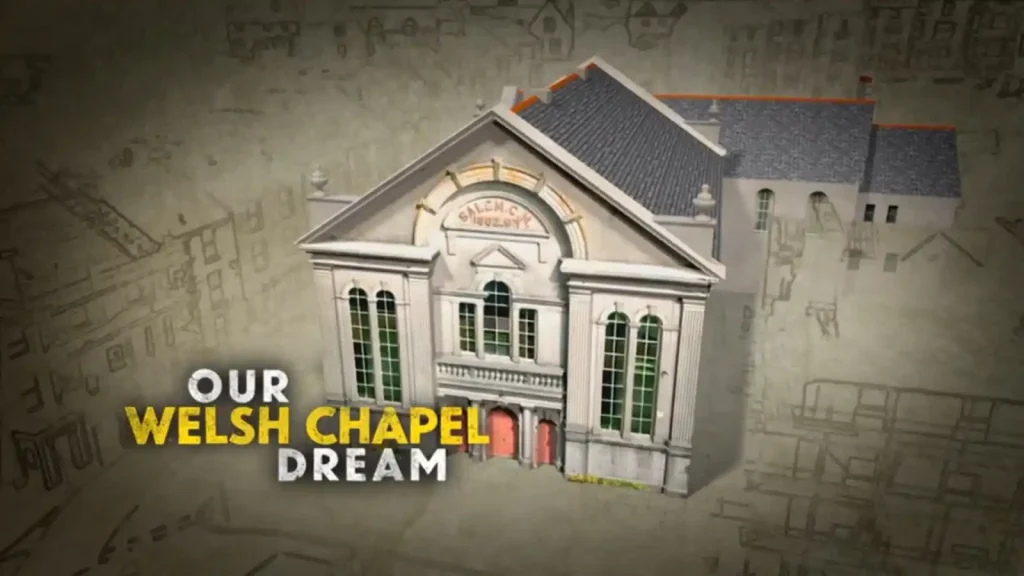
Our Welsh Chapel Dream 2026 episode 4 arrives at a pivotal moment in Keith and Marj’s extraordinary journey to transform a Grade II listed Welsh chapel into a fully functioning home and pottery studio. After months of structural work, planning battles, and the slow, painstaking business of restoring a building that has stood at the heart of its community for generations, this episode shifts the tone entirely. Before the Sunday school hall is handed over to builders and permanently converted into Marj’s pottery studio, Keith and Marj decide to throw one final celebration in the space — a farewell party that doubles as a homecoming for the chapel’s history, its music, and its people.
The decision to host a party in the Sunday school hall before its transformation is not simply a sentimental gesture. It reflects something deeper about the way Keith and Marj have approached this entire project. From the beginning, they have been acutely conscious that they are not merely renovating a building — they are stewards of a cultural heritage site that once served as a gathering place, a school, a concert hall, and a spiritual home for the local Welsh community. Choosing to bring singing back to the chapel one final time, before the walls are stripped and reordered for a new purpose, is an act of respect and recognition.
Home restoration at this scale rarely proceeds in a straight line. Keith and Marj have faced a succession of setbacks and surprises, as any major project on a Grade II listed building inevitably produces. Yet this episode demonstrates that the couple have also found ways to honour the building’s original character even as they reshape it for contemporary living. Interior design decisions that might seem purely aesthetic in a conventional home carry much heavier symbolic weight here. Every exposed stone wall, every restored window, every retained original fitting is a conversation between the present and the past.
The Sunday school hall itself is a remarkable space. Separate from the main chapel but architecturally connected to it, the hall has its own distinct atmosphere — lower ceilinged than the main worship space, more intimate, with a quality of light that makes it feel simultaneously functional and charged with memory. Keith and Marj have already lived alongside it long enough to understand its character, and they approach the task of temporarily converting it into a party venue with the same practical creativity they have brought to every other challenge on the site.
Love spoons appear in this episode as a handmade gift that Keith presents to Marj, carved by hand from wood. The love spoon is one of the oldest and most distinctive traditions in Welsh craft culture, originating as a gift exchanged between sweethearts and carrying a language of symbols that communicates devotion, fidelity, and shared life. In the context of Our Welsh Chapel Dream 2026 episode 4, the gesture sits at the intersection of personal love story and cultural heritage, quietly underlining the fact that what Keith and Marj are doing is not just a home restoration project — it is also a declaration of belonging, of choosing Wales and choosing each other.

Scan smarter. Create faster. Free.
Download QR & Barcode Studio — Create and scan unlimited QR codes & barcodes.
No paywalls. No limits. 100% Free.

The party, the love spoon, the singing, and the pottery studio conversion all arrive in the same episode, creating a kind of emotional density that rewards close attention. Each element connects to the others through threads of craft, community, and commitment. Meanwhile, the practical realities of the build continue pressing in: timelines, budgets, the particular demands of working within the constraints of a Grade II listed structure. Keith and Marj navigate all of this with a directness and warmth that makes the project feel genuinely human rather than aspirational television.
The broader significance of what they are doing in Our Welsh Chapel Dream 2026 episode 4 extends beyond their own lives. Welsh chapels are among the most endangered building types in Britain. Hundreds have been demolished, converted into flats, or simply left derelict as congregations declined throughout the twentieth century. Each successful restoration — especially one that maintains community connection and respects historical heritage — represents a small but meaningful counterweight to that trend. Keith and Marj are demonstrating that these spaces can be given new life without being stripped of their identity.
By the time the party preparations begin in earnest, the episode has established its central argument: that home restoration and cultural stewardship are not competing ambitions but deeply complementary ones. The singing that fills the chapel during the farewell gathering is not a nostalgic performance staged for the cameras. It is a genuine act of continuity, a thread connecting the chapel’s living past to its carefully considered future. With that foundation in place, the episode moves into its most active and revealing phase.
Our Welsh Chapel Dream 2026 episode 4
Our Welsh Chapel Dream 2026 Episode 4 and the Last Use of the Sunday School Hall
The Sunday school hall has served many purposes over the decades since the chapel was built. Originally a space for religious education and community instruction, it later housed social gatherings, local events, and the informal life of a congregation that used the building for far more than Sunday worship. By the time Keith and Marj acquired the chapel, the hall was empty, dusty, and waiting — still structurally sound but no longer serving any active function.
Their plan to convert it into Marj’s pottery studio is one of the most logistically significant decisions of the entire project. A pottery studio requires specific infrastructure: robust flooring capable of handling heavy equipment, plumbing for clay work and glazing, appropriate ventilation, and good natural light. Adapting a historic Sunday school hall to meet those requirements without damaging its fabric demands careful planning and a close working relationship with conservation specialists and planning authorities.
Before any of that work begins, however, Keith and Marj choose to use the hall one final time in its original capacity — as a gathering place for people. Transforming it temporarily into a party venue involves clearing the accumulated materials of the build, setting up lighting, arranging seating, and creating an atmosphere hospitable enough to welcome guests. The effort is considerable, but the motivation is clear. This space deserves a proper farewell before it becomes something new.
The party itself draws in neighbours, friends, and people with long connections to the chapel and the surrounding community. Their presence is not decorative. These are people who remember the hall in its active years, who have their own memories of the space, and who understand at a personal level what it means for this building to survive and be cared for. Their attendance transforms the event from a private celebration into something more genuinely communal.
Bringing Singing Back to the Chapel in Our Welsh Chapel Dream 2026 Episode 4
Of all the elements woven through this episode, the return of singing to the chapel carries perhaps the most emotional resonance. Welsh choral culture is one of the defining expressions of Welsh identity, rooted in nonconformist chapel tradition and inseparable from the kinds of buildings Keith and Marj are now restoring. The chapel was built, in part, to be filled with voices. Its acoustics were designed for communal singing. To let that function lapse entirely, even temporarily, is to lose something essential about what the building is.
Keith organises the singing as part of the farewell party, bringing in voices to fill the space one more time before the interior design and construction work changes its acoustic character. The effect, once the singing begins, is striking. The building responds to music with an immediacy that underlines how well-suited it was always to this purpose. The reverberation in the main chapel space, the way sound moves through the connected rooms, the sense that the walls themselves are participants in the performance — all of this becomes briefly and vividly audible.
For Marj, the moment holds particular meaning. She is the one who will ultimately work in the pottery studio that replaces the Sunday school hall’s former life. The studio will be her creative space, shaped to her specific needs as a potter. Yet she is also fully aware of what the space is giving up in order to become something new, and the singing serves as both acknowledgement and tribute. Home restoration of this kind asks its inhabitants to hold two timelines simultaneously: the history of the building and the life they are building within it.
The decision to document the singing as part of Our Welsh Chapel Dream 2026 episode 4 also reflects a broader commitment to treating cultural heritage as a living rather than merely archival concern. This is not a museum reconstruction of what once happened here. These are real people singing in a real space, responding to its qualities and its history with genuine feeling. The distinction matters, because it reinforces the sense that what Keith and Marj are doing is an active and continuing conversation with the past rather than a performance of nostalgia.
Keith’s Love Spoon and the Language of Welsh Craft Tradition
The love spoon that Keith presents to Marj in this episode arrives with considerable cultural weight. Love spoons have been carved in Wales since at least the seventeenth century, beginning as gifts made by young men for the women they hoped to court. Each spoon incorporated symbolic carved elements — chains indicating a desire to be bound together, horseshoes for luck, hearts for love, balls within cages representing the children a couple hoped to have. Over time, the tradition became one of the most recognisable expressions of Welsh craft culture, blending functional skill with deeply personal symbolic communication.
Keith’s decision to carve a love spoon by hand places him within that tradition deliberately and thoughtfully. The physical effort involved in carving a spoon from a single piece of wood — the patience required, the precision of the knife work, the accumulated small decisions about shape and proportion — mirrors in miniature the larger effort of the chapel restoration itself. Both activities demand sustained attention, respect for material, and a willingness to invest time in something that cannot be hurried.
The spoon functions within the episode as a personal counterpoint to the public and communal dimensions of the party and the singing. While the farewell gathering is about the chapel’s relationship with its community, the love spoon is about Keith and Marj’s relationship with each other. The chapel project has been a shared undertaking from the beginning, and the spoon acknowledges that. It is a gift that says: this is what we are doing together, and it means something.
In the broader context of home restoration and cultural heritage, the love spoon episode is a reminder that the people undertaking these projects bring their own cultural identities to the work. Keith and Marj are not simply renovating a Welsh building — they are engaging with Welsh culture in a direct and personal way, learning its traditions, participating in its practices, and finding ways to make those practices part of their own lives.
Our Welsh Chapel Dream 2026 Episode 4 and the Pottery Studio Conversion
The conversion of the Sunday school hall into Marj’s pottery studio represents one of the most technically demanding aspects of the entire chapel project. The Great Pottery Throw Down, the Channel 4 competition series in which Marj has participated, has given her a high level of professional skill and a clear understanding of what a working studio requires. Applying that knowledge to the specific constraints of a Grade II listed building calls for creative problem-solving at every stage.
The structural requirements of a pottery studio diverge significantly from those of a conventional domestic room. Clay is heavy, and large quantities of it need to be stored and moved efficiently. Kilns require dedicated electrical circuits and adequate ventilation. Glazing work produces waste that must be managed carefully to avoid contaminating drainage systems. Wheel-throwing generates noise and vibration. All of these factors need to be accommodated within a building whose every significant alteration requires planning permission and conservation officer approval.
The planning dimension of the studio conversion has been a consistent source of complexity throughout the project. Working within a Grade II listed structure means that even sympathetic and reversible changes require formal consent. Keith and Marj have navigated this process with patience, and the episode shows the results of that patience beginning to materialise as the conversion moves from planning into early execution.
The interior design of the studio space draws on the Sunday school hall’s existing character rather than trying to suppress it. Original features — exposed brickwork, the quality of the windows, the proportions of the room — inform the aesthetic of the studio rather than being concealed behind new surfaces. This approach to interior design is consistent with the philosophy Keith and Marj have applied throughout the chapel: work with what is there rather than against it, and let the history of the space inform its new identity.
The DIY Home Ethic and Historical Heritage in Our Welsh Chapel Dream 2026 Episode 4
One of the defining characteristics of the chapel project is the degree to which Keith and Marj have taken on work themselves. The DIY home dimension of the project is not merely a cost-saving measure, though the savings are real and significant on a project of this scale. It reflects a genuine belief that hands-on engagement with the building — understanding how it is put together, learning its materials and its methods — produces better outcomes than delegation alone.
Keith in particular has developed skills through the project that he did not arrive with. Stone work, joinery, basic plumbing, decorating to conservation standards — each phase of the build has required him to learn new techniques and apply them with enough precision to satisfy both his own standards and those of the conservation authorities. The love spoon carving is, in some ways, an extension of this ethic: taking time to make something by hand, with care and skill, because the making itself has value.
The historical heritage dimensions of the project set specific parameters around what DIY intervention is possible and appropriate. Not everything can be attempted by an enthusiastic amateur, and certain aspects of the restoration require specialist contractors with experience in historic buildings. Keith and Marj have understood from the beginning where those boundaries lie, and the credibility of the project rests in part on that understanding. DIY home renovation and formal heritage conservation are not in conflict here — they operate in different registers and complement each other effectively.
Working on a Grade II listed building also means that every decision leaves a record. Planning applications, conservation officer correspondence, contractor specifications — all of this documentation accumulates into an archive of the project that will outlast the individuals involved and become part of the building’s historical record. Keith and Marj are aware of this, and it adds a layer of responsibility to their decision-making that most home renovation projects simply do not carry.
Our Welsh Chapel Dream 2026 Episode 4: Community, Continuity, and What Comes Next
As the farewell party draws to a close and the singing fades from the Sunday school hall, the episode arrives at a natural point of transition. The hall will now move forward into its next life as a pottery studio. The main chapel continues its own slow transformation into a family home. The external fabric of the building, already substantially restored, stands as evidence of what sustained effort and careful planning can achieve on a structure of this age and significance.
The community connections established through the party are not incidental. Keith and Marj have always been conscious that buying a chapel carries social implications that buying an ordinary house does not. The building had a congregation, a history, and a network of people for whom it holds meaning. Maintaining those connections — inviting people back, sharing the project with them, treating their memories of the space as relevant rather than obsolete — has been a consistent thread through the series, and this episode brings it to a particularly clear expression.
The cultural heritage significance of the project extends beyond the building itself. Welsh chapels represent a specific form of nonconformist architecture that flourished in the nineteenth and early twentieth centuries, shaped by the particular spiritual and social priorities of Welsh nonconformism. Their interior design, their acoustic qualities, their relationship to the communities that built them — all of these characteristics make them irreplaceable. When a chapel is demolished or stripped of its character, something genuinely irretrievable is lost. When one is restored with the attention and seriousness that Keith and Marj have brought to this project, it demonstrates what is possible.
The pottery studio, when complete, will be both a working professional space and a continuation of the chapel’s identity as a place where making happens — where skill is applied to material, where process and patience produce results that endure. The connection between Marj’s practice as a potter, the craft traditions represented by Keith’s love spoon, and the chapel’s own history as a place shaped by communal skill and collective effort is not forced. It emerges naturally from the project itself, from the choices Keith and Marj have made at every stage.
Grade II Listed Constraints and Interior Design Philosophy in Our Welsh Chapel Dream 2026 Episode 4
Working within Grade II listed status shapes virtually every practical decision Keith and Marj make. The designation exists to protect buildings of special architectural or historic interest, and it imposes a framework of obligations and permissions that runs through the project like a structural element in its own right. Understanding that framework — knowing what requires consent, what can be done under permitted development, what will meet conservation officer expectations — has been essential to the project’s progress.
Interior design decisions are subject to the same framework as structural ones. Choosing materials, finishes, and fittings that are appropriate to the building’s age and character is not simply a matter of aesthetic preference but a planning requirement. Keith and Marj have consistently chosen approaches that work sympathetically with the building’s existing fabric, and the episode shows the results of that philosophy in the spaces already completed.
The Sunday school hall, in its transitional state between its original use and its future as a studio, offers a particularly clear view of the building’s inherent character — before new finishes are applied and before the infrastructure of the pottery studio changes the room’s proportions and surfaces. Its original qualities are visible in a way they may not be once the conversion is complete, and the farewell party captures them at this precise moment of transition.
The episode closes with Keith and Marj looking forward to the next phase of work, their sense of purpose undiminished by the scale of what remains to be done. Our Welsh Chapel Dream 2026 episode 4 is, in the end, a portrait of a project that has found its rhythm — one in which home restoration and historical heritage, DIY commitment and professional conservation, personal love story and communal responsibility all coexist within the same extraordinary building.
FAQ Our Welsh Chapel Dream 2026 episode 4
Q: What is Our Welsh Chapel Dream and who are Keith and Marj?
A: Our Welsh Chapel Dream follows Keith and Marj, a couple who purchased a Grade II listed Welsh chapel and are converting it into a family home and working pottery studio. The series documents their hands-on approach to chapel renovation, balancing DIY home improvements with the strict requirements of listed building conservation.
Q: What happens in Our Welsh Chapel Dream 2026 episode 4?
A: Episode 4 focuses on the final use of the Sunday school hall before its conversion into Marj’s pottery studio. Keith and Marj transform the space into a party venue, invite the local community, and bring singing back to the chapel one last time. Additionally, Keith presents Marj with a hand-carved love spoon as a personal tribute to their shared journey.
Q: Why is the Sunday school hall being converted into a pottery studio?
A: Marj is an experienced potter, having competed on The Great Pottery Throw Down, and requires a dedicated professional workspace. The Sunday school hall offers the size and structural potential needed for kilns, clay storage, and glazing equipment. However, converting a Grade II listed space demands formal planning consent and close cooperation with conservation authorities throughout the home restoration process.
Q: What challenges does Grade II listed status create for the chapel renovation?
A: Grade II listed status means virtually every significant alteration requires planning permission. Keith and Marj must use materials sympathetic to the building’s historical heritage, satisfy conservation officers, and document every intervention formally. Furthermore, even interior design choices — such as wall finishes and fittings — must align with the building’s original character rather than purely contemporary preferences.
Q: What is the cultural significance of bringing singing back to the chapel?
A: Welsh choral singing is inseparable from nonconformist chapel culture. These buildings were acoustically designed for communal voices, and their cultural heritage is bound up with music and congregation. By organising a farewell singing gathering, Keith and Marj acknowledge the chapel’s original identity. This act of continuity honours the historical heritage of the space before its interior design is permanently altered.
Q: What is a Welsh love spoon and why does Keith give one to Marj?
A: A Welsh love spoon is a hand-carved wooden gift dating back to at least the seventeenth century. Carved symbols — hearts, chains, and horseshoes — each carry specific meanings relating to love, fidelity, and shared life. Keith carves one by hand for Marj as a personal expression of their partnership. The gesture connects their relationship to Welsh craft tradition and mirrors the patient, skilled effort the chapel renovation demands.
Q: How do Keith and Marj approach DIY home work on a listed building?
A: Keith and Marj take on a significant proportion of the physical work themselves, developing skills in stonework, joinery, and conservation-standard decorating as the project progresses. However, they clearly distinguish between what enthusiastic DIY home effort can achieve and where specialist historic building contractors are essential. This balanced approach keeps costs manageable while maintaining the standards that Grade II listed restoration requires.
Q: Why are Welsh chapels considered important examples of cultural heritage?
A: Welsh chapels represent a distinct form of nonconformist architecture that flourished between the nineteenth and early twentieth centuries. Their interior design, acoustics, and community function reflect the specific spiritual and social values of Welsh nonconformism. Hundreds have been demolished or stripped of character as congregations declined. Each successful home restoration therefore preserves an irreplaceable piece of historical heritage and demonstrates that sensitive reuse remains achievable.
Q: How does Our Welsh Chapel Dream 2026 episode 4 handle the relationship between community and renovation?
A: Keith and Marj actively maintain ties with people who hold personal memories of the chapel. The farewell party invites neighbours and long-standing community members back into the space before construction changes it. Rather than treating the building’s past as a closed chapter, they incorporate community connection as an ongoing responsibility. This approach distinguishes their chapel renovation from a purely private home restoration project.
Q: What does the pottery studio conversion reveal about the overall interior design philosophy of the project?
A: Rather than concealing original features, Marj’s studio design works with the Sunday school hall’s existing proportions, brickwork, and natural light. This approach reflects the interior design philosophy applied throughout the chapel: retain what is authentic, adapt what is necessary, and allow the building’s historical heritage to inform its new identity. The studio will consequently serve as both a professional workspace and a continuation of the chapel’s long tradition as a place of making and craft.
Thank you