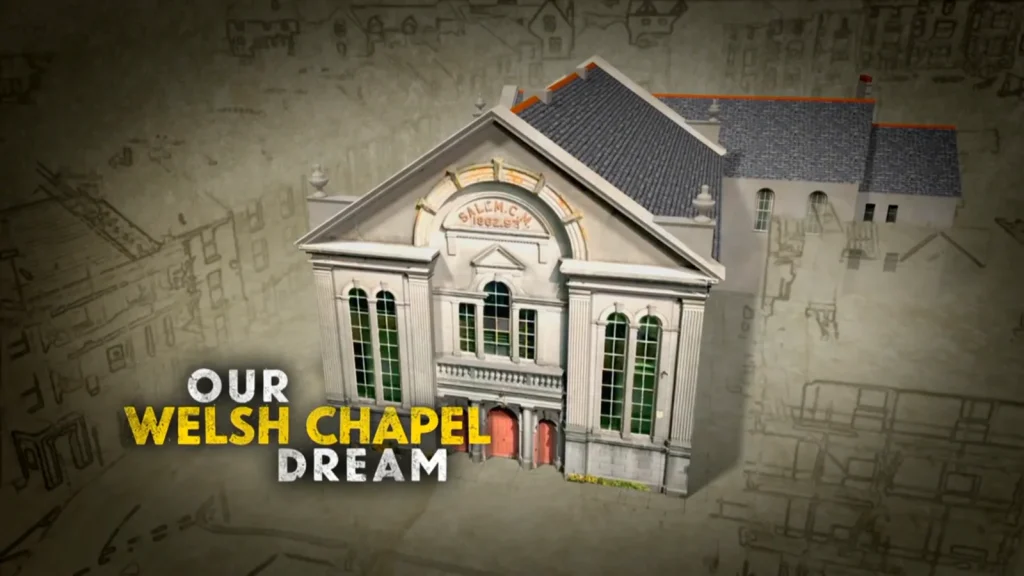
Our Welsh Chapel Dream episode 7 – Restoring Dreams: The Victorian Parlour Bathroom
In episode seven of “Our Welsh Chapel Dream,” viewers witness an extraordinary transformation. Keith and Marj continue their ambitious journey to convert a Grade 2 listed chapel in Porcelli, North Wales into their forever home. Their latest focus? Creating a Victorian parlour-inspired bathroom that defies convention and celebrates their unique design sensibilities.
The episode begins with the couple explaining their vision for the former Sunday school’s old kitchen. Rather than crafting a traditional bathroom, they envision a Victorian parlour complete with a sofa, drinks trolley, and Marj’s much-coveted standard lamp. Additionally, they plan to incorporate a walk-in shower, jade green bath, and black walls. This bold design choice immediately establishes the episode’s central theme: creating spaces that reflect personal taste rather than following convention.
Throughout the renovation, we observe Keith and Marj’s resourcefulness and commitment to preservation. They repurpose the chapel’s original pews to create a partition wall, demonstrating their dedication to incorporating historical elements. Furthermore, they install a second-hand 1950s cast iron Art Deco bath, weighing nearly 200 kilograms. These choices not only reduce waste but also maintain the chapel’s character while adding new layers of history.
The couple’s passion for craftsmanship shines throughout this episode. Keith creates a bespoke candlestick holder inspired by Hans Koper’s work at Coventry Cathedral. Meanwhile, Marj handcrafts a fringed standard lamp that pays homage to her childhood memories of her great-uncle Harry’s velvety parlour. These personal touches transform the bathroom into something truly unique and meaningful.

Scan smarter. Create faster. Free.
Download QR & Barcode Studio — Create and scan unlimited QR codes & barcodes.
No paywalls. No limits. 100% Free.

However, the renovation isn’t without its challenges. Keith experiences a moment of overwhelm midway through the episode. Standing in the chapel hall, he expresses frustration with the chaos and magnitude of the project. This vulnerability provides a glimpse into the emotional toll of such an ambitious undertaking. Yet the couple’s mutual support ultimately sees them through this difficult moment.
The episode also highlights the importance of community. Local builder Hill helps construct the partition wall, while friends assist with moving the heavy bath. Professional sign writer Andy Misselbrook adds gold lettering to the bathroom door. These contributions underscore how the project has become a community effort, with locals investing in Keith and Marj’s vision.
A particularly poignant excursion takes the couple to Trawsfynydd nuclear power station. This brutalist structure, designed by Sir Basil Spence, serves as an unexpected source of inspiration. Keith and Marj appreciate its unapologetic design, drawing parallels to their own bathroom vision. This scene effectively illustrates their appreciation for bold, divisive aesthetics that aren’t “for everyone.”
Another significant journey leads them to Coventry Cathedral, also designed by Spence. Here, Keith finds inspiration in Hans Koper’s candlesticks adorning the altar. This creative pilgrimage connects their small, personal project to larger architectural and artistic traditions. Moreover, it demonstrates how they thoughtfully source ideas rather than simply following interior design trends.
The episode culminates with the reveal of the completed bathroom. The transformation is remarkable. Black walls create a dramatic backdrop for the jade green bath. The repurposed pews form an elegant partition between the practical shower area and the Victorian parlour space. Ship cargo lights cast a warm glow, while Keith’s handcrafted candlestick and Marj’s fringed lamp add deeply personal elements.
The final scene shows the couple enjoying a celebratory drink from their bathroom drinks trolley. This moment of achievement perfectly captures the joy and satisfaction of seeing their unconventional vision realized. Keith’s comment, “What’s convention? You know, what’s normal? It doesn’t matter, does it?” encapsulates the episode’s underlying message about authentic self-expression.
“Our Welsh Chapel Dream” succeeds as a renovation show because it transcends the before-and-after formula. Instead, it delves into the philosophy behind design choices and the emotional journey of creation. Keith and Marj aren’t simply renovating a building; they’re crafting spaces that reflect their identities, histories, and artistic sensibilities.
The episode’s production values enhance this narrative. Crisp cinematography captures both the grand scale of the chapel and the intricate details of craftsmanship. Meanwhile, thoughtful editing juxtaposes the couple’s initial vision with the completed space, highlighting the remarkable transformation. Additionally, the soundtrack complements the emotional beats without overwhelming them.
Our Welsh Chapel Dream episode 7
Though primarily focused on the bathroom renovation, the episode skillfully weaves in broader themes. It explores the balance between preservation and innovation, the value of craftsmanship in a disposable culture, and the courage to follow personal vision rather than convention. These themes give the episode depth beyond typical renovation programming.
One criticism might be that certain technical aspects of the renovation receive limited attention. Viewers interested in practical details might want more information about costs, timeline challenges, or specific installation techniques. However, this focus on the emotional and artistic aspects of renovation rather than technical details is clearly an intentional choice.
Overall, episode seven of “Our Welsh Chapel Dream” delivers an inspiring example of creative vision and determined execution. Keith and Marj’s Victorian parlour bathroom stands as a testament to their artistic sensibilities and commitment to creating truly personal spaces. As they toast their achievement at the episode’s end, viewers can’t help but feel invested in their continuing journey.
The episode closes with a teaser for the next installment, promising a transformation of the bedroom space. Judging by their bathroom creation, viewers can expect another bold, beautiful and deeply personal interpretation of what makes a house a home.
Embracing Unconventional Design: The Heart of Home Renovation
Keith and Marj’s Victorian parlour bathroom represents more than just an innovative design concept. Instead, it stands as a powerful testament to authentic self-expression in home renovation. Their willingness to challenge conventional bathroom design transforms a utilitarian space into a personal sanctuary that tells their unique story.
Throughout this journey, we’ve witnessed how meaningful design emerges from personal history and experiences. Marj’s childhood memories of her great-uncle’s parlour, for instance, directly influenced their bathroom’s aesthetic. Similarly, Keith’s artistic background enriched the space with handcrafted elements that mass-produced items simply cannot replicate.
The couple’s approach also highlights the value of sustainable renovation practices. By repurposing original chapel pews and installing second-hand fixtures, they demonstrate how preservation can coexist with innovation. This thoughtful balance honors the building’s heritage while creating spaces suited for modern living.
Furthermore, their renovation philosophy reminds us that our homes should reflect who we are rather than follow passing trends. The black walls, jade bath, and Victorian-inspired elements might not appeal to everyone, yet they perfectly embody Keith and Marj’s distinctive taste and vision.
Community involvement has likewise played a crucial role in bringing their dreams to life. From local builders to helpful neighbors, these contributions underscore how meaningful renovation often extends beyond the homeowners themselves. The project has clearly fostered connections within their new Welsh community.
Their creative excursions—whether to brutalist power stations or magnificent cathedrals—further exemplify how inspiration can emerge from unexpected sources. These journeys remind us to look beyond conventional design resources when seeking ideas for our own spaces.
Ultimately, “Our Welsh Chapel Dream” offers viewers more than renovation entertainment. It provides a blueprint for approaching home design with courage, creativity, and personal conviction. Keith and Marj teach us that creating truly meaningful spaces requires embracing our unique perspectives rather than conforming to standard design formulas.
As they continue transforming their Welsh chapel, one room at a time, they inspire us all to consider: What personal stories might our own homes tell if we designed them with similar authenticity and vision?
FAQ Our Welsh Chapel Dream episode 7
Q: What makes Victorian parlour bathrooms unique in home renovation?
A: Victorian parlour bathrooms blend functional bathing spaces with the comfort and elegance of traditional Victorian sitting rooms. Unlike conventional bathrooms, these spaces incorporate elements like sofas, standard lamps, and drinks trolleys alongside bathing fixtures. Furthermore, they typically feature rich color palettes, ornate detailing, and vintage fixtures that create a sense of historical opulence. This approach transforms an otherwise utilitarian space into a luxurious retreat where one might actually want to spend leisure time beyond basic hygiene needs.
Q: How can homeowners incorporate historical elements into modern bathroom designs?
A: Homeowners can seamlessly blend history with modernity by repurposing original architectural features as focal points. For instance, consider transforming wooden pews into partition walls or cabinets, or converting bread ovens into distinctive storage niches. Additionally, incorporating period-appropriate colors, fixtures, and accessories can honor a building’s heritage. Moreover, sourcing authentic vintage pieces like claw-foot tubs or antique mirrors adds genuine historical character. Finally, balancing these elements with modern conveniences like efficient plumbing and lighting creates a space that respects the past while meeting contemporary needs.
Q: What are the challenges of renovating bathrooms in listed or historic buildings?
A: Renovating bathrooms in listed buildings presents several unique challenges beyond standard renovations. First, preserving original features while adding modern plumbing often requires creative problem-solving and specialized expertise. Second, obtaining proper permissions and adhering to conservation regulations can significantly extend project timelines. Additionally, addressing hidden issues like rot, dampness, or outdated electrical systems frequently uncovers unexpected costs. Furthermore, finding appropriate materials that match historical elements sometimes necessitates custom fabrication. Despite these obstacles, the resulting spaces offer unparalleled character and historical significance that new builds simply cannot replicate.
Q: How important is craftsmanship in creating unique bathroom spaces?
A: Craftsmanship plays an essential role in creating truly unique bathroom spaces with soul and personality. Hand-crafted elements like custom ceramics, bespoke lighting, or hand-stitched textiles add irreplaceable character that mass-produced items cannot achieve. Moreover, these artisanal touches often become the focal points that define the room’s identity. Additionally, supporting skilled artisans preserves traditional techniques while creating one-of-a-kind features for your home. In fact, the imperfections and variations inherent in handmade pieces bring warmth and authenticity to spaces that might otherwise feel sterile or generic.
Q: Where can homeowners find inspiration for unconventional bathroom designs?
A: Unconventional bathroom inspiration can emerge from surprisingly diverse sources beyond typical home design magazines. For instance, architectural landmarks like cathedrals or historic buildings offer lessons in proportion, materials, and lighting. Additionally, personal memories and family histories might suggest unique color schemes or styling elements with emotional resonance. Furthermore, unexpected locations such as industrial sites, theaters, or hotels can spark innovative spatial concepts. Above all, the most distinctive designs often draw from the homeowner’s authentic passions and experiences rather than following temporary trends in the wider design world.
Q: What sustainable practices can be incorporated into bathroom renovations?
A: Sustainable bathroom renovations embrace several eco-friendly approaches that reduce environmental impact while creating distinctive spaces. First, repurposing existing fixtures and architectural elements significantly decreases waste while preserving character. Additionally, sourcing second-hand items like vintage baths or sinks combines sustainability with unique aesthetic appeal. Furthermore, installing water-efficient fixtures and proper insulation reduces ongoing resource consumption. Meanwhile, choosing natural, non-toxic finishes improves indoor air quality and minimizes chemical pollution. Ultimately, these sustainable practices often result in more characterful, healthier spaces with compelling stories behind their creation.
Q: How can color choices transform a bathroom’s atmosphere?
A: Color selections profoundly influence a bathroom’s emotional impact and perceived character. Bold, dramatic choices like black walls create intimate, cocooning spaces that feel luxurious and unexpected. In contrast, vibrant accent colors against neutral backgrounds can highlight architectural features or statement fixtures. Additionally, color psychology suggests that blues promote tranquility while greens connect to nature and renewal. Furthermore, unexpected color combinations can transform ordinary bathrooms into extraordinary personal statements. When selecting colors, consider how different lighting conditions will affect perception throughout the day for a complete understanding of the palette’s impact.
Q: What role does community support play in ambitious renovation projects?
A: Community involvement provides crucial practical and emotional support during challenging renovation projects. Local craftspeople and builders bring invaluable regional knowledge about materials, techniques, and building characteristics specific to the area. Additionally, neighbors can offer assistance with labor-intensive tasks like moving heavy fixtures or providing temporary storage. Furthermore, community encouragement helps sustain motivation during inevitable setbacks and frustrations. Beyond practical benefits, these collaborations often forge lasting relationships that enrich the homeowners’ connection to their new location. In fact, many successful renovations evolve into community points of pride that strengthen local identity.
Q: How can homeowners balance preservation with personal expression in renovation projects?
A: Balancing preservation with personal expression requires thoughtful consideration of a building’s essential character. First, identify and restore truly significant historical elements that define the space’s heritage value. Then, introduce contemporary touches and personal preferences in ways that complement rather than compete with these features. Additionally, consider creating distinct zones where modern functionality takes precedence, while allowing other areas to showcase historical authenticity. Furthermore, use color, lighting, and textiles to express personality without permanent structural changes. This harmonious approach honors a building’s past while acknowledging its evolution through your unique stewardship.
Q: What psychological benefits come from creating deeply personal spaces in home renovations?
A: Creating deeply personal spaces through thoughtful renovation offers significant psychological benefits beyond aesthetic pleasure. First, spaces that authentically reflect our identities and histories foster a profound sense of belonging and rootedness. Additionally, the creative process itself provides opportunities for self-discovery and expression that build confidence and satisfaction. Furthermore, incorporating meaningful objects and design elements creates daily connections to positive memories and important relationships. Moreover, breaking from conventional design formulas to follow personal vision cultivates independence and authenticity in other life areas. Ultimately, these personalized environments become nurturing sanctuaries that support well-being and authentic living.