Rekha’s Experimental Vegetable Garden: A Celebration of Culinary Diversity and Growing Innovation
In a modest allotment on the edge of London lies a remarkable garden that defies conventional growing approaches. At first glance, it appears to be an ordinary plot, but a closer inspection reveals an extraordinary horticultural laboratory where curiosity meets culinary exploration. This is Rekha Mistry’s experimental vegetable garden – a vibrant showcase of over 100 different plant varieties that transforms traditional vegetable growing into an adventure of discovery and flavor.
The Philosophy of Experimental Growing
For Rekha Mistry, gardening transcends mere cultivation; it represents an ongoing dialogue between curiosity, cooking, and agricultural experimentation. “Gardening for me is a lot of curiosity mixed with cooking and mixed with will it work in my soil,” she explains, articulating the three fundamental questions that guide her approach. This holistic perspective connects the garden directly to the kitchen table, creating a complete cycle of growing and nourishing.
Unlike many gardeners who follow established patterns and grow familiar varieties, Rekha embraces the unknown. “I love to grow. Anything I see, I like to grow,” she shares with infectious enthusiasm. “It’s the curiosity of a seed that just generates so much excitement.” This childlike wonder fuels her expansive collection of vegetables from around the world, each one carefully tested for its performance in British growing conditions.
What makes Rekha’s garden truly special is her systematic approach to experimentation. Each growing season becomes an opportunity to conduct rigorous trials on a specific vegetable family, evaluating dozens of varieties for their flavor, productivity, and adaptability. The results inform future growing decisions, continuously refining her garden’s diversity toward varieties that deliver exceptional culinary experiences.

Scan smarter. Create faster. Free.
Download QR & Barcode Studio — Create and scan unlimited QR codes & barcodes.
No paywalls. No limits. 100% Free.

The Great Tomato Experiment
Perhaps the most ambitious of Rekha’s growing experiments centered on one of the most beloved garden vegetables: tomatoes. “Tomato was a very big trial,” she acknowledges. “This year there’s only a few that you see, but it started with 40 different varieties just to see what we like as a family.”
From this comprehensive assessment emerged clear winners that earned permanent places in her garden rotation:
Costa Luto Fiorentino: This impressive beefsteak variety emerged as a versatile all-rounder. “You can use it as a salad tomato, you can slice it, but you can even cook with it,” Rekha notes. The tomato’s exceptional sweetness makes it a summer essential, creating a distinct seasonal marker in Rekha’s culinary calendar. “I miss them a lot in the wintertime because you really taste summer through this tomato,” she reflects.
Burmi Sour: While exploring tomato diversity, Rekha discovered this variety that fulfilled a specific culinary niche. Unlike the sweetness prized in most tomatoes, this variety offers intense acidity that performs beautifully in specific dishes. “They are as bright as they could be, but they’re as sour as anything, and it is perfect, perfect for curries, perfect for very spicy food,” she explains. The variety created a culinary connection to her travels, evoking memories of authentic Indian cuisine.
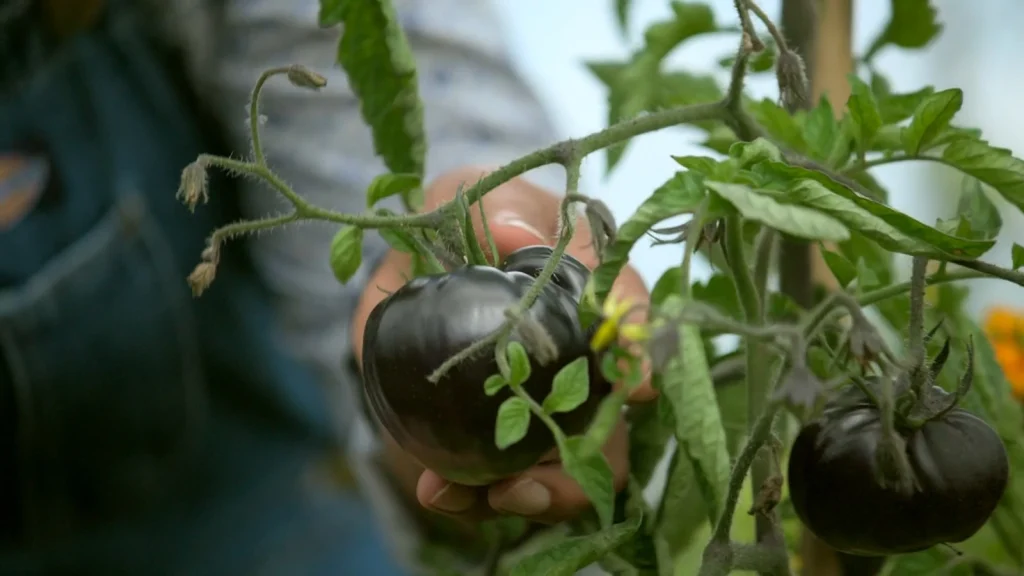
Black Beauty: Even after extensive trials, Rekha continues discovering exceptional varieties. Her excitement about Black Beauty tomatoes is palpable as she showcases their distinctive appearance. “I mean, just look at it, the shine. I haven’t polished them. It is just the way it is,” she marvels. The tomato’s natural glossy finish creates visual appeal regardless of weather conditions, while its flavor profile balances sweetness with complex undertones. The variety offers both aesthetic and culinary rewards.
Through these careful explorations, Rekha has developed a tomato collection precisely calibrated to her family’s preferences and cooking needs. Rather than growing generic varieties, she can reach for specific tomatoes that enhance particular dishes – sweet varieties for fresh eating, acidic ones for curries, and uniquely colored varieties for visual impact.
Global Vegetables in British Soil
Rekha’s explorations extend far beyond tomatoes to encompass vegetables from diverse culinary traditions worldwide. Often inspired by restaurant meals or supermarket discoveries, she challenges conventional thinking about what can grow successfully in British conditions.
The story of her amaranth cultivation illustrates her connection to culinary heritage. “The story of my amaranth started as knowing that there was a leaf or a spinach that my mom used to grow and cook,” she recounts, referring to her childhood in Zambia. Her research revealed three distinct varieties – Asian, African, and Caribbean – each with different characteristics.
What began as a connection to her roots became a practical growing success. “It’s a substitute for spinach, and it grows perfectly well outdoors,” she explains, highlighting its resilience in variable British weather. The plant’s resistance to slugs and tendency to self-seed make it particularly valuable in her garden ecosystem, providing reliable harvests with minimal intervention.
Rekha’s experimentation with edamame beans demonstrates her willingness to challenge assumptions about crop suitability. After noticing these Japanese soybeans in supermarkets, she questioned whether they could thrive in the British climate. Two growing seasons later, her trials confirm their adaptability. “They’ve loved it. It’s really wet this year, and they still performed like they did last year,” she notes with satisfaction. The beans’ consistency across varying weather conditions marks them as reliable performers regardless of seasonal fluctuations.
Heritage Preservation Through Active Growing
Beyond exploring global diversity, Rekha dedicates garden space to preserving heritage varieties that have fallen from commercial cultivation. These seeds represent agricultural history at risk of disappearing as industrial agriculture focuses on fewer, standardized varieties.
Among her heritage treasures are several distinctive French beans. The Q-Blue variety showcases striking purple coloration throughout both stems and pods, creating ornamental appeal alongside productive harvests. “They have produced the most enormous amount of pod, and not just pod. The amount of beans per pod is amazing,” Rekha observes. This productivity validates her belief that older varieties often perform exceptionally well despite their commercial obscurity.
The Mallucan Pea bean represents another heritage success story. This versatile variety transitions through different culinary uses as it matures – harvested young as a pea-like vegetable or allowed to mature for use as a dried bean. Rekha’s excitement at discovering its productivity mirrors the joy of agricultural explorers throughout history who identified exceptionally performing food plants.
Through these cultivation efforts, Rekha participates in living conservation. “The whole idea is there is things out there, old, ancient, whatever you want to call them, that will work,” she affirms. By growing these varieties and saving their seeds, she ensures their genetic diversity remains viable and available for future gardeners.
Unexpected Treasures
Among Rekha’s most cherished discoveries are plants that appear humble but offer extraordinary culinary potential. Her safflower (Carthamus tinctorius) experiment exemplifies this principle.
“This might sound a bit bizarre. It might look like nothing, but this is my best ever thing that I’ve tried this year,” she reveals, showcasing a plant that appears unremarkable at first glance. The plant’s value lies in its identity as “poor man’s saffron,” offering similar culinary properties to one of the world’s most expensive spices.
Rekha’s cultural knowledge informs her appreciation for this plant’s potential. “What I’d like to use this for is what they use in Spain, paella,” she explains, connecting her garden experiment to Mediterranean culinary traditions. This discovery represents the perfect intersection of her guiding principles – agricultural curiosity yielding ingredients that expand cooking possibilities.
Integrating Flowers for Ecosystem Balance
Rekha’s garden philosophy extends beyond vegetables to embrace flowering plants that support the broader garden ecosystem. Unlike purely ornamental gardens, her flower selections serve multiple purposes within the vegetable-growing environment.
“I tend to grow flowers which are pollinator-friendly,” she explains, recognizing the essential role of bees and other insects in vegetable production. By incorporating plants that attract beneficial insects, she enhances pollination rates throughout her productive plants.
Her practical approach extends to flower selection and maintenance. “There’s always ones that can self-seed because I haven’t got time to grow them all the time,” she notes, favoring varieties that establish sustainable populations with minimal intervention. Plants like tagetes (marigolds), borage, and “Cupid’s arrow” maintain themselves once established, creating habitat for beneficial insects while requiring little active management.
This integration of flowers creates multiple seasons of interest. “They look even lovely when they’re in seed heads,” Rekha observes, appreciating their structural beauty beyond the flowering period. The approach balances ecological benefits with aesthetic considerations: “It’s just trying to be as friendly to the wildlife as I can but still keep beauty to the place.”
The Joy of Growing from Seed
Throughout Rekha’s garden adventures, one constant remains – her profound appreciation for the miracle of seeds. This fundamental element of gardening provides her endless fascination and satisfaction.
“Growing from seed is just magical,” she reflects. “Watching a seed germinate, that in itself… I don’t need any TV.” This observation reveals the meditative quality she finds in nurturing plants from their earliest beginnings. The simple act of witnessing emergence and growth provides entertainment more engaging than manufactured diversions.
This seed-to-table journey represents the complete cycle of gardening. Each successful experiment adds to her seed collection, which expands her options for future growing seasons. “That means I need to go and buy another container,” she jokes about her expanding seed storage needs. These carefully saved seeds embody both past successes and future possibilities, connecting growing seasons across years.
Lessons from an Experimental Garden
Rekha’s approach offers valuable lessons for gardeners of all experience levels. Her willingness to challenge conventions through systematic experimentation demonstrates how gardens can become spaces for personal discovery rather than merely replicating established patterns.
The integration of growing with cooking ensures her garden remains relevant and purposeful. Each plant earns its place by contributing to memorable meals and family enjoyment rather than meeting arbitrary standards of appearance or conformity.
Perhaps most importantly, her garden celebrates diversity – not just for its own sake, but for the specific, meaningful contributions each variety makes to her family’s experience. The garden becomes a living library of flavors, textures, and growing behaviors, each carefully evaluated and appreciated for its unique qualities.
In an era when industrial agriculture increasingly narrows crop diversity, gardens like Rekha’s preserve agricultural heritage while simultaneously exploring new possibilities. Her seed-by-seed experimentation honors traditional growing wisdom while remaining open to innovation, creating a dynamic balance between preservation and discovery.
For those inspired by Rekha’s approach, starting small with focused experimentation offers an accessible entry point. Even testing three varieties of a favorite vegetable can reveal surprising differences and preferences, beginning a journey of discovery that transforms ordinary growing into an adventure of culinary exploration.
FAQ
Q: How can I start my own experimental vegetable garden like Rekha’s?
A: Begin by selecting one vegetable family to focus your experimentation on, rather than attempting too many varieties at once. First, research different varieties of your chosen vegetable, considering both common and heritage options. Then, dedicate specific growing spaces for your trial plants, making sure to label each variety clearly. Furthermore, maintain detailed notes about germination rates, growth patterns, pest resistance, and harvest quality. Most importantly, connect your growing experiments directly to your cooking by evaluating flavor, texture, and culinary versatility. Additionally, save seeds from your most successful varieties to build a personalized collection that performs well in your specific growing conditions.
Q: What makes heirloom and unusual vegetable varieties worth growing?
A: Heritage vegetable varieties often offer exceptional flavors and unique culinary properties that have been lost in modern commercial breeding. Additionally, many older varieties demonstrate surprising resilience and productivity despite their absence from supermarket shelves. Moreover, growing these plants actively preserves agricultural biodiversity threatened by industrial farming’s narrow focus. Beyond practical benefits, these vegetables frequently display distinctive colors, shapes, and growth habits that add visual interest to your garden. Furthermore, cultivating rare varieties connects you to food histories and cultural traditions from around the world. Consequently, each unusual plant you grow contributes to a living seed library that preserves genetic diversity for future generations.
Q: Which tomato varieties perform best in challenging growing conditions?
A: Costa Luto Fiorentino demonstrates exceptional adaptability, thriving in variable weather while maintaining its sweet, versatile flavor profile. Additionally, Black Beauty tomatoes produce consistently glossy fruits regardless of light conditions, making them reliable even during cloudy British summers. For gardeners dealing with wet conditions, Burmi Sour offers remarkable resilience while providing distinctive acidity perfect for cooking. Meanwhile, smaller cherry varieties generally show greater disease resistance and earlier fruiting in challenging climates. Furthermore, many heritage varieties have maintained resilience through centuries of selection by gardeners in diverse conditions. Therefore, consider your specific challenges—whether limited sunlight, excessive moisture, or temperature fluctuations—when selecting experimental varieties for your garden.
Q: How can I successfully grow exotic vegetables in non-native climates?
A: Research the vegetable’s natural growing conditions and identify similarities with your local climate to assess potential compatibility. Subsequently, start with smaller trials before committing large garden space, allowing you to learn specific cultivation needs without significant investment. Additionally, consider microclimate creation through strategic placement, using south-facing walls or sheltered positions to mimic warmer conditions. Moreover, extend growing seasons with protective coverings like cloches or row covers during vulnerable periods. Furthermore, select varieties specifically bred for shorter growing seasons or cooler climates when available. Consequently, successful exotic vegetable cultivation requires patience through multiple growing seasons as you refine techniques. Finally, connect with gardeners in similar climates who have experience with your target vegetables to benefit from their hard-earned knowledge.
Q: What are the best companion flowers to integrate into vegetable gardens?
A: Marigolds (tagetes) excel in vegetable gardens by deterring harmful nematodes while attracting beneficial pollinators with their bright blooms. Similarly, borage attracts numerous pollinators while its edible flowers add cucumber-like flavors to summer drinks and salads. Additionally, self-seeding calendula offers continuous color while its petals provide edible garnishes with mild peppery notes. Meanwhile, nasturtiums serve multiple functions by attracting aphids away from crops while providing edible flowers and leaves with peppery flavors. Furthermore, phacelia creates magnificent purple blooms that attract beneficial insects while improving soil structure when incorporated after flowering. Consequently, selecting flowers that offer multiple benefits—pollinator attraction, pest management, and culinary uses—maximizes the value of limited garden space.
Q: How can growing amaranth benefit my vegetable garden?
A: Amaranth provides exceptionally nutritious leafy greens that thrive in variable weather conditions where other greens might struggle. Moreover, its natural resistance to slugs makes it especially valuable in damp British gardens where slug damage often devastates leafy crops. Additionally, amaranth’s tendency to self-seed reduces the need for annual replanting, creating sustainable harvests with minimal intervention. Furthermore, different varieties (Asian, African, and Caribbean) offer subtle flavor variations that expand culinary possibilities beyond common spinach. Consequently, this versatile plant bridges ornamental and productive roles with its striking colors and abundant harvests. Importantly, amaranth requires little specialized care once established, making it ideal for busy gardeners seeking reliable, low-maintenance food crops.
Q: What unexpected vegetables can serve dual culinary and ornamental purposes?
A: Safflower (Carthamus tinctorius) produces vivid flowers that create “poor man’s saffron” while adding striking vertical elements to garden beds. Meanwhile, purple-podded beans like Q-Blue deliver abundant harvests while their vibrant stems and pods create dramatic visual impact throughout the growing season. Additionally, rainbow chard combines nutritional density with spectacular colored stems in gold, pink, orange, and crimson that brighten vegetable plots. Furthermore, edamame beans feature attractive growth habits with fuzzy pods that transform ordinary garden spaces into conversation pieces. Similarly, decorative amaranth varieties produce both nutritious leaves and dramatic plume-like seedheads in burgundy, orange, and gold. Consequently, these dual-purpose plants maximize garden productivity while ensuring vegetable growing areas remain visually captivating throughout the season.
Q: How does seed saving enhance the experimental vegetable garden experience?
A: Seed saving transforms your garden into an evolving laboratory where plants gradually adapt to your specific growing conditions with each generation. Furthermore, collecting seeds from your most successful varieties creates a personalized seed bank perfectly matched to your soil, climate, and growing techniques. Additionally, saved seeds connect growing seasons across years, allowing successful experiments to continue without dependency on commercial seed sources. Moreover, the practice deepens your understanding of plant life cycles beyond the typical grow-harvest relationship. Consequently, seed saving becomes both practical resource management and profound connection to agricultural traditions spanning human history. Finally, your growing seed collection becomes a living library of genetic diversity, preserving unique varieties and contributing to sustainable food systems in an increasingly homogenized agricultural landscape.