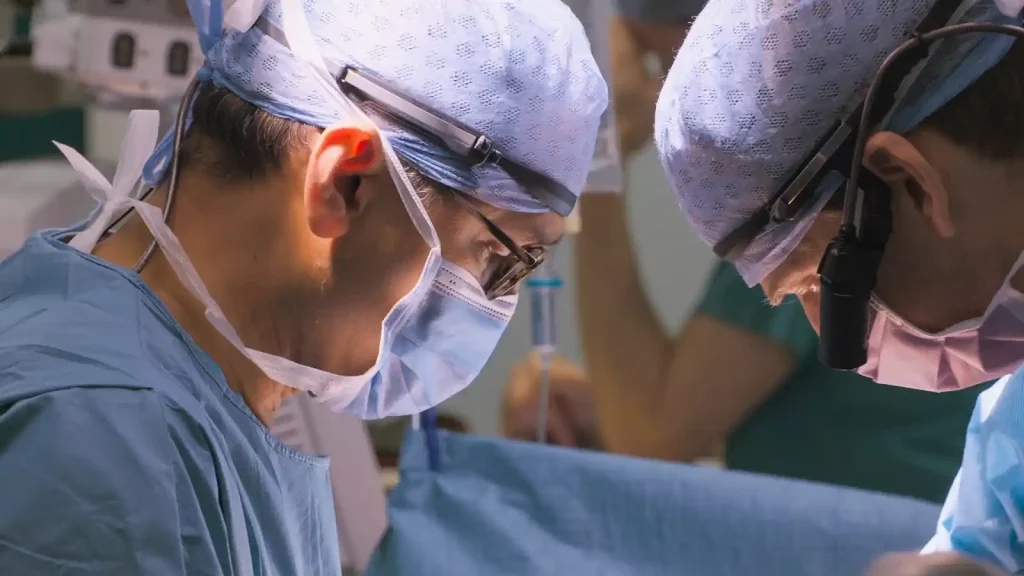
Surgeons: At the Edge of Life Episode 8: In the Balance
In the bright, sterile corridors of Edinburgh’s Western General Hospital, two remarkable medical journeys unfold simultaneously. These stories of surgical innovation and human courage exemplify modern medicine at its most challenging frontier.
Consultant colorectal surgeon Danielle Collins stands at her operating table, faced with a case that would give even the most experienced surgeons pause. Her patient’s aggressive tumor has displayed alarming growth, doubling in size over just eight weeks. Without immediate and decisive surgical intervention, the prognosis appears increasingly grim, with fatal spread becoming not just possible but probable.
What makes this case particularly daunting is the tumor’s precarious position. Rather than being isolated to a single organ, this invasive growth has attached itself to four different vital structures within the patient’s abdomen. The surgical challenge is formidable: removing the tumor necessitates removing portions of each affected organ. As Collins prepares for the operation, she acknowledges this represents the absolute limit of what she would consider undertaking surgically.
“When you encounter a tumor with this level of invasiveness, you’re essentially performing not one operation but four simultaneously,” Collins explains while reviewing the imaging scans. “Every cut must be precisely calculated because we’re working across multiple organ systems with different tissue types and vascular patterns.”

Scan smarter. Create faster. Free.
Download QR & Barcode Studio — Create and scan unlimited QR codes & barcodes.
No paywalls. No limits. 100% Free.

The team prepares meticulously, gathering specialized instruments and ensuring adequate blood products are available. The operation will likely last many hours, with the patient’s condition potentially fluctuating throughout. Collins briefs her team thoroughly, emphasizing the critical junctures where complications might arise and outlining contingency plans.
Meanwhile, in another operating theater within the same hospital, consultant vascular surgeon Orwa Falah readies himself for what many consider the Mount Everest of surgical procedures. Falah is about to perform a complete replacement of the human body’s largest blood vessel—the aorta.
This main arterial highway runs from the heart through the chest and abdomen, delivering oxygen-rich blood to virtually every organ system. When the aorta fails, the consequences are catastrophic. Falah’s patient faces precisely this threat, necessitating a procedure so complex and risky that approximately one in ten patients do not survive.
“The aorta isn’t simply a tube we can disconnect and reconnect,” Falah notes during his preoperative assessment. “It’s the primary supply line for every critical abdominal organ. During replacement, those organs temporarily lose their blood supply, placing them under tremendous stress.”
The procedure requires a delicate balance between speed and precision. Working too quickly increases the risk of errors; working too slowly extends the time organs remain deprived of adequate blood flow. Furthermore, the new artificial aorta must be perfectly sized and positioned to ensure natural blood flow patterns are maintained.
Both surgeons share a common burden: they operate knowing that despite their best efforts and years of training, success cannot be guaranteed. The margins between positive outcomes and devastating complications remain razor-thin.
Surgeons: At the Edge of Life episode 8
For Collins, the multi-organ tumor removal proceeds methodically. Each organ interface requires different approaches and techniques. She works with the focus of someone defusing a bomb, carefully separating tumor from healthy tissue while preserving as much normal function as possible.
Across the hospital, Falah’s aortic replacement has reached its most critical phase. The patient’s vital signs are closely monitored as the team completes the final connections of the artificial vessel. Every suture must hold perfectly against the tremendous pressure of arterial blood flow.
These extraordinary surgical challenges represent modern medicine at its most ambitious. They test not only technical skill but also decision-making under pressure, leadership of multidisciplinary teams, and the emotional resilience required when holding a patient’s life in one’s hands.
The episode captures these parallel journeys of surgical courage—Collins navigating the complexity of multi-organ involvement and Falah undertaking what might be considered the most extensive operation possible in human surgery. Both procedures push against the boundaries of what medicine can accomplish, demonstrating why the series title “At the Edge of Life” so aptly describes this rarefied medical territory.
As these operations unfold, viewers gain unprecedented insight into the calculated risks, technical brilliance, and profound human connection that characterize surgery at its most challenging and transformative.
Conclusion Surgeons: At the Edge of Life episode 8 – The Delicate Balance of Surgical Innovation
As the operating room lights dim and the surgical teams complete their extraordinary work, we are left to contemplate the profound implications of what we’ve witnessed. Indeed, these surgical frontiers represent far more than medical procedures; they embody the eternal human struggle against our own fragility.
Through the skilled hands of surgeons like Collins and Falah, we glimpse a world where the boundaries between impossible and possible blur continuously. Their work, delicate yet decisive, reminds us that medical advancement remains fundamentally a human endeavor, despite all our technological sophistication.
Consider, for instance, how the surgical theater transforms into a battleground where life hangs in perfect equilibrium. On one side stands human ingenuity, armed with knowledge accumulated across generations. On the other waits entropy itself—the body’s natural tendency toward breakdown and disorder. Furthermore, this balance extends beyond technical skill to encompass ethical considerations about risk, hope, and the very meaning of healing.
The courage displayed in these operating rooms, moreover, exists on multiple levels. Initially, we recognize the patients’ bravery in facing procedures where outcomes remain uncertain. Additionally, we witness the surgeons’ willingness to shoulder responsibilities that would paralyze most individuals with their immensity.
What lessons, then, can we draw from these remarkable medical journeys? First and foremost, they remind us that progress often emerges from confronting what initially appears impossible. Consequently, today’s radical surgery becomes tomorrow’s standard procedure through this cycle of daring and innovation.
The narrow margins between success and failure in these operations mirror life itself. Although we strive for perfection, we must ultimately navigate through uncertainty with both humility and determination. Therefore, these surgeons embody not just medical excellence but philosophical wisdom about living meaningfully in an unpredictable world.
As viewers and witnesses to these extraordinary medical narratives, we are changed. Subsequently, our understanding of human potential expands alongside our appreciation for life’s precious vulnerability. Eventually, we recognize that medicine at this level transcends science to become art—a creative act that requires equal measures of precision and imagination.
In the final analysis, “At the Edge of Life” captures an essential truth: the most profound medical innovations happen at the intersection of technical brilliance and human compassion. Meanwhile, the delicate balance surgeons maintain between confidence and humility continues to push medicine forward into territory once thought beyond reach.
FAQ Surgeons: At the Edge of Life episode 8
Q: What is “Surgeons: At the Edge of Life” and what makes Episode 8 special?
A: “Surgeons: At the Edge of Life” is a medical documentary series that showcases groundbreaking surgical procedures. Episode 8, titled “In the Balance,” specifically follows two extraordinary cases at Edinburgh’s Western General Hospital. Firstly, it documents colorectal surgeon Danielle Collins tackling a complex multi-organ tumor removal. Subsequently, it covers vascular surgeon Orwa Falah performing a complete aorta replacement, considered one of the most extensive operations possible in human surgery. The episode expertly illustrates how modern surgical innovation pushes the boundaries between possible and impossible.
Q: What challenges did colorectal surgeon Danielle Collins face in her tumor removal procedure?
A: Danielle Collins confronted an exceptionally aggressive tumor that doubled in size over just eight weeks. Moreover, the tumor’s precarious position created unprecedented complexity as it had attached itself to four different vital organs within the patient’s abdomen. Consequently, Collins needed to remove portions of each affected organ while preserving normal function. This delicate operation required precise calculations for every cut across multiple organ systems with different tissue types and vascular patterns. In essence, she was performing four operations simultaneously, pushing her surgical skills to their absolute limit.
Q: Why is aortic replacement considered the “Mount Everest” of surgical procedures?
A: Aortic replacement earns its “Mount Everest” reputation due to its extraordinary complexity and risk profile. The aorta functions as the body’s main arterial highway, delivering oxygen-rich blood to virtually every organ system. Therefore, replacing it requires temporary interruption of blood supply to critical abdominal organs, placing them under tremendous stress. Furthermore, the procedure demands perfect balance between speed and precision, with approximately one in ten patients not surviving. Additionally, the artificial aorta must be flawlessly sized and positioned to maintain natural blood flow patterns and withstand the tremendous pressure of arterial circulation.
Q: How do surgical teams prepare for high-risk operations like those shown in the episode?
A: Surgical teams prepare meticulously for high-risk operations through comprehensive planning and coordination. Initially, they gather specialized instruments and ensure adequate blood products are available. Meanwhile, lead surgeons like Collins conduct thorough team briefings that emphasize critical junctures where complications might arise. Furthermore, they develop detailed contingency plans for various scenarios that could emerge during surgery. This preparation involves not just technical readiness but also mental preparation for procedures that may last many hours with potentially fluctuating patient conditions throughout the operation.
Q: What qualities do surgeons need to perform such complex procedures successfully?
A: Successful complex surgery requires an exceptional combination of technical skill and psychological resilience. First and foremost, surgeons need extraordinary precision and anatomical knowledge to navigate intricate structures. Additionally, they must possess remarkable decision-making abilities under pressure and leadership skills to direct multidisciplinary teams effectively. Furthermore, they require emotional fortitude to shoulder life-and-death responsibilities that would overwhelm most individuals. Perhaps most importantly, these elite surgeons maintain a delicate balance between confidence and humility, recognizing that despite their extensive training, success cannot be guaranteed in these razor-thin margin procedures.
Q: How does the episode portray the relationship between medical technology and human skill?
A: The episode masterfully illustrates how modern surgery represents a partnership between technological advancement and irreplaceable human expertise. Despite sophisticated medical technologies that support these procedures, the surgeons’ judgment, experience, and manual dexterity remain paramount. For instance, Collins works with the focus of someone defusing a bomb, carefully separating tumor from healthy tissue. Similarly, Falah must ensure every suture holds perfectly against tremendous arterial pressure. Consequently, viewers understand that while technology enables these medical frontiers, surgical innovation remains fundamentally a human endeavor requiring equal measures of precision and imagination.
Q: What broader life lessons can viewers draw from watching these surgical procedures?
A: Viewers can extract profound life lessons from these surgical narratives that extend beyond medicine. First, they demonstrate how progress often emerges from confronting apparent impossibilities with courage and innovation. Furthermore, the narrow margins between success and failure mirror life itself, showing how we navigate uncertainty with both humility and determination. Additionally, the episode highlights the importance of meticulous preparation while remaining adaptable to changing circumstances. Moreover, these surgeries illustrate how human potential expands alongside our appreciation for life’s precious vulnerability, transforming technical procedures into philosophical explorations of our mortality and resilience.
Q: How does “At the Edge of Life” differ from other medical documentaries?
A: “At the Edge of Life” distinguishes itself from other medical documentaries through its unflinching focus on procedures at the absolute frontier of surgical possibility. Unlike shows that might sensationalize medical drama, this series provides unprecedented insight into the calculated risks and technical brilliance of elite surgeons. Moreover, it captures the profound human connection underlying these medical narratives, balancing clinical detail with emotional resonance. Additionally, by following parallel surgeries simultaneously, the episode creates a unique narrative structure that emphasizes how these remarkable procedures happen routinely in major hospitals, pushing medicine forward into territory once thought beyond reach.