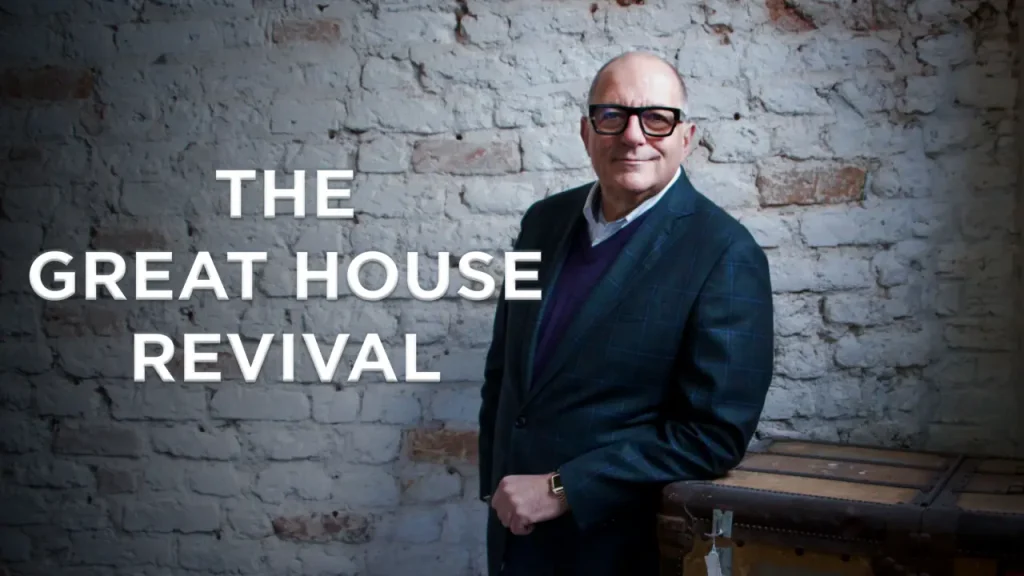
In The Great House Revival episode 7 2025, a young couple embarks on an ambitious journey to transform a collection of ivy-infested ruins into their forever home. Graphic design lecturer Tommy McDonald and primary school teacher Emily Lewis take on the challenge with no prior building experience. Their project is located on the high slopes of the River Barrow valley in County Carlow. The long-abandoned farmstead holds deep personal significance for Tommy. He grew up next door, playing among the very walls he now seeks to restore. This deep-rooted emotional connection fuels their determination to resurrect the site.
The task they face is monumental, involving a complex ruin restoration that tests their skills and resolve at every turn. The property, which had not been inhabited for over a century, presents a landscape of crumbling stone and roofless structures. These buildings are more than just ruins; they represent a tangible link to the past and a solid foundation for modern housing needs. For Emily, who is originally from Wales, the beautiful stonework reminded her of home, solidifying her desire to build their life there. Their story captures the essence of a modern DIY home build, blending personal dreams with formidable architectural challenges.
This ambitious undertaking detailed in The Great House Revival episode 7 2025 involves not just restoring six crumbling structures, but also constructing a large, modern timber-frame building to link them. The planned 2,000-square-foot home is designed to feature generous living areas, a main bedroom suite within the old walls, and additional rooms housed in the original buildings skirting the lane. The couple’s vision is a blend of old and new, preserving the site’s character while creating a functional, contemporary space. This fusion of architectural styles lies at the heart of their project.
The initial financial scope of the project immediately presents a significant hurdle. Having purchased the 0.7-acre site for €45,000, Tommy and Emily secured a mortgage leaving them with a working budget of €275,000. However, they aimed to complete the project for even less. This figure was quickly challenged by presenter Hugh Wallace, who estimated a project of this scale would cost closer to half a million euros in the current market. This stark reality check forced the couple to confront the immense financial pressures inherent in such a large-scale renovation and the critical need for meticulous construction budget management.
To supplement their finances, the couple applied for the vacant property refurbishment grant, a government scheme for derelict buildings. Their eligibility for this grant became a crucial element of their financial strategy. They hoped to secure €70,000, which would be essential for moving forward. However, the application process itself introduced delays, preventing them from starting major work on the old buildings until they received approval. This administrative waiting period added another layer of complexity to their already challenging timeline, forcing them to focus on site cleanup and preparation.

Scan smarter. Create faster. Free.
Download QR & Barcode Studio — Create and scan unlimited QR codes & barcodes.
No paywalls. No limits. 100% Free.

The Great House Revival episode 7 2025
The Initial Vision and Financial Realities
The couple’s initial plan was grand and optimistic. They envisioned a 185-square-metre home connecting the disparate ruins with a modern, timber-frame structure. This new wing would contain an entrance hall, a large kitchen-living area with expansive valley views, and a utility room. The original stone buildings were designated to house bedrooms, a bathroom, a sitting room, and an office. Tommy, relying on YouTube tutorials and a can-do attitude, planned to tackle the timber framing himself to save money. This DIY approach was central to their strategy for making the project affordable.
However, the chasm between their budget and expert valuation was a primary source of concern. With a goal of spending just €275,000 on a build estimated to cost €500,000, the couple faced tough choices. The presenter suggested phasing the project, focusing initially on the new extension and one portion of the old buildings to stay within their financial constraints. This advice, while practical, conflicted with the couple’s desire to complete the entire home, including their main bedroom in the old section, in one go. They found themselves at a crossroads, needing to reconsider their plans.
Effective construction budget management became a recurring theme. Initially, the couple admitted to operating on a “wing and a prayer” basis, without a detailed, itemised budget. They were strongly advised to create an Excel spreadsheet to track every cost, a practice they were unaccustomed to but which was deemed essential for a project of this magnitude. The financial pressure was immense, compounded by the fact that their main mortgage approval was contingent on the grant being signed off. They were temporarily funding the initial work with a smaller home renovation loan, a solution with a rapidly approaching limit. This financial uncertainty cast a long shadow over the build’s early stages.
The vacant property refurbishment grant was a potential lifeline, offering a significant capital injection. After a period of waiting, they received conditional approval for €70,000. This news was a major relief but came with a strict condition: they had 13 months to make the house liveable to receive the funds. This deadline introduced a new kind of pressure, transforming their relaxed timeline into a race against the clock. The grant, while helpful, simultaneously locked them into an accelerated and demanding build schedule that would test their limits.
Preserving Architectural Heritage Amidst Decay in The Great House Revival episode 7 2025
The core of the project involved the careful restoration of the existing stone structures, a task that proved more challenging than anticipated. The walls, exposed to the elements for decades, were in a dire state. The lime mortar that once held the stones together was completely dead, washed away by rain. This left the structures incredibly fragile. As Emily began the painstaking work of scraping out the old mortar by hand to prepare for repointing, the full extent of the decay became apparent. In some places, it was possible to see straight through the walls, a clear sign of instability.
This ruin restoration was not merely a construction job; it was an act of preserving architectural heritage. The site’s history is woven into the local fabric of County Carlow. Research revealed the buildings first appeared on an 1838 map, part of an estate owned by the Kavanagh family of Borris House. The story of Arthur Kavanagh, a 19th-century landlord and MP born without arms or legs, provided a fascinating historical backdrop. His progressive efforts to support tenant rights eventually led to the Land Act, which likely enabled the property to be purchased by the family of its last tenant in 1915, before eventually passing into Tommy’s family.
The process of saving the walls was labour-intensive and required specialised skills. The plan involved using a lime render and hemp, but the cost of professional lime-mortaring was prohibitive. To reduce expenses, the couple took on the arduous task of scraping out the old mortar themselves, a job that required countless hours of manual labour. The professional builder would then handle the more skilled task of repointing the stone. This division of labour was crucial for managing costs, but the sheer volume of work was immense, covering every stone in all six existing buildings.
Despite their best efforts, the forces of nature and the inherent fragility of the ruins led to significant losses. Several key walls and gables became dangerously unstable due to prolonged exposure and the effects of bad weather. One gable at their planned bedroom collapsed after the roof had been off for too long. Another wall crumbled when accidentally touched by a digger bucket. While these events were setbacks, they also created unforeseen opportunities. The loss of these internal walls allowed them to redesign spaces like their main bedroom, making them larger and better able to capture the stunning views.
A Journey of Delays, Deadlines, and Discoveries
The project’s timeline was fraught with delays from the very beginning. The initial months were spent clearing the overgrown site and navigating the grant application process. This administrative hold meant they couldn’t begin structural work on the old buildings, limiting them to cleanup and preliminary tasks. To reduce their living expenses and be closer to the site, they purchased a mobile home for €7,500, a move that allowed them to redirect rent money into the build. This marked a significant step in their full-time commitment to the DIY home build.
Once the council viewed the site, allowing work to commence ahead of the final grant sign-off, progress began in earnest. The summer was spent clearing out the floors of the old buildings, a delicate operation. They needed to dig down to find solid foundations for new floors while being careful not to undermine the fragile walls. This process yielded mixed results; they discovered the foundations were not as deep as hoped, limiting potential headroom. The constant risk of causing a collapse meant every move with the mini-digger was a calculated risk.
The arrival of the €70,000 grant approval brought both relief and intense pressure. The 13-month deadline to make the home liveable loomed large. An intervention from the show’s host highlighted their lack of a concrete building programme. They were advised to get roofs on the buildings by October to allow for interior work during the wet winter months. This required ordering materials like steel and timber with long lead times, something they had not yet done. This “tough love” moment served as a wake-up call, forcing them to confront their “live in the moment” approach to planning.
Life introduced its own timeline when Emily and Tommy announced they were expecting a baby. This joyful news added a new sense of urgency to the project. The prospect of raising a newborn in the tight confines of the mobile home was a powerful motivator. However, a winter of exceptionally bad weather brought progress to a near standstill, with builder Cian Doyle noting they had only been able to work one full week since starting. The project entered a critical phase where every delay felt magnified, and the grant deadline seemed increasingly challenging to meet.
Reassessing Plans in The Great House Revival episode 7 2025
The journey of The Great House Revival episode 7 2025 was one of constant adaptation. The initial reluctance to engage in detailed, long-term planning gradually gave way to necessity. After being prompted, the couple finally sat down with their builder to map out the next steps, though they still resisted creating a formal spreadsheet budget. The paperwork and administrative tasks associated with the mortgage and grant proved to be one of the most stressful parts of the build, draining their time and mental energy.
A turning point came with the birth of their baby, Elis. This shifted their perspective, particularly Emily’s, who began to advocate for reducing the scale of the plan to focus on making a core section of the house liveable. With only five months left on their initial grant deadline, the pressure to focus on finishing the new build portion and the main bedroom became paramount. They acknowledged that they lacked the time and money to complete the entire project within that timeframe, making the grant’s conditions a serious financial risk.
Fortunately, they managed to secure a six-month extension on the grant deadline, pushing it to April 2025. This provided much-needed breathing room but did not solve the underlying budget issues. A late-stage budget review revealed their planned spending had dropped from €275,000 to €200,000 to reduce future debt. Having already spent €180,000, they were left with just €50,000 to complete the most expensive finishing stages of the house, a figure deemed highly challenging.
Despite the hurdles, the project saw significant progress. Windows were finally installed in December, including a large, ceiling-to-floor sliding door inspired by a visit to another restoration project. This feature was chosen to maximise the spectacular views over the Barrow Valley. Yet, even with this milestone, the house remained far from liveable. The final stages—plumbing, electrics, flooring, and finishes—represented a mountain of work and expense that lay ahead. The couple’s journey was far from over, but their vision was slowly, painstakingly taking shape against the odds.
When Dreams Meet Reality: The True Cost of Chasing Your Forever Home
Tommy McDonald and Emily Lewis’s journey from ivy-covered ruins to family home reveals a fundamental truth about ambitious renovation projects: the distance between vision and reality is often measured not just in euros, but in resilience, adaptability, and the courage to reimagine your dreams when circumstances demand it.
Their story strips away the Instagram-perfect veneer of home renovation shows to expose the raw mechanics of turning architectural dreams into livable reality. What started as a €275,000 budget ballooned under the weight of expert estimates suggesting €500,000 would be more realistic. Yet rather than abandon their vision entirely, Tommy and Emily demonstrated something more valuable than unlimited funds: the wisdom to pivot without losing sight of their core goal.
The couple’s evolution from “wing and a prayer” planners to deadline-driven strategists offers a masterclass in adaptive project management. Their initial resistance to detailed budgeting and formal timelines—while understandable for creative souls—nearly derailed their entire endeavor. It was only when external pressures mounted—the grant deadline, the baby’s arrival, harsh winter weather—that they embraced the unsexy but essential discipline of structured planning. Their journey illustrates that successful renovation isn’t just about construction skills; it’s about project management, financial literacy, and the emotional intelligence to know when to scale back ambitions.
Perhaps most poignantly, their story reveals how life has a way of clarifying priorities. The birth of baby Elis transformed their perspective from completionist perfectionists to pragmatic parents focused on creating a functional family home. Emily’s shift toward advocating for a more focused approach wasn’t defeat—it was maturation. Sometimes the most courageous decision isn’t pushing forward with the original plan, but having the wisdom to recognize when “good enough” today beats “perfect” never.
For anyone harboring similar dreams of breathing life into forgotten buildings, Tommy and Emily’s experience offers both inspiration and cautionary wisdom. Their success lay not in flawless execution, but in their ability to weather setbacks, adapt to changing circumstances, and maintain focus on what truly mattered: creating a home filled with love, history, and hope.
The ruins of County Carlow that once stood as mere remnants of the past now serve as the foundation for a family’s future. In transforming those crumbling walls, Tommy and Emily didn’t just restore architecture—they proved that with enough determination, flexibility, and willingness to learn from mistakes, even the most ambitious dreams can find solid ground. Their story reminds us that the most meaningful journeys rarely follow the original map, but they’re no less beautiful for their unexpected detours.
FAQ The Great House Revival episode 7 2025
Q: What is The Great House Revival episode 7 2025 about?
A: The Great House Revival episode 7 2025 follows Tommy McDonald and Emily Lewis as they transform ivy-infested ruins into their forever home. Additionally, the episode showcases their ambitious journey to restore six crumbling stone structures while constructing a modern timber-frame extension. Furthermore, viewers witness the couple’s emotional connection to the County Carlow site, where Tommy grew up playing among the very walls he now seeks to restore.
Q: Who are Tommy McDonald and Emily Lewis?
A: Tommy McDonald works as a graphic design lecturer, while Emily Lewis teaches at a primary school. Moreover, neither had prior building experience before undertaking this massive renovation project. Originally from Wales, Emily felt drawn to the beautiful stonework that reminded her of home, which solidified their decision to build their life there.
Q: Where is their renovation project located?
A: Their project sits on the high slopes of the River Barrow valley in County Carlow, Ireland. The 0.7-acre site contains a long-abandoned farmstead that hadn’t been inhabited for over a century. Additionally, research revealed these buildings first appeared on an 1838 map as part of an estate owned by the Kavanagh family of Borris House.
Q: What was their initial budget for the restoration?
A: Tommy and Emily secured a mortgage leaving them with a working budget of €275,000 after purchasing the site for €45,000. However, presenter Hugh Wallace estimated the project would cost closer to €500,000 in the current market. Consequently, this stark reality check forced them to confront the immense financial pressures and consider phasing their ambitious plans.
Q: How did the vacant property refurbishment grant affect their timeline?
A: The couple applied for a €70,000 vacant property refurbishment grant, which became crucial to their financial strategy. Nevertheless, the application process introduced significant delays, preventing major work until approval. Eventually, they received conditional approval with a strict 13-month deadline to make the house liveable, transforming their relaxed timeline into a race against the clock.
Q: What challenges did they encounter with the stone buildings?
A: The lime mortar holding the stones together was completely dead, washed away by decades of rain exposure. Consequently, Emily began scraping out old mortar by hand, revealing walls so fragile you could see straight through them. Furthermore, several key walls and gables became dangerously unstable, with one bedroom gable collapsing after prolonged exposure to bad weather.
Q: What major delays affected their construction timeline?
A: Initially, they spent months clearing the overgrown site and navigating grant applications before structural work could begin. Additionally, exceptionally bad winter weather brought progress to a near standstill, with their builder noting they worked only one full week during that period. Subsequently, these delays magnified pressure as the grant deadline approached.
Q: How did having a baby impact their renovation project?
A: The birth of baby Elis served as a pivotal turning point in their approach to the project. Specifically, Emily began advocating for reducing the scale to focus on making core sections liveable first. Moreover, the prospect of raising a newborn in their tight mobile home quarters provided powerful motivation to prioritize completion of essential living spaces.
Q: What architectural features did they incorporate into the design?
A: Their 185-square-metre home design blends old and new by connecting disparate ruins with a modern timber-frame structure. The new wing features an entrance hall, large kitchen-living area with expansive valley views, and utility room. Furthermore, they installed a striking ceiling-to-floor sliding door to maximise the spectacular views over the Barrow Valley.
Q: What lessons can other DIY renovators learn from their experience?
A: Their journey demonstrates that successful renovation requires more than construction skills—it demands project management, financial literacy, and emotional intelligence. Additionally, their evolution from ‘wing and a prayer’ planners to deadline-driven strategists shows the importance of detailed budgeting and formal timelines. Most importantly, knowing when to scale back ambitions can be more valuable than unlimited funds.