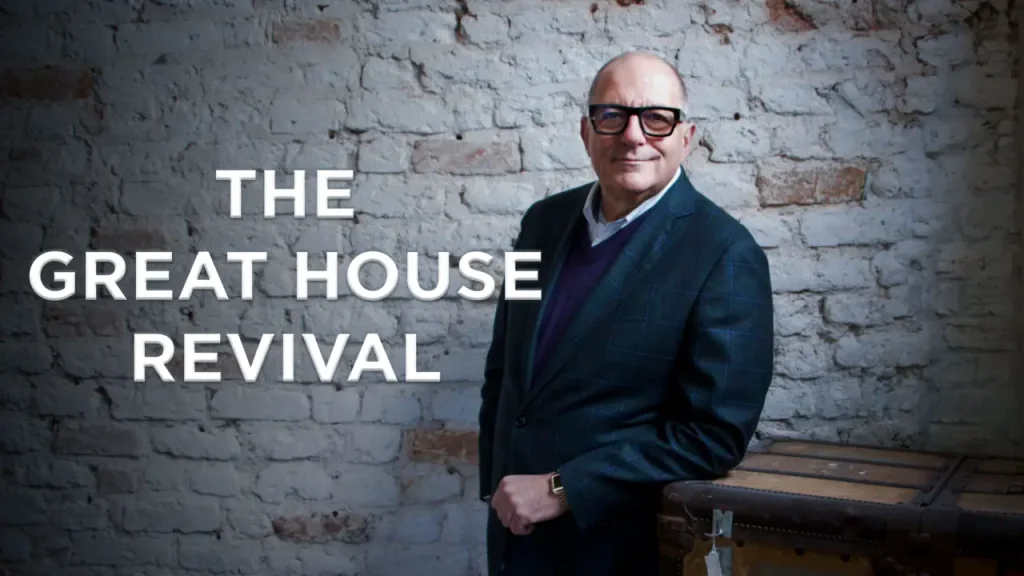
The Great House Revival episode 6 2025 chronicles a remarkable journey of returning home, as one man transforms a former Victorian guesthouse into his forever home by the sea. Eoghan O’Riain, a senior construction asset manager, embarked on an ambitious project in the Donegal village of Rathmullan. After years working abroad, he aimed to breathe new life into an 1870s property on Seaview Terrace. His vision was to create a modern life for himself, blending contemporary needs with the building’s historic character. This project serves as a powerful example of reversing long-standing emigration trends.
The undertaking is particularly relevant today. New remote working possibilities allow professionals to return to their roots, revitalising rural communities. This specific renovation highlights the potential to repurpose historic buildings for 21st-century living. It demonstrates how personal ambition can align with the preservation of a village’s architectural fabric. Consequently, the project is more than a personal quest; it is a case study in sustainable community development. It shows how heritage properties can be saved from dereliction or seasonal use.
The story documented in The Great House Revival episode 6 2025 captures the entire process, from initial concepts to the final, stunning reveal. It explores the delicate balance required when adding a modern extension to a period home. The narrative follows Eoghan as he navigates budget constraints, structural emergencies, and evolving design philosophies. Viewers witness the immense challenges and creative solutions that define such a complex undertaking. The project becomes a masterclass in project management and creative problem-solving.
At the outset, the house presented a fascinating mix of potential and problems. It retained much of its original Victorian charm, including an elegant staircase and a distinctive vestibule screen. However, the property was dated, with a tiny kitchen and quirky features that were not suited for permanent residence. The core challenge involved respecting the building’s significant heritage while performing a complete overhaul. This required a deep understanding of traditional building methods alongside modern architecture principles to ensure a seamless union between the old and new structures.
Eoghan’s initial plan was ambitious: a complete restoration of the main house and a large, open-plan extension to the rear. He set a budget of €160,000 and a tight five-month timeline, aiming for completion by Christmas. This optimism quickly met the harsh realities of construction. The initial phase was marked by a critical disagreement over the extension’s design, focusing on how to bring natural light deep into the new space. This early conflict set the stage for a project defined by constant adaptation.

Scan smarter. Create faster. Free.
Download QR & Barcode Studio — Create and scan unlimited QR codes & barcodes.
No paywalls. No limits. 100% Free.

The journey was fraught with practical and financial hurdles from the beginning. Eoghan’s initial budget was immediately challenged when quotes from contractors came back significantly higher than anticipated, ranging between €215,000 and €225,000. This financial shock forced a major strategic pivot. Instead of hiring a main contractor, he took on the demanding role of project manager himself, opting for a direct labour approach where he would hire and coordinate individual subcontractors. This decision dramatically increased his personal involvement and stress levels.
The Great House Revival episode 6 2025
Navigating Budget and Labour Challenges
Taking control of the project firsthand, Eoghan initially attempted to save money by undertaking some of the demolition work himself. He spent a full week tearing down water-damaged ceilings, a physically demanding task for a novice. However, he soon had a crucial realisation. He calculated that his brothers, with more experience, could accomplish the same amount of work in a fraction of the time. This experience taught him a valuable lesson about where his efforts were best placed. He understood his true value to the project was not in manual labour but in meticulous planning, coordination, and looking ahead to the next trade.
This shift in approach from hands-on labourer to strategic project manager proved essential for the project’s progression. It allowed Eoghan to leverage his professional skills in construction asset management effectively. He focused on sequencing trades, sourcing materials, and making critical decisions to keep the build moving forward. Although this path was more demanding, it gave him complete control over the budget and the quality of the work. This phase of the restoration underscored the intense personal commitment required when managing a historic property renovation on a tight budget.
Structural Crises and The Great House Revival episode 6 2025
The project faced its most terrifying challenge when work began on connecting the new extension to the old house. As workers carefully dismantled the rear stone wall to create the opening, the structure of the original 1870s building began to shift. Cracks appeared and rapidly widened, signalling that the entire back wall was unstable and at risk of collapse. The house’s structural integrity was literally hanging in the balance, a nerve-wracking development that required immediate and decisive action. The team had to install emergency acrow props and steel supports to prevent a catastrophic failure.
Just as the structural crisis was brought under control, another disaster struck. Shortly after the new windows and the enormous sliding door for the extension were installed, the wild Donegal weather took a ferocious turn. A torrential downpour revealed a major flaw in the flashing where the new roof met the old house. Water began pouring into the building, creating a waterfall that threatened to derail the entire project schedule. This leak put the timeline for the electricians, insulators, and plasterers in jeopardy, creating immense pressure to find a solution before dampness could cause irreparable damage and long-term delays.
The Evolution of a Design Philosophy
Throughout the build, Eoghan’s personal design philosophy underwent a significant transformation. Initially focused on practicality and modern minimalism, he was hesitant to embrace the home’s quirkier elements, even considering discarding a unique stained-glass door. However, through conversations and gentle persuasion, he began to see the value in preserving the home’s unique character. This marked a turning point, moving him from a purely functional mindset towards one that celebrated the building’s history and soul. His approach to the traditional elements of the house became more nuanced and appreciative.
This evolution culminated in one of the project’s most beautiful features. Inspired by a newfound appreciation for craftsmanship, Eoghan commissioned a new, custom-made stained-glass screen for the vestibule. Working with a specialist artisan, he designed an intricate piece that reflected the colours and maritime history of Rathmullan. This decision was a bold investment in artistry, transforming the entrance into a stunning focal point. Furthermore, he integrated his family’s creative legacy into the home, framing and hanging paintings by his mother and grandmother, weaving personal heritage directly into the walls of his new home.
Weaving History and Heritage into a Modern Home
The project gained deeper meaning with the discovery of the house’s own history of global connections. Research revealed that previous residents had emigrated to Canada, New Jersey, and Australia over the decades. This narrative of departure is deeply woven into the history of the region. Rathmullan itself was the site of the 1607 “Flight of the Earls,” a seminal event in Irish history where Gaelic leaders left Ireland for continental Europe. This historical context casts the house as a silent witness to centuries of migration and far-reaching connections.
In a powerful reversal of this historical trend, Eoghan’s return to Rathmullan represents a new chapter for both the house and the area. His ability to work from home, connecting globally from his Donegal office, provides a modern counter-narrative to the departures of the past. The renovation is therefore not just about saving a building; it is about re-anchoring a family in a place of deep historical significance. By preserving the home’s past while equipping it for the future, Eoghan has created a lasting legacy, ensuring the house remains a vibrant part of the village for generations to come.
Beyond Renovation: A Blueprint for Rural Ireland’s Renaissance
Looking back on Eoghan O’Riain’s remarkable journey, his Victorian house restoration in Rathmullan stands as something far greater than mere renovation. Indeed, this project represents a profound shift in how we view heritage, home, and belonging in modern Ireland.
Furthermore, Eoghan’s story beautifully illustrates how remote work technology can breathe new life into rural communities. Previously, talented professionals like him felt compelled to leave their roots behind. Now, however, they can return home while maintaining global careers. Consequently, villages across Ireland are witnessing similar revivals as emigrants become “returners.”
The transformation of this 1870s guesthouse also demonstrates that heritage preservation doesn’t require sacrificing modern comfort. Rather than viewing old and new as opposing forces, Eoghan learned to see them as dance partners. His custom stained-glass screen perfectly embodies this philosophy, marrying traditional craftsmanship with contemporary design sensibilities.
Moreover, the project’s challenges taught invaluable lessons about resilience and adaptation. When budgets exploded and walls threatened collapse, Eoghan didn’t abandon his dream. Instead, he evolved from hopeful homeowner to seasoned project manager. Each crisis became a stepping stone toward greater expertise and confidence.
The house itself emerges as a silent storyteller, having witnessed generations of departures and now celebrating a homecoming. Additionally, Eoghan’s decision to display his family’s artwork creates powerful continuity between past and future. These paintings transform walls into galleries of memory, ensuring ancestral creativity lives on.
His success story also offers hope to countless other heritage properties languishing in rural Ireland. Similarly, it proves that individual ambition can align perfectly with community preservation goals. When one person invests in their village’s architectural fabric, everyone benefits from increased vibrancy and economic activity.
Most importantly, Eoghan’s journey reminds us that home is worth fighting for. Despite structural emergencies, budget pressures, and endless decisions, he persevered because this wasn’t just construction—it was reclamation. He reclaimed his connection to place, family history, and authentic living.
Today, as Eoghan works from his beautiful Donegal office overlooking the sea, he embodies Ireland’s new chapter. No longer must talented individuals choose between career success and hometown loyalty. Through determination, vision, and respect for heritage, they can have both.
The Great House Revival episode 6 2025 ultimately proves that the most meaningful renovations transform more than buildings—they transform lives, communities, and futures.
FAQ The Great House Revival episode 6 2025
Q: What is The Great House Revival episode 6 2025 about?
A: The Great House Revival episode 6 2025 chronicles Eoghan O’Riain’s remarkable journey transforming a former Victorian guesthouse into his forever home by the sea. Furthermore, this episode captures the entire renovation process in Rathmullan, Donegal, from initial concepts to the final reveal. Additionally, it explores the delicate balance required when adding modern extensions to period homes while preserving their historic character.
Q: Who is Eoghan O’Riain and what was his background?
A: Eoghan O’Riain is a senior construction asset manager who worked abroad for years before returning to Ireland. Moreover, his professional experience in construction asset management proved invaluable during the renovation project. Additionally, he embarked on this ambitious undertaking to create a modern life for himself while reconnecting with his Irish roots and contributing to rural community revitalization.
Q: Where is the Victorian house located and what was its original purpose?
A: The 1870s property sits on Seaview Terrace in the picturesque Donegal village of Rathmullan. Originally, it served as a Victorian guesthouse, retaining much of its period charm including an elegant staircase and distinctive vestibule screen. However, the building required significant updates, featuring a tiny kitchen and quirky elements unsuitable for permanent modern residence.
Q: What was Eoghan’s initial budget and timeline for the renovation?
A: Eoghan initially set an ambitious budget of €160,000 with a tight five-month timeline, aiming for Christmas completion. However, reality quickly challenged this optimism when contractor quotes ranged between €215,000 and €225,000. Consequently, this financial shock forced a major strategic pivot, leading him to take on project management responsibilities himself.
Q: Why did Eoghan choose to manage the project himself rather than hire a main contractor?
A: When contractor quotes exceeded his budget by €55,000-€65,000, Eoghan made a strategic decision to become project manager himself. Furthermore, this direct labour approach allowed him to hire and coordinate individual subcontractors while maintaining complete control over budget and quality. Although more demanding, this path leveraged his professional construction management skills effectively.
Q: What were the major structural challenges encountered during the renovation?
A: The most terrifying challenge occurred when connecting the new extension to the original house. As workers dismantled the rear stone wall, the 1870s building began shifting dangerously, with rapidly widening cracks threatening complete collapse. Additionally, emergency acrow props and steel supports were installed immediately. Subsequently, torrential weather revealed major flashing flaws, creating internal waterfalls that jeopardized the entire timeline.
Q: How did Eoghan’s design philosophy evolve throughout the project?
A: Initially focused on practicality and modern minimalism, Eoghan hesitated to embrace the home’s quirky historical elements. However, through conversations and gentle persuasion, he began appreciating the building’s unique character and soul. Consequently, this transformation culminated in commissioning a custom stained-glass screen for the vestibule, reflecting Rathmullan’s maritime history and celebrating traditional craftsmanship.
Q: What historical significance does Rathmullan and the house possess?
A: Research revealed that previous house residents emigrated to Canada, New Jersey, and Australia over decades. Moreover, Rathmullan itself was the site of the 1607 “Flight of the Earls,” a seminal Irish historical event. Additionally, this context casts the house as a silent witness to centuries of migration and global connections, making Eoghan’s return particularly meaningful.
Q: How does this project represent a reversal of traditional emigration patterns?
A: Eoghan’s return to Rathmullan provides a powerful counter-narrative to historical departure trends from rural Ireland. Furthermore, remote working technology now allows talented professionals to maintain global careers while living in their ancestral communities. Consequently, this renovation demonstrates how modern connectivity can revitalize rural areas and reverse long-standing population decline patterns.
Q: What makes this renovation a model for heritage preservation and sustainable development?
A: This project proves that heritage preservation doesn’t require sacrificing modern comfort or functionality. Additionally, it demonstrates how individual ambition can align perfectly with community preservation goals and architectural heritage protection. Furthermore, the renovation shows how historic buildings can be saved from dereliction while creating vibrant, contemporary living spaces that honor their past.