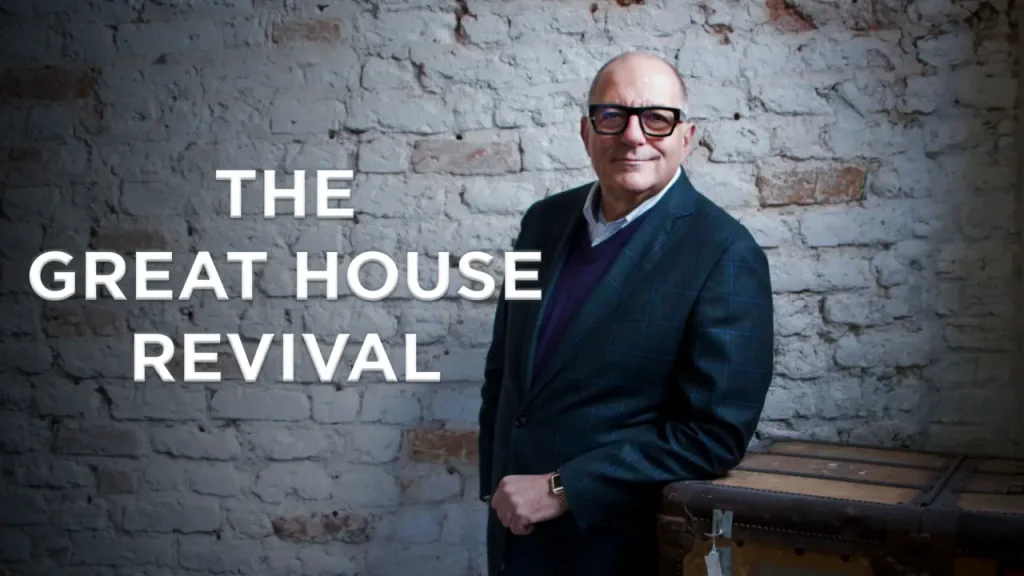
In The Great House Revival episode 8 2025, a compelling story of heritage and determination unfolds on the slopes of the Stack Mountains in North Kerry. The episode follows 26-year-old engineer Kieran Cotter as he embarks on an ambitious mission: to transform his late grandmother’s derelict farm cottage into his own home. Fueled by a passion to buck the local trend of emigration, Kieran’s project is more than a simple renovation; it is a profound act of homecoming. He was born in the very cottage he now seeks to restore, a place imbued with memories of his childhood and his beloved Nana Mary.
The challenge Kieran faces is immense, representing a microcosm of the hurdles facing young people who wish to build a life in rural Ireland. These historic stone buildings, while rich with potential, often require significant investment and specialised labour to become habitable for modern life. With the cottage having stood empty since 2010, Kieran confronts not only decay but also the daunting prospect of a shoestring budget. His journey becomes a powerful exploration of how past architectural traditions can offer solid solutions for contemporary housing needs.
This ambitious house revival serves as a practical guide to the possibilities and pitfalls of such an undertaking. The narrative of The Great House Revival episode 8 2025 delves deep into the specifics of the restoration, from structural repairs to the selection of sustainable materials. It chronicles a hands-on approach, showcasing how a blend of traditional knowledge and modern ingenuity can breathe new life into a forgotten piece of architectural heritage. The project tests the limits of one person’s resolve while highlighting the enduring power of community.
Kieran’s personal connection to the property provides the project with its emotional core. He and his three older brothers lived in the cottage with their parents before swapping homes with his grandmother. The house is filled with memories, from his nana keeping Wagon Wheels in a particular bread bin to the smell of turf smoke filling the yard. This deep affection informs his desire to carry out a sensitive restoration, preserving the building’s essential character. His initial approach is a complete diy build, driven by necessity and a desire to learn.
The project began in December 2023 with a 90-square-metre structure that was surprisingly large for a traditional cottage. Kieran planned an open-plan kitchen and dining area, a cosy sitting room, and two bedrooms, one in a new loft space. He made the crucial decision to avoid extending the building, recognizing that its existing footprint, which once housed entire families, was more than sufficient for his needs. This commitment to working within the original form set the tone for the entire project.

Scan smarter. Create faster. Free.
Download QR & Barcode Studio — Create and scan unlimited QR codes & barcodes.
No paywalls. No limits. 100% Free.

The financial reality of the renovation was stark from the outset. Kieran secured a €70,000 Vacant Property Refurbishment Grant, but his total budget was only €75,000. Crucially, the grant funds would only be released after the work was completed, forcing him to rely on loans to bridge the gap. With a target completion of September 2024, Kieran quit his job to work on the house full-time, armed with a few books on old houses and a self-taught understanding of lime pointing. It was a high-risk strategy born from a deep-seated passion to create a future for himself on his home turf.
The Great House Revival episode 8 2025
The Foundation: Demolition, Design, and a DIY Build Philosophy
The substantive work began in January 2024 with a smashing start. Kieran’s first major act was to demolish a 1960s extension at the rear of the cottage. He viewed this addition as a “wart on the original house” and was keen to return the building to its traditional rectangular form. This process was a community affair from day one. Kieran roped in his best friend and cousin, DJ, to help erect scaffolding and take down the block walls, demonstrating the rural Irish tradition of cousins being called upon for such tasks.
Following the demolition, the focus turned inward. With the help of friends and family, including his father Richard and brother Richie, Kieran stripped the cottage back to its essential structure. They removed rotten ceiling joists and internal stud walls that had been used for “dry lining,” a method of boxing in the original stonework. This painstaking work returned the building to its original three-room layout, centred around the massive central hearth. This deconstruction phase was vital for revealing the true condition of the historic structure.
A key design decision emerged during this early stage. Initially, Kieran planned to retain the layout from his childhood, with a bedroom behind the hearth and a bathroom at the end of a corridor. However, the show’s presenter suggested swapping their positions. This change would shorten the corridor, create a more spacious and light-filled main bedroom, and allow for a more integrated staircase to the loft. After consideration, Kieran adopted this advice, a choice that proved transformative for the home’s final flow and feel. The next major physical task involved bringing in a mini-digger to lower the internal floor levels, creating the necessary depth for modern plumbing and insulation.
Embracing Vernacular Architecture and Sustainable Materials
Kieran’s project was deeply rooted in a respect for traditional building methods. To deepen his understanding, he met with local historian Tom Dillon to explore the principles of vernacular architecture. This approach, as Dillon explained, means building with materials taken directly from the surrounding environment. Whether using local limestone or, in its absence, mud from the fields, these houses were born from the land they occupied. This philosophy resonated strongly with Kieran, who discovered his own cottage was depicted on maps from 180 years ago in an area once dotted with lime kilns.
This historical context also revealed a rich social tapestry. Kieran learned about the culture of “rambling houses,” where neighbours would gather for music, dancing, and storytelling—the primary form of entertainment before television or Netflix. A conversation with 95-year-old Sister Theresa Nolan, who grew up in the cottage, confirmed this vibrant history. She recalled nights filled with accordion music and dancing, sustained by a powerful community bond where neighbours always helped one another without being asked. This concept of mutual support, known as the “mihil,” became a cornerstone of Kieran’s own project.
This commitment to tradition guided Kieran’s choice of materials throughout the restoration. He opted for limecrete for the new floor slab, a more sustainable but complicated alternative to standard ready-mixed concrete. The process required mixing on-site and a large team of volunteers, including his girlfriend Eva and her brothers, who spent a full Saturday wheelbarrowing the sticky mixture. For insulation, he chose foam glass aggregate made from recycled materials for under the floor and planned to use natural sheep’s wool between the ceiling joists. This “fabric first” approach, focusing on creating a breathable, healthy, and efficient building envelope, was fundamental to his ethos.
Navigating The Great House Revival episode 8 2025 Restoration Challenges
The journey of this particular house revival was fraught with difficulties that tested Kieran’s resolve. One of the most significant issues uncovered by the initial demolition was the structural integrity of the walls. Stripping the old plaster revealed a large crack and a noticeable bow in one of the external corners. While Kieran was initially confident in the wall’s stability, he eventually took expert advice to install L-shaped steel ties when re-mortaring the area, painstakingly rebuilding the corner with stones and lime to secure it for the future.
The tight budget remained a constant source of pressure throughout The Great House Revival episode 8 2025. By June, six months into the project, Kieran had spent €23,000 but knew the most expensive phase—hiring professional tradespeople—was still to come. By October, the money had run out, forcing a pause and re-evaluation. This financial strain was compounded by the sheer volume of labour required. The pointing, plastering, and building up of uneven walls with stones gathered from the fields were slow, laborious tasks that he largely undertook alone, listening to audiobooks to pass the time.
Nature also presented its own set of challenges. In January 2024, Storm Isha battered the area, and while the cottage’s newly replaced roof held firm, the storm destroyed the roof on an adjacent outbuilding. A year later, in January 2025, the site was cut off by snowdrifts, which caused the roof of another barn to collapse. Through it all, the most critical element requiring outside expertise was the windows. The original frames were beyond repair. In a heartwarming display of support, Kieran’s girlfriend’s father, Liam Bell, a carpenter, took on the project. He meticulously built eight new traditional windows, lamenting that modern carpentry often involves merely fixing pre-made units and enjoying the chance to return to the traditional joinery skills of his craft.
The Transformation: A Home Built on Community and Creativity
Ultimately, the cottage’s successful transformation was a testament to the power of community and creative problem-solving. Kieran’s vision inspired a modern-day “mihil,” with his father, Richard, becoming a constant presence on site, strengthening their bond as they worked side-by-side. Friends, cousins, and his girlfriend Eva all contributed time, labour, and support, proving that such a monumental task cannot be done alone. This collective effort was the engine that drove the renovation forward, especially through the most difficult periods.
When the budget tightened, creativity flourished. The beautiful bathroom floor was made from old roofing slates given to him by a neighbour, with their original nail holes adding unique character. Kieran sourced and fitted a second-hand kitchen, while Eva painted old chairs and the bed frame to give them new life. The generosity of the community extended to gifts of everything from a toilet to a microwave. This approach demonstrated that imperfection can be beautiful and that resourcefulness is key when funds are low.
The final result is a magnificent home that cost a total of €100,000. After receiving the €70,000 grant, Kieran’s net expenditure was an astonishing €30,000. For this, he has a fully restored, warm, and dry home that honours its past while being perfectly suited for the future. The interior is bright and welcoming, with the massive, exposed stone hearth as its centrepiece and light flooding in from new roof windows. The clever layout swap created a spacious bedroom, and the unfinished sitting room has been temporarily repurposed as a workshop where Kieran plans to teach others the skills of stone and lime work. This project proves that a cost-effective and sustainable path to homeownership for young people in rural Ireland is possible.
A Blueprint for Rural Renaissance: When Heritage Meets Hope
Kieran Cotter’s remarkable journey from derelict cottage to dream home represents far more than a successful house revival—it’s a masterclass in how determination, community spirit, and respect for traditional building wisdom can create extraordinary outcomes on an ordinary budget. His €30,000 net investment didn’t just restore a building; it revitalized a piece of rural Ireland’s soul while proving that young people need not abandon their roots to build meaningful futures.
The true genius of this cottage restoration lies not in its impressive cost efficiency, though achieving a fully renovated home for less than many people spend on a car is undeniably remarkable. Rather, it’s in how Kieran seamlessly wove together three powerful forces: the time-tested principles of vernacular architecture, the irreplaceable value of community support, and the creative problem-solving that emerges when passion meets constraint. His decision to work within the cottage’s original footprint rather than expanding demonstrates a profound understanding that sometimes the most innovative approach is to honor what already exists.
The revival of the “mihil”—that beautiful Irish tradition of neighbors helping without being asked—proved as structurally important as any steel tie or lime mortar. When Eva’s father crafted eight traditional windows by hand, when friends spent Saturdays wheelbarrowing limecrete, when neighbors gifted everything from slates to microwaves, they weren’t just contributing labor and materials. They were rebuilding the social infrastructure that makes rural communities resilient and vibrant. This collective effort transformed what could have been an isolating struggle into a celebration of shared purpose.
Perhaps most significantly, Kieran’s approach offers a replicable model for addressing rural Ireland’s housing challenges. While not everyone will have access to a €70,000 grant, his emphasis on sustainable materials, traditional techniques, and community resources creates a framework that others can adapt. His plans to teach stone and lime work from his temporarily repurposed sitting room suggest he understands this project’s true legacy lies not in what he built, but in what he can teach others to build.
For anyone dreaming of their own house revival—whether driven by financial necessity, environmental consciousness, or deep love of place—Kieran’s story illuminates the path forward. Start with respect for what exists, embrace the learning curve that comes with traditional skills, and never underestimate the power of community to transform both buildings and lives. In an era when housing costs drive young people from the places they love, this cottage on the Stack Mountains stands as proof that with creativity, determination, and a willingness to work with rather than against architectural heritage, homecoming remains beautifully, affordably possible.
The lights now glowing warmly through those handcrafted windows aren’t just illuminating Kieran’s new home—they’re beacons of hope for rural Ireland’s future.
FAQ The Great House Revival episode 8 2025
Q: What is cottage restoration and why is it becoming popular in rural Ireland?
A: Cottage restoration involves transforming derelict or abandoned traditional stone buildings into modern, habitable homes while preserving their historic character. Furthermore, this approach has gained popularity in rural Ireland as young people seek affordable homeownership alternatives. Additionally, restoration projects help combat emigration trends by enabling people to build futures in their ancestral communities rather than relocating to expensive urban centers.
Q: How much does it typically cost to restore a traditional Irish cottage?
A: Restoration costs vary significantly depending on the cottage’s condition and desired finish level. However, recent projects demonstrate that complete renovations can range from €75,000 to €100,000 total investment. Moreover, with available grants like the €70,000 Vacant Property Refurbishment Grant, net costs can be reduced to as little as €30,000. Consequently, this makes cottage restoration considerably more affordable than purchasing new homes in many areas.
Q: What grants are available for cottage restoration projects in Ireland?
A: The primary funding source is the Vacant Property Refurbishment Grant, which provides up to €70,000 for qualifying restoration projects. Nevertheless, applicants must complete all work before receiving funds, requiring alternative financing during construction. Additionally, various local authority schemes may offer supplementary support. Therefore, potential restorers should research all available options and plan financing carefully to bridge funding gaps.
Q: What are the main structural challenges in restoring old stone cottages?
A: Common structural issues include wall cracks, corner bowing, and foundation settlement from decades of neglect. Furthermore, removing modern additions often reveals hidden problems requiring expert assessment. Additionally, integrating contemporary plumbing and electrical systems into thick stone walls presents unique challenges. Consequently, successful projects typically require steel reinforcement ties, lime repointing, and careful structural repairs to ensure long-term stability.
Q: What is vernacular architecture and why is it important for cottage restoration?
A: Vernacular architecture refers to building methods using materials directly sourced from the surrounding environment, such as local limestone or field mud. Moreover, this approach creates structures perfectly adapted to their specific climate and landscape. Additionally, understanding these traditional principles helps restorers make authentic material choices and preserve the cottage’s original character. Therefore, respecting vernacular principles ensures restorations remain true to their historical and cultural context.
Q: What traditional building materials should be used in cottage restoration?
A: Authentic restoration prioritizes traditional materials like lime mortar, natural stone, and sustainable insulation options such as sheep’s wool. Furthermore, limecrete offers a more environmentally friendly alternative to standard concrete for flooring. Additionally, reclaimed materials like salvaged slates can provide character while reducing costs. However, these materials often require specialized knowledge and techniques, making proper research and training essential for successful application.
Q: How important is community support in cottage restoration projects?
A: Community involvement proves absolutely crucial for successful cottage restoration, particularly in rural Irish contexts. Moreover, the traditional ‘mihil’ concept of neighbors helping without being asked can significantly reduce labor costs and create emotional support networks. Additionally, local craftspeople often possess irreplaceable knowledge about traditional building techniques. Consequently, projects that embrace community participation typically achieve better results while strengthening local social bonds and cultural preservation.
Q: What skills are needed for a DIY cottage restoration approach?
A: Essential skills include lime pointing, basic stonework, and understanding traditional building principles through research and hands-on learning. Furthermore, project management abilities help coordinate multiple phases and manage tight budgets effectively. Additionally, problem-solving creativity becomes vital when unexpected challenges arise during demolition or construction. However, certain specialized tasks like structural repairs and window crafting typically require professional expertise to ensure safety and quality standards.
Q: How long does a typical cottage restoration project take to complete?
A: Timeline expectations vary greatly depending on project scope, budget constraints, and available labor. Nevertheless, full-time restoration efforts typically require 12-18 months from initial demolition to completion. Moreover, financial limitations often force temporary pauses, potentially extending timelines significantly. Additionally, weather conditions and seasonal accessibility can impact progress in rural locations. Therefore, realistic planning should accommodate delays while maintaining flexibility for unexpected complications or funding gaps.
Q: What are the long-term benefits of restoring rather than building new homes?
A: Restoration preserves cultural heritage while creating unique homes with character impossible to replicate in new construction. Furthermore, traditional stone buildings offer excellent thermal mass and durability when properly maintained. Additionally, restoration often proves more environmentally sustainable than demolition and new building. Moreover, successful projects can inspire community revitalization and demonstrate viable pathways for young people to remain in rural areas, ultimately contributing to local economic and social sustainability.