In The Repair Shop 2025 episode 20, the barn doors swing open to welcome four remarkable treasures—each brimming with personal memories and historical significance, each awaiting the expert touch of the workshop’s skilled restorers. These aren’t just objects; they are tangible pieces of family heritage, carrying the stories, struggles, and triumphs of those who owned them. Every restoration is more than a repair—it’s an act of love, a way of breathing life back into the past.
First to arrive are Thomas and his grandfather Roger, carrying something that, at first glance, looks fragile enough to crumble at a touch—a small diary from the Channel Islands. Yet, inside this pocket-sized book lies a world of resilience. Written by Roger’s grandmother Lillian during the Nazi occupation of Guernsey in the Second World War, its pages record the daily realities of life under the shadow of war. It is a diary of quiet endurance, penned in careful script on paper so thin it’s almost translucent.
Time, however, has been merciless. The spine has completely disintegrated, pages are coming loose, and the delicate binding is barely holding together. For bookbinder Chris Shaw, this is a formidable challenge. He must not only restore the diary’s physical integrity but also ensure every word, every sentence, every heartbeat of Lillian’s wartime testimony survives for future generations. With the precision of a surgeon and the reverence of a historian, Chris begins the painstaking process of preservation.
From the world of paper and ink, we step into the realm of steel and rust. Metalworkers Dom Chinea and Brenton West are next in the spotlight, presented with a railway lantern that has seen better days. Jenny, who has brought it all the way from Northern Ireland, explains that this paraffin lamp once belonged to her grandmother Margaret—an extraordinary woman who defied the norms of her time. Margaret was the last station master at Donemana station, a trailblazer in a role traditionally dominated by men. With this lantern, she signalled trains, safeguarded passengers, and ensured the crossing gates were secure.
It was both a tool of her trade and a symbol of her determination. Sadly, decades of exposure have left the lantern in ruins. The chimney is crumbling, the lens housing has corroded, and the paint has flaked away in ragged patches. When Dom and Brenton begin their inspection, they realise the damage is even worse than they expected—the rust has eaten deeply into the metal, threatening the lantern’s very structure. Yet, with skill, patience, and a shared determination to honour Margaret’s legacy, they set about reversing the decades of decay, working to restore not just a light, but a piece of history.

Scan smarter. Create faster. Free.
Download QR & Barcode Studio — Create and scan unlimited QR codes & barcodes.
No paywalls. No limits. 100% Free.

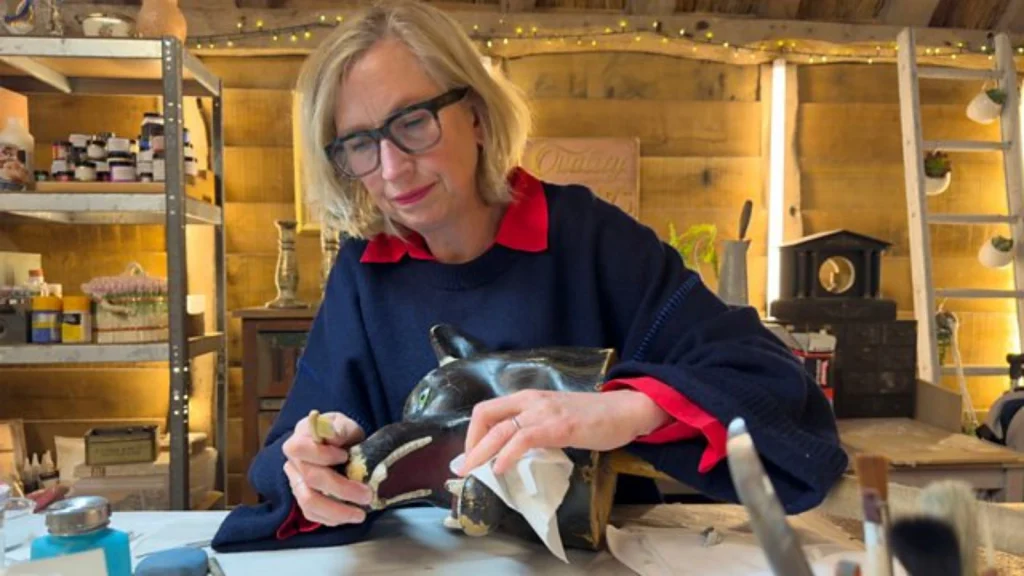
The atmosphere shifts again with the arrival of Akela Helen, a dedicated cub scout leader, accompanied by three bright-eyed members of her pack. They carry with them their most unusual mascot—a large ceremonial wolf’s head believed to date back to the 1950s. For decades, this fierce yet friendly figure has led the pack’s traditional grand howl, its painted features adding a sense of theatre to every gathering. But now, the wolf shows its age.
The Repair Shop 2025 episode 20
The paint is cracked, its once-proud ears wobble precariously, and its surface is worn from years of enthusiastic use. This restoration calls for collaboration. Woodworker Will Kirk steps in to address the structural issues, while ceramics expert Kirsten Ramsay, more accustomed to delicate porcelain, turns her hand to an unfamiliar material. Together, they stabilise the ears, fill deep cracks, and retouch the bold features until the wolf regains its dignified snarl. When the pack returns to see their mascot restored to glory, their faces light up. They leave ready to howl once more, carrying forward a tradition renewed.
Finally, the barn welcomes Audrija, carrying a different kind of memory—one built of wood, plastic, and the laughter of childhood. She has brought a much-loved doll’s house, a retro delight from the 1980s, originally gifted to her elder sister. As a child, Audrija spent countless hours playing with it alongside her sister, creating miniature worlds in its tiny rooms. But an accident left the doll’s house with a gaping hole in the roof, its charm diminished and its structure unstable.
After her sister’s passing in 2020, the house became more than a toy—it became a treasured reminder of their shared childhood. Now, with her own daughters growing up, Audrija dreams of seeing it restored, so it can be played with once again. Plastics expert Charlotte Abbott takes on the delicate task, rebuilding the damaged structure and ensuring every detail is faithful to the original. It’s a labour not only of craftsmanship but of compassion, a way of keeping a sister’s memory alive through the simple joy of play.
By the end of The Repair Shop 2025 episode 20, each of these cherished items has been transformed. The wartime diary stands proud and strong, its pages ready to share their story for decades to come. The railway lantern gleams once more, ready to shine in honour of a remarkable station master. The wolf’s head regains its commanding presence, ready to lead many more grand howls. And the doll’s house, with its new roof and restored beauty, stands ready to welcome another generation of imagination. In the barn, time’s damage may be inevitable, but here, memories are not only preserved—they are given a second chance to shine.
The Repair Shop 2025 episode 20 review
The Repair Shop 2025 episode 20 opens its barn doors to reveal four extraordinary treasures, each carrying profound personal histories and representing the delicate art of preservation that defines our relationship with the past. These objects—a wartime diary, a railway station lamp, a ceremonial wolf’s head, and a childhood dollhouse—demonstrate how restoration transcends mere repair, becoming an act of cultural preservation that connects generations through shared heritage and memories.
The significance of preserving family heirlooms has never been more crucial in our digital age, where physical connections to our ancestors risk being lost forever. Professional restoration represents far more than cosmetic improvement; it serves as a bridge between past and present, ensuring that stories embedded within antiques continue to inspire future generations. The craftsmanship required to breathe new life into damaged treasures demands both technical expertise and deep respect for the original artisan’s work.
This episode of The Repair Shop 2025 showcases the remarkable range of restoration challenges that skilled craftspeople face daily. From delicate paper conservation to complex metalwork, each project requires specialized knowledge, patience, and an understanding of historical context. The barn’s expert restorers demonstrate how modern techniques can seamlessly blend with traditional methods to achieve results that honor both the object’s original character and its continued functionality.
The heritage value of these items extends beyond their monetary worth, representing tangible connections to pivotal moments in history and personal family narratives. Each restoration project illuminates different aspects of British cultural history, from wartime resilience to the evolution of transportation infrastructure. The careful preservation of these artifacts ensures that future generations can experience authentic connections to their past, rather than relying solely on digital reproductions or historical accounts.
Understanding the restoration process reveals the extraordinary skill required to balance historical accuracy with practical functionality. Expert restorers must navigate complex decisions about materials, techniques, and aesthetic choices while respecting the integrity of original craftsmanship. This delicate balance between preservation and renewal forms the foundation of professional restoration work, requiring years of training and deep understanding of traditional techniques.
The Art of Paper Conservation: Preserving Wartime Memories
The restoration of Lillian Le Page’s 1942 Guernsey occupation diary represents one of the most challenging forms of conservation work. Bookbinder Chris faced the daunting task of stabilizing a fragile paper book that had survived over eighty years, including five years of Nazi occupation and decades of family handling. The diary’s deteriorated condition—missing spine, loose pages, and brittle paper—required immediate intervention to prevent complete loss of this invaluable historical document.
Paper conservation demands extraordinary precision, as demonstrated by Chris’s meticulous approach to dismantling and reassembling the diary. The process began with careful evaluation of the existing French catch stitch binding, a traditional technique that provided the foundation for the restoration strategy. Each section required individual attention, with repair tissue wrapped around damaged areas to provide structural support without compromising the original text. This guarding technique creates a protective barrier between new adhesives and historical paper, ensuring long-term preservation.
The challenge of recreating an authentic spine illustrates the complexity of historical restoration work. Chris selected textured paper that matched the diary’s original appearance, recognizing that authenticity extends beyond mere functionality to encompass visual and tactile elements. The restoration process involved manipulating new materials to accommodate the book’s natural aging and movement, requiring both technical skill and artistic sensitivity. The final result preserves Lillian’s wartime observations while ensuring the diary can withstand careful handling by future generations.
Railway Heritage and Victorian Engineering Excellence
Jenny’s grandmother Margaret’s railway lamp represents a fascinating intersection of transportation history and women’s professional achievements in mid-20th century Britain. As the last station master at Donemana railway station in Northern Ireland, Margaret broke gender barriers in a traditionally male-dominated profession. The lamp itself embodies the sophisticated signaling technology that enabled safe railway operations throughout the Victorian and Edwardian eras.
The restoration challenge extended far beyond simple metalwork, requiring Dom and Brenton to understand the lamp’s original functionality as a communication device. The colored glass system allowed station masters to send precise signals to train drivers, using red for danger, green for safety, and other colors for specific operational messages. This technology represented cutting-edge innovation for its time, demonstrating the engineering excellence that characterized Britain’s railway expansion period.
The extensive corrosion damage revealed during disassembly highlighted the challenges facing metal artifacts exposed to decades of environmental stress. The restoration team employed electrolysis to remove rust while preserving the underlying steel structure, a technique that demonstrates how modern technology can enhance traditional restoration methods. Creating replacement components required precise measurements and understanding of the lamp’s original manufacturing techniques, ensuring that new parts integrated seamlessly with surviving original elements.
Institutional Heritage: Scout Traditions and Community Continuity
The ceremonial wolf’s head belonging to the Cub Scout pack represents a unique category of heritage objects—items that gain significance through continuous community use rather than individual ownership. This 1950s artifact had served as the centerpiece of weekly pack meetings for over seventy years, accumulating damage that threatened its continued use during the troop’s 70th anniversary celebrations.
Kirsten’s restoration approach balanced preservation of the wolf’s character with necessary structural repairs. The decision to maintain visible aging while addressing critical damage points demonstrates sophisticated understanding of how heritage objects acquire meaning through use. Rather than pursuing pristine restoration, the team preserved evidence of the countless hands that had held the ceremonial piece, recognizing that these marks of use contribute to its historical significance.
The creation of Repair Shop badges for the young Cubs illustrates how restoration work extends beyond object repair to community engagement. By involving the children in the restoration narrative, the workshop reinforced the connection between past and future custodians of heritage. This approach recognizes that successful preservation depends on creating emotional investment in historical objects among those who will inherit responsibility for their care.
Childhood Memories and Domestic Material Culture
Audrija’s damaged dollhouse represents the powerful role that toys play in preserving family bonds across generations. Originally gifted to prevent sibling jealousy, the dollhouse became a vehicle for storytelling and imagination shared between sisters. The tragic loss of Audrija’s sister Reem transformed the toy from a source of joy into a painful reminder, illustrating how objects absorb emotional significance beyond their original purpose.
Charlotte’s restoration challenged conventional approaches to plastic repair, requiring innovative techniques to address the unique properties of aged synthetic materials. The development of a plastic welding solution and custom support structures demonstrates how contemporary restoration must adapt to materials that didn’t exist during traditional craft periods. The careful color matching and surface treatment ensured that repairs remained invisible while providing structural integrity for continued use.
The addition of deer-themed bedding honored the memory of both Reem and her niece through symbolic representation, showing how thoughtful restoration can incorporate new elements that enhance an object’s emotional resonance. This approach recognizes that heritage items continue to evolve through use, acquiring new layers of meaning while maintaining connections to their original purpose. The dollhouse transformation from damaged relic to functional toy enabled the creation of new memories while preserving the essence of sisterly bonds that originally defined its significance.
Traditional Craftsmanship in Modern Context
The diverse restoration challenges presented in this episode illuminate the extraordinary range of skills required for professional heritage conservation. Each project demanded different technical approaches, from the delicate paper handling required for the wartime diary to the precision metalwork needed for the railway lamp restoration. This variety demonstrates how traditional craftsmanship adapts to serve contemporary preservation needs while maintaining respect for historical techniques and materials.
The workshop’s approach to documentation and process transparency reveals another crucial aspect of modern restoration work. By carefully recording each step and explaining decision-making processes, the restorers create valuable resources for future conservation efforts. This knowledge sharing ensures that restoration techniques continue to evolve while maintaining connections to traditional craft practices that form the foundation of heritage preservation.
The Living Legacy: Why Every Family Story Deserves Preservation
The transformative journeys witnessed in The Repair Shop 2025 episode 20 reveal a profound truth about human nature: we are all custodians of stories that deserve to survive beyond our own lifetimes. Each restored treasure—from Lillian’s wartime diary to Margaret’s railway lamp—demonstrates how objects become vessels for memory, carrying forward the experiences, struggles, and triumphs that define our collective heritage.
What makes these restoration stories particularly compelling is their reminder that significance isn’t measured in monetary value or museum-worthy provenance. The Cub Scout wolf’s head gained meaning through decades of small hands grasping it during weekly ceremonies. The dollhouse acquired emotional weight through sisterly play sessions and whispered secrets shared in childhood bedrooms. These items prove that family heirlooms needn’t be ancient or expensive to warrant careful preservation—they simply need to matter to someone who loves them.
The expert craftsmanship displayed throughout each restoration project illuminates an encouraging reality: skilled artisans still exist who can breathe life back into seemingly hopeless cases. Chris’s delicate paper conservation, Dom and Brenton’s precision metalwork, Kirsten’s thoughtful aesthetic choices, and Charlotte’s innovative plastic welding techniques showcase how traditional skills evolve to meet contemporary preservation challenges. These professionals serve as bridges between past and future, ensuring that tomorrow’s families can experience authentic connections to their ancestors.
Perhaps most importantly, these restoration stories reveal how the act of preservation itself strengthens family bonds. Thomas’s emotional response to holding his great-grandmother’s restored diary created a tangible link to wartime experiences he had only heard about in family stories. Jenny’s ability to light her grandmother’s railway lamp for the first time connected her to Margaret’s pioneering role as a female station master. Audrija’s daughters now have the opportunity to create new memories with a dollhouse that carries forward their aunt’s love and their mother’s childhood joy.
The broader implications extend far beyond individual families. Every restored antique represents a small victory against the forces of time and neglect that constantly threaten our material heritage. In an era when digital documentation often replaces physical preservation, these tangible connections to the past become increasingly precious. They remind us that human experiences are best understood through the objects people touched, used, and treasured during their daily lives.
For those inspired by these restoration stories, the path forward is clear: identify the meaningful objects in your own family collection before they reach crisis points. Don’t wait until damage becomes irreversible or until the stories behind them are forgotten. Seek out skilled craftspeople in your community who understand both the technical and emotional aspects of restoration work. Document the histories of your treasured items while knowledgeable family members can still share their stories.
The artisans of The Repair Shop demonstrate that with patience, skill, and genuine respect for the past, even the most damaged treasures can be coaxed back to life. Their work reminds us that preservation isn’t just about maintaining objects—it’s about honoring the people who came before us and ensuring that their legacies continue to inspire future generations. In a world that often prioritizes the new over the meaningful, choosing restoration over replacement becomes an act of profound love and cultural responsibility.
FAQ The Repair Shop 2025 episode 20
Q: What types of items are typically featured on The Repair Shop?
A: The show features diverse family heirlooms including wartime memorabilia, antique furniture, toys, musical instruments, clocks, textiles, and ceremonial objects. Moreover, each item must have significant emotional value to the owner’s family history. Additionally, the workshop accepts items spanning centuries of craftsmanship, from Victorian railway equipment to mid-20th century household goods.
Q: How do the experts determine which restoration techniques to use?
A: Expert restorers first conduct thorough assessments of materials, construction methods, and damage patterns. Subsequently, they research historical manufacturing techniques to ensure authenticity. Furthermore, they balance preservation of original character with necessary structural repairs, often using traditional methods enhanced by modern conservation science to achieve optimal results.
Q: Can severely damaged family heirlooms actually be saved?
A: Professional restorers can salvage remarkably damaged items through specialized techniques and innovative approaches. For instance, completely rusted metal components can be restored using electrolysis, while fragmented ceramics can be reconstructed using careful adhesion methods. However, success depends on retaining sufficient original material and understanding the item’s construction principles.
Q: What makes paper conservation particularly challenging?
A: Paper deteriorates rapidly due to acid content, environmental exposure, and handling stress over decades. Consequently, conservators must work with extremely fragile materials that can disintegrate during treatment. Additionally, they must preserve original text and imagery while strengthening structural integrity using compatible materials that won’t damage historical fibers.
Q: How do restorers maintain historical authenticity while making functional repairs?
A: Skilled craftspeople research original manufacturing techniques and source period-appropriate materials whenever possible. Furthermore, they document all interventions for future reference and ensure repairs remain reversible. Meanwhile, they balance historical accuracy with safety requirements, particularly for items intended for continued family use rather than museum display.
Q: What role does family history play in restoration decisions?
A: Understanding an object’s personal significance guides restoration approaches and helps determine appropriate intervention levels. For example, preserving evidence of use and aging often matters more than achieving pristine appearance. Additionally, family stories provide crucial context about original function, materials, and any previous repair attempts that influence treatment strategies.
Q: Are modern materials ever used in heritage restoration work?
A: Contemporary conservation employs modern materials when they offer superior longevity or reversibility compared to historical alternatives. Nevertheless, restorers carefully select products that remain compatible with original materials and don’t compromise aesthetic authenticity. Moreover, advanced techniques like plastic welding enable repairs that weren’t possible using traditional methods alone.
Q: How long does a typical restoration project take to complete?
A: Project timelines vary dramatically based on damage severity, material complexity, and required research. Simple repairs might require days, while comprehensive restorations can span weeks or months. Additionally, certain treatments like adhesive curing or paint drying demand specific waiting periods that cannot be rushed without compromising final quality.
Q: What should families do to preserve heirlooms before they need professional restoration?
A: Preventive care significantly extends object lifespans through proper storage, controlled environmental conditions, and gentle handling practices. Furthermore, families should document item histories while knowledgeable relatives can share stories. Meanwhile, early professional consultation can identify potential problems before they become irreversible, making eventual restoration more successful and cost-effective.
Q: Why is professional restoration preferable to DIY repair attempts?
A: Professional restorers possess specialized knowledge about material compatibility, historical techniques, and conservation ethics that prevent irreversible damage. Conversely, well-intentioned amateur repairs often use inappropriate materials or methods that complicate future professional treatment. Moreover, experts understand how to balance preservation with functionality while maintaining objects’ historical and emotional significance.