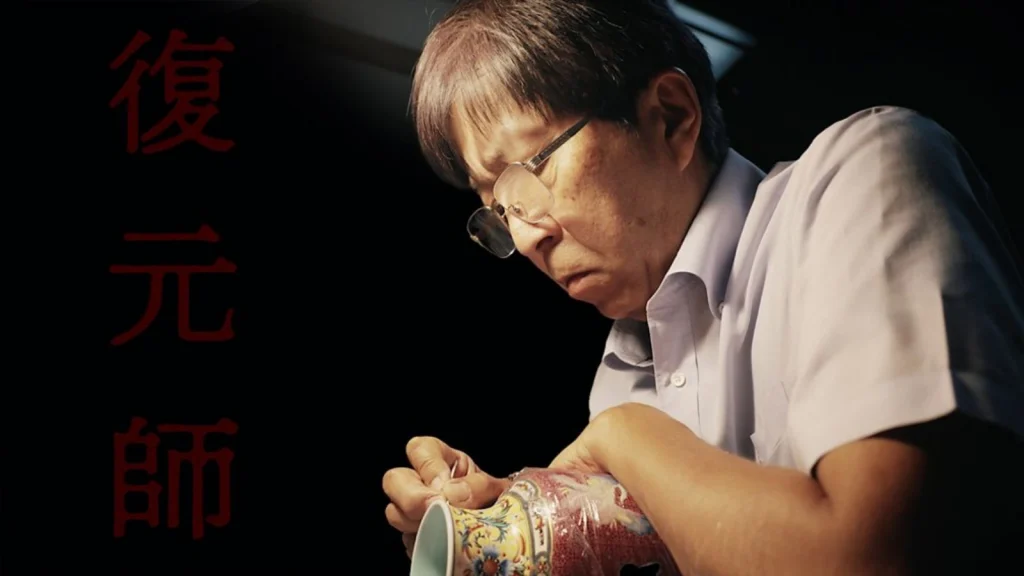
In Japan’s Master of Restoration episode 2, the quiet hum of the Mayuyama workshop is once again alive with purpose. This time, a father and son take on two intricate challenges—both steeped in history, artistry, and cultural pride. The first task is as majestic as it is delicate: restoring a ceramic horse from the Edo period. Once a proud stallion, its form now bears the subtle but undeniable marks of age. A previous restoration, though done with care, has begun to show its years, softening the once-bold stance of this symbolic figure. Now, a fresh approach is needed to return the horse’s posture, presence, and spirit to the glory it once commanded.
The Edo period, stretching from the early 1600s to the mid-1800s, was a time when craftsmanship thrived. This ceramic horse is not merely a decorative piece—it is a frozen moment from a vibrant past. To touch it is to feel the pulse of history, the echo of artisans who poured their skill and soul into its creation. For the Mayuyamas, this is not just about mending clay; it’s about breathing life back into a cultural relic. Every brush of the hand, every mix of pigment, and every subtle stroke of lacquer is a conversation with those long-gone craftsmen, carried out in respectful whispers.
The process begins with careful examination. Under the workshop’s warm light, father and son study the horse from every angle, noting where the glaze has dulled and where earlier repairs have cracked. In their hands, the piece is not simply an object—it is a patient, waiting for gentle but transformative care. They discuss the best path forward, weighing tradition against innovation, always aware that their work must not erase the past but rather protect it for the future.
As the restoration progresses, their roles blend seamlessly. The father’s decades of experience guide the son’s youthful precision, while the son’s fresh eyes spark new ideas. This dance of generations mirrors the very spirit of the Edo period—where mastery was passed down through patient apprenticeship. The work is meticulous, requiring a steady hand, unwavering focus, and an almost meditative patience. By the time the stallion begins to reclaim its stance, there is a quiet satisfaction in the air, as if the horse itself senses its rebirth.
Yet, before the final touches are placed, another challenge arrives. A beautiful Nabeshima-ware plate, delicate and luminous, is brought into their care. This is no ordinary artifact—it belongs to a living Japanese national treasure, a recognition reserved for those whose craft is considered essential to the nation’s cultural heritage. The plate’s surface gleams with the elegance that Nabeshima porcelain is famous for: pure white clay, flawless glazing, and painted designs so refined they seem almost weightless. But even the most exquisite treasures are not immune to time, and this plate bears a hairline crack that threatens both its beauty and its legacy.

Scan smarter. Create faster. Free.
Download QR & Barcode Studio — Create and scan unlimited QR codes & barcodes.
No paywalls. No limits. 100% Free.

The Mayuyamas approach it with the reverence of a tea master lifting a priceless cup. Every movement is deliberate. First comes the inspection, where magnifying lenses reveal the crack’s path like a fine spider’s thread. Then, the careful cleaning to ensure that the repair materials will bond without leaving a trace. Nabeshima-ware, with its unmatched quality and centuries-old prestige, demands nothing less than perfection.
Japan’s Master of Restoration episode 2
The challenge here is not just technical—it is emotional. To work on a piece owned by a living national treasure is to shoulder immense responsibility. A mistake would not only damage the plate but also diminish the honor attached to it. And yet, there is no tremor in their hands. Years of dedication to their craft have taught them that precision is born of calm, not of haste.
As father and son work side by side, their conversation is light but purposeful. They discuss glaze composition, firing temperatures, and the fine balance between invisibility and authenticity in a repair. Each step is checked, rechecked, and adjusted as needed. Slowly, the crack vanishes, replaced by a seamless continuity of color and texture. In their hands, the plate does not simply return to its former self—it emerges renewed, carrying both the strength of its original creation and the quiet resilience of careful restoration.
By the end of Japan’s Master of Restoration episode 2, both projects stand completed, each transformed yet unchanged in essence. The ceramic horse once again holds its stallion stance, its posture proud and unyielding. The Nabeshima-ware plate rests in perfect symmetry, its beauty unmarred, ready to be cherished for generations to come. These restorations are more than repairs; they are acts of devotion, binding past and present with threads of skill, respect, and love for Japan’s cultural treasures.
In the Mayuyama workshop, the day’s work closes with the same quiet dignity with which it began. The tools are cleaned, the restored pieces carefully stored or returned to their owners, and father and son share a silent understanding of what they’ve accomplished. They have not only preserved objects—they have safeguarded history, ensuring that its beauty endures far beyond their own time. And as the warm light fades, the spirit of craftsmanship that defines their family’s legacy glows just as brightly.
Japan’s Master of Restoration Episode 2: Preserving Japan’s Ceramic Legacy
In Japan’s Master of Restoration episode 2, the heart of traditional Japanese craftsmanship beats quietly in a small workshop, where time seems to slow and history rests gently in the palm of a hand. This episode follows master restorer Mayuyama and his son Yu as they take on two extraordinary projects—each a rare, irreplaceable treasure from Japan’s rich artistic heritage. Their first challenge is a ceramic horse from the early Edo period, its proud stallion stance compromised by an aging previous restoration. The second is a Nabeshima-ware plate, over 350 years old, entrusted to them by none other than the youngest Living National Treasure of Japan.
The work they undertake is not simply about repairing objects. It is a dialogue across centuries, where every touch of a tool and every drop of pigment bridges the past and present. In the world of art restoration, precision is everything, but so is sensitivity. A restorer must protect the story an object carries, allowing its history to remain visible even as its damage is erased. For Japanese ceramics, especially those from the Edo period, this balance between preservation and renewal holds deep cultural significance.
What makes this episode compelling is the way it highlights the dual nature of the restorer’s role: scientist and artist, technician and historian. The Mayuyamas must undo the less-than-perfect fixes of the past without leaving their own work too obvious. The ceramic horse, created in Arita, Saga Prefecture, is one of only a handful known to exist. It has traveled overseas and back again, carrying both the beauty of its origins and the scars of time. The restoration must return the horse’s proud, almost defiant stance, a task complicated by missing sections and inaccurate proportions from earlier repairs.
The Nabeshima-ware plate is equally demanding, though in a different way. Originating from the famed kilns of Arita, Nabeshima ware was once presented as gifts to shoguns and daimyos, symbols of both artistic excellence and political prestige. This plate’s delicate celadon glaze, enriched with painted designs, is unusual and prized. Its crack threatens more than just its appearance—it risks undermining its structural integrity and the trust of the Living National Treasure who has loaned it for repair. Here, the challenge lies in eliminating visible damage without overpainting or losing the plate’s centuries-old authenticity.
The episode also sheds light on the historical evolution of restoration techniques in Japan. Mayuyama’s father, Manji, pioneered methods after World War II that allowed for seamless, almost invisible repairs. These techniques, refined over decades, are now second nature to his son. Yu, though younger, has already mastered skills that demand patience and discipline, from moulding missing ceramic pieces to replicating minute painted lines less than half a millimetre wide. Their work is not about shortcuts—it is about understanding the soul of an object and coaxing it back to life.
This attention to authenticity and detail is what gives Japan’s Master of Restoration episode 2 its depth. In both projects, there is a constant interplay between past and present. The Mayuyamas consult original, undamaged ceramic horses in a Hiroshima museum to understand correct proportions. They examine the warp of the Nabeshima plate under magnification, binding it with string to reverse distortions before carefully filling its crack with clear resin. In every step, they balance reverence for tradition with the ingenuity of modern materials and methods.
The Edo Period Legacy in Japanese Ceramics
The Edo period, spanning from 1603 to 1868, was an era of flourishing arts and meticulous craftsmanship in Japan. Arita, in Saga Prefecture, became the cradle of Japanese ceramics, producing pieces that would travel across the world. Ceramics from this period were not merely functional—they were imbued with aesthetic and cultural meaning, often reflecting the values of the elite.
The ceramic horse in this episode embodies that heritage. Its stance, proportions, and surface finish are not arbitrary—they are a visual language of strength, elegance, and stability, speaking directly to the sensibilities of its time. In Edo Japan, such decorative figures could adorn elite residences, symbolizing power and refined taste.
Restoring such a piece requires more than skill—it requires historical literacy. Without understanding how Edo artisans shaped and glazed their works, a restorer risks imposing modern interpretations that could distort the piece’s meaning. The Mayuyamas’ visit to the Hiroshima museum underscores this point. By studying undamaged examples, they ensure their reconstruction aligns with original craftsmanship, right down to the angle of the front hooves and the subtle curvature of the legs.
The Art and Prestige of Nabeshima Ware
Nabeshima ware occupies a special place in Japanese art. Unlike mass-produced ceramics, these were elite objects, crafted with the highest standards for presentation to powerful figures. The Nabeshima clan of Saga Prefecture commissioned these works as diplomatic gifts, cementing political alliances and displaying cultural sophistication.
The celadon glaze of the plate in this episode is a distinctive bluish-green, as clear as the sky after rain—a metaphor often used in Japanese art criticism. What makes this piece exceptional is its painted decoration under the glaze, a technique requiring perfect timing and control during firing. The designs, often inspired by seasonal motifs or nature, carried layers of symbolism understood by those who received them.
In restoring such an object, there is no room for approximation. The crack in the plate is treated with clear resin, avoiding the need for overpainting. This method preserves the plate’s original colour while eliminating visible damage. The goal is subtlety: the repair should be invisible to the casual eye, yet detectable under close, expert examination, ensuring honesty in the piece’s conservation history.
Master-Apprentice Dynamics in Restoration
The relationship between Mayuyama and Yu offers an intimate glimpse into how restoration skills are transmitted. Yu, with 12 years of experience since graduating from art college, works with confidence, yet always within the framework of his father’s teachings.
The process is collaborative: Yu constructs missing ceramic segments, while his father focuses on the final colour recreation, mixing pigments from natural ore to match tones precisely. This pigment work is especially difficult, as even the colour black is not a single tone but a gradient of hues that must be replicated to blend seamlessly with the original surface.
This interplay between generations mirrors the way Japanese craftsmanship has been preserved over centuries. Just as Edo-period artisans trained apprentices in workshops, the Mayuyamas embody a living lineage of restoration expertise. The workshop itself becomes a bridge between eras, where the tools may be modern but the spirit remains deeply traditional.
Technical Challenges and Innovative Solutions
Both the horse and the plate present distinct technical challenges. The missing lower section of the horse’s back right leg requires mould-making techniques borrowed from dentistry, allowing for precise shaping before plaster application. For the plate, controlling warp is critical; moisture changes during kiln firing can cause ceramic fragments to twist out of alignment. The Mayuyamas counter this with physical binding, patiently applying force over time until the plate’s shape is restored.
Once structural repairs are complete, the surface work begins. For the horse, this means sculpting fine details into the plaster so they match the original ceramic texture, then applying a base coat before layering pigments. For the plate, the resin-filled crack is polished to a seamless finish, ensuring no bump or depression disrupts the smooth celadon surface.
Cultural Responsibility in Restoration
Restoring artifacts like these is an act of cultural stewardship. Both the ceramic horse and the Nabeshima plate are more than beautiful objects—they are vessels of history, tied to specific places, people, and moments. Mishandling them would not only damage the physical object but also disrupt the chain of cultural memory they represent.
The Mayuyamas’ work demonstrates that true restoration honours an object’s imperfections as much as its strengths. Their repairs blend so seamlessly with the original that the pieces appear whole again, yet they retain the quiet dignity of having endured centuries. By the episode’s end, the horse stands with renewed strength, and the plate’s celadon glaze gleams as brightly as it did when first presented to a daimyo.
Edo Period Cultural and Artistic Context
To understand the depth of the work in Japan’s Master of Restoration episode 2, one must step into the cultural world of the Edo period. This was a time of peace under the Tokugawa shogunate, when the arts flourished and a rigid social order allowed craftsmanship to develop with meticulous refinement. Japanese ceramics, including those from Arita and Nabeshima, were not just decorative—they were social statements, carrying the prestige of their owners.
The ceramic horse embodies this status. Horses held symbolic weight in Japan, representing loyalty, strength, and nobility. They appeared in court art, samurai emblems, and as ceremonial gifts. A decorative ceramic horse might stand in a place of honour in a daimyo’s residence, both as a conversation piece and a symbol of the household’s sophistication.
Nabeshima ware also carried political significance. Each piece was a carefully crafted ambassador, presented to other feudal lords or foreign dignitaries. The quality of the glaze, the precision of the hand-painted patterns, and the perfection of the form all reflected the honour of the Nabeshima clan.
Science Behind Pigments and Glazes
The restoration process shown in Japan’s Master of Restoration episode 2 goes far beyond filling cracks and sculpting missing sections—it involves a deep understanding of the chemistry behind historical pigments and glazes.
Traditional Edo-period pigments were often mineral-based, made from natural ores such as malachite for green, azurite for blue, and iron oxides for reds and browns. These pigments were mixed with binders and applied to the ceramic surface before glazing. When fired, they fused into the glaze, creating colours that have lasted for centuries.
Matching these tones is one of the most difficult tasks in art restoration. The Mayuyamas must not only recreate the visible colour but also match the way light refracts through the glaze. This is why, in the episode, even the colour black is treated as a gradient—it contains subtle shifts that make the repaired section indistinguishable from the original.
The celadon glaze on the Nabeshima plate is another challenge. Its bluish-green tint comes from a controlled amount of iron in the glaze, fired in a reduction atmosphere. Achieving the same colour on a repaired section requires an exact balance of pigment and resin, so the final look blends seamlessly without another trip to the kiln.
Step-by-Step: Restoring the Edo Period Ceramic Horse
- Assessment – The horse arrives at the workshop showing signs of previous restoration. Cracks have widened, adhesives have aged, and proportions are slightly distorted.
- Documentation – Every angle of the piece is photographed and sketched to record its current condition and guide the restoration process.
- Removal of Old Repairs – Using fine blades and a chemical solvent, the Mayuyamas carefully remove past restoration materials without damaging the original ceramic.
- Comparative Study – They visit the Hiroshima museum to study two undamaged ceramic horses from the same era, noting differences in stance, leg shape, and hoof position.
- Reconstruction of Missing Sections – For the entirely missing portion of the back right leg, a moulding material from dentistry is used to create an accurate shape. Plaster is then cast and refined.
- Surface Preparation – The reconstructed section is sanded and textured to match the original surface.
- Colour Matching – Layers of pigment and resin are applied, building up the exact tone and sheen of the Edo-period glaze.
- Final Inspection – Under varying light conditions, the repair is checked to ensure invisibility and structural integrity.
Step-by-Step: Restoring the Nabeshima-Ware Plate
- Initial Examination – The plate’s crack is studied under magnification to understand its depth and trajectory.
- Warp Correction – The plate is bound with string in a controlled environment to apply gentle pressure, reversing kiln-related warping.
- Cleaning – Any dirt or oils in the crack are removed to ensure proper adhesion.
- Resin Application – A clear resin is injected into the crack, filling it without the need for overpainting.
- Polishing – Once cured, the resin is polished to match the surrounding celadon glaze.
- Detail Retouching – Minute wear is recreated where appropriate, ensuring the plate looks authentic and not artificially “new.”
Profiles of Key Figures
Kumazawa Masayuki
At 90 years old, Kumazawa Masayuki remains a pillar of the Japanese art world. As chairman of the Kurita Museum—one of the foremost ceramic museums in the world—he has dedicated his life to preserving Japan’s artistic treasures. His decision to entrust the Mayuyamas with the ceramic horse reflects the level of trust and respect they command in the field of art restoration.
Imaizumi Imaemon XIV
The youngest Living National Treasure of Japan, Imaizumi Imaemon XIV is the fourteenth generation in a family that has perfected Nabeshima ware for over three centuries. His endorsement of the Mayuyamas to restore a 350-year-old family treasure speaks volumes about their skill. His connection to the plate is not just professional but personal—it is a link to his ancestors and their role in shaping Japanese art history.
Inside the Workshop
The Mayuyama workshop is a blend of tradition and innovation. Wooden shelves hold brushes, pigments, and small tools, many of which have been custom-made or passed down from previous generations. Natural light filters in from high windows, casting a soft glow over workbenches covered with protective cloths.
The atmosphere is calm but focused. Every sound—a blade scraping old adhesive, a brush sweeping pigment—feels deliberate. It is a place where haste has no home. The work demands a meditative patience, the kind that comes from years of training and a deep respect for the materials at hand.
Why Restoration Matters
The restorations in Japan’s Master of Restoration episode 2 go beyond preserving beauty—they maintain a tangible connection to the past. Without such work, these objects would slowly deteriorate, and with them, an irreplaceable part of Japanese culture would fade.
Each repair is an act of respect for the artisans who came before. It ensures that the stories embedded in clay and glaze continue to be told to future generations. Whether it is the powerful stance of a ceramic horse or the serene glow of a celadon plate, these restored works continue to inspire, teach, and connect people to a cultural legacy spanning centuries.
Carrying the Flame of Japan’s Ceramic Heritage
Standing at the crossroads of past and present, Japan’s Master of Restoration episode 2 reminds us that true craftsmanship is not measured solely by skill, but by the care taken to preserve a legacy. In the quiet focus of the Mayuyama workshop, we witness how art restoration becomes a bridge — not just between centuries-old artisans and today’s experts, but between the object’s original spirit and its future life. The ceramic horse, once constrained by tired repairs, now holds its head high, as if reclaiming the dignity it was always meant to carry. The Nabeshima-ware plate, its crack erased without erasing history, once again glows with the prestige it bore in the hands of Japan’s elite.
These transformations are more than visual triumphs. They are proof of the discipline and humility that underpin Japanese craftsmanship. The Mayuyamas’ work shows that restoration is not about replacing the past with the present — it is about becoming invisible custodians, ensuring that an object’s story continues without interruption. Like a gardener pruning a centuries-old bonsai, they shape without overshadowing, leaving the viewer to see only the living beauty, not the careful hands that tended it.
Their approach offers lessons far beyond the world of art restoration. In a culture driven by speed and disposability, their patience is a quiet rebellion. They teach us that worth is often found in what we choose to preserve, in the traditions we carry forward, and in the respect we give to the work of those who came before. Every pigment matched, every contour recreated, is an affirmation that history is not static — it breathes, and it asks to be cared for.
For anyone who treasures art, history, or the stories objects can tell, this episode is a call to action: value the things that endure. Whether that means supporting museums, learning the crafts of your own heritage, or simply taking the time to mend what is broken in your life, the principle remains the same — restoration is an act of respect, and respect is the first step toward legacy.
As the workshop lights dim and the Mayuyamas set down their tools, their day’s work quietly joins a chain of effort stretching back hundreds of years. Somewhere in that chain are the Edo-period artisans who shaped clay with their own hands, and somewhere ahead are future generations who will still marvel at the stallion’s stance and the celadon’s glow. The thread that binds them is not time — it is care. And as long as there are hands willing to pick up that thread, Japan’s ceramic heritage will never fade.
FAQ Japan’s Master of Restoration episode 2
Q: What is Japan’s Master of Restoration and what makes it unique?
A: Japan’s Master of Restoration is a documentary series showcasing traditional Japanese art restoration techniques. Episode 2 features the Mayuyama workshop, where father and son restorers work on irreplaceable artifacts including an Edo-period ceramic horse and a 350-year-old Nabeshima-ware plate. Furthermore, the series uniquely combines scientific precision with centuries-old craftsmanship, demonstrating how restoration becomes a dialogue between past and present artisans.
Q: What artifacts are restored in episode 2 of the series?
A: Episode 2 focuses on two exceptional pieces: a ceramic horse from the early Edo period and a precious Nabeshima-ware plate. Additionally, the ceramic horse originated from Arita, Saga Prefecture, and represents one of only a handful known to exist. Meanwhile, the Nabeshima plate belongs to Japan’s youngest Living National Treasure, making its restoration both technically and culturally significant.
Q: Who are the Mayuyama restorers featured in the episode?
A: The episode features master restorer Mayuyama and his son Yu, representing a living lineage of restoration expertise. Notably, Mayuyama’s father Manji pioneered post-World War II restoration techniques that enabled seamless, invisible repairs. Yu brings 12 years of experience since graduating from art college, combining youthful precision with traditional methods passed down through generations.
Q: What historical significance does the Edo period hold for Japanese ceramics?
A: The Edo period (1603-1868) represents a golden age of Japanese craftsmanship when arts flourished under peaceful Tokugawa rule. During this era, Arita became the cradle of Japanese ceramics, producing pieces that traveled worldwide. Consequently, ceramic objects from this period weren’t merely functional but carried deep aesthetic and cultural meaning, often reflecting elite values and serving as symbols of power and refined taste.
Q: What makes Nabeshima ware so prestigious and valuable?
A: Nabeshima ware occupies an elite position in Japanese ceramics as diplomatic gifts crafted for shoguns and daimyos. Unlike mass-produced ceramics, these pieces featured the highest quality standards with distinctive celadon glazes and painted decorations. Moreover, the Nabeshima clan commissioned these works to cement political alliances and display cultural sophistication, making each piece a carefully crafted ambassador carrying significant political and artistic weight.
Q: What technical challenges do the restorers face with these ancient artifacts?
A: The ceramic horse required reconstructing missing sections while maintaining authentic proportions, necessitating mould-making techniques borrowed from dentistry. Meanwhile, the Nabeshima plate presented warp control challenges due to moisture changes during original kiln firing. Additionally, both pieces demanded precise color matching using natural ore pigments, where even black contains gradient hues that must blend seamlessly with centuries-old surfaces.
Q: How do the restorers ensure historical accuracy in their work?
A: The Mayuyamas employ rigorous comparative research, visiting museums to study undamaged examples from the same period. For instance, they examined ceramic horses in a Hiroshima museum to understand correct proportions and stance angles. Furthermore, they balance tradition with innovation, using modern materials like clear resins while respecting original craftsmanship techniques. This approach ensures repairs remain historically authentic rather than imposing contemporary interpretations.
Q: What role does the master-apprentice relationship play in restoration?
A: The father-son dynamic exemplifies traditional Japanese craft transmission, where knowledge passes through patient apprenticeship across generations. Yu constructs missing ceramic segments while his father focuses on final color recreation, demonstrating complementary skills. This collaborative process mirrors how Edo-period artisans trained apprentices, ensuring restoration expertise continues as a living lineage rather than merely technical knowledge.
Q: Why is invisible restoration preferred over obvious repairs?
A: Invisible restoration preserves an object’s historical integrity while maintaining its aesthetic impact. The goal involves eliminating visible damage without overpainting or losing centuries-old authenticity. However, repairs remain detectable under expert examination, ensuring honesty in conservation history. This philosophy respects the original artisan’s work while allowing modern viewers to experience the piece’s intended beauty without distraction from obvious modern interventions.
Q: What cultural impact does art restoration have beyond preserving objects?
A: Art restoration maintains tangible connections to Japan’s cultural heritage, ensuring stories embedded in clay and glaze continue reaching future generations. Each restoration becomes an act of cultural stewardship, honoring past artisans while safeguarding their legacy. Ultimately, this work demonstrates that true craftsmanship values preservation over disposability, teaching respect for traditions and the importance of caring for what endures across centuries of human creativity and skill.