Welcome back to The Repair Shop 2026 episode 3. This episode is filled with extraordinary heirlooms. Each one holds powerful family memories. Our experts prepare for some of the most challenging and emotional restorations yet. The barn is ready to welcome four unique items. Each piece tells a story of love, loss, heritage, and history.
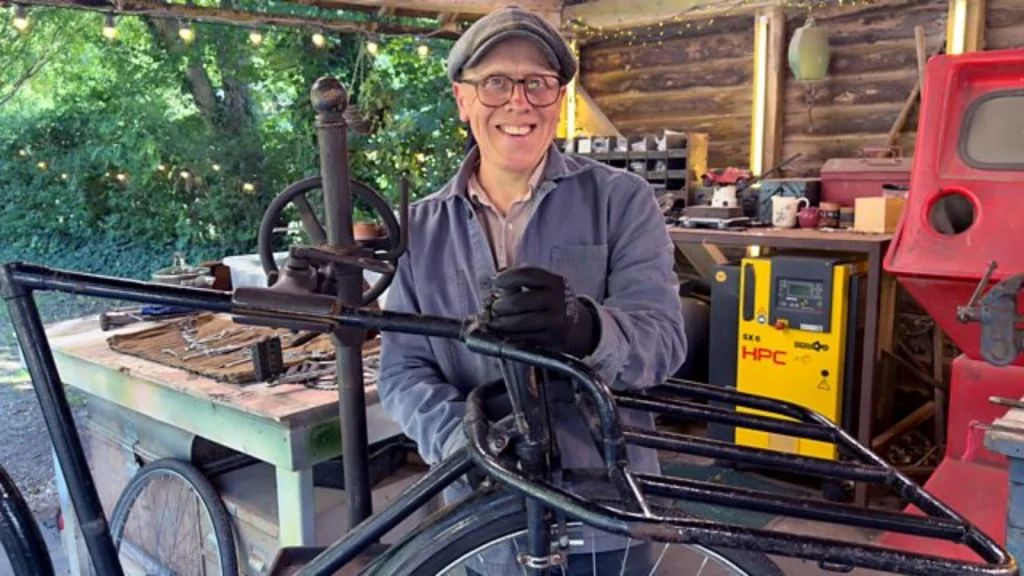
First into the barn is Gary from Hastings. He brings his father Jimmy’s old butcher’s bike. This machine is a true heavyweight. It was originally built to carry heavy loads of meat. Gary shares memories of his father using it in the 1950s. The bike was a familiar sight in Hastings. After his butcher days, Jimmy worked on the seafront. He was a fisherman and later a ‘boy ashore’. He helped boats land their precious catch.
Tragically, Jimmy’s life was cut short. He perished in the infamous storm of 1987. He was bravely trying to save fishing boats from the violent seas. His loss devastated the local community. Soon after, his friends wanted to honour his memory. They created the Crown Lane bike race. Jimmy’s old delivery bike became the centrepiece of this new tradition. It became a memorial on wheels.
For nearly four decades, this event has raised money for charity. Thousands of competitors have pedalled the heavy machine uphill. This amazing community effort has preserved his legacy. However, years of punishing wear have taken their toll. The bike is now unsafe to ride. The race’s future is in jeopardy. Gary hopes the repair shop team can save this vital piece of family history.
Bike restorer Tim Gunn quickly assesses the challenge. He must strengthen the weary frame. He also needs to fix the failing brakes and cranks. His priority is making the bike safe for future races. Meanwhile, Dom Chinea focuses on its appearance. He crafts a new, hand-painted advertising board. This board will proudly honour Jimmy’s memory. This restoration is about more than just a bike; it’s about saving a community’s heritage.

Scan smarter. Create faster. Free.
Download QR & Barcode Studio — Create and scan unlimited QR codes & barcodes.
No paywalls. No limits. 100% Free.

Next, father and son Paddy and Gary travel from Belfast. They bring a prized pair of motorcycle racing goggles. These fragile antiques belonged to Paddy’s father, George Brockerton. George was an extraordinary competitor. His story is one of daring and speed. His motorbike journey began as a teenage dispatch rider in the First World War. This experience ignited a passion for racing.
After the war, George became a celebrated racer. He competed in the legendary Ulster Grand Prix. He also raced in the dangerous Isle of Man TT. Then, in 1935, he achieved something incredible. He became the only known Irishman to win a coveted Brooklands Gold Star. He earned this by breaking the 100mph barrier. This feat was almost unheard of at the time. His goggles were a symbol of his daring speed. They were his personal pride.
Today, however, these precious heirlooms are in a sorry state. The latex eyepieces have become brittle. They are crumbling away with age. Consequently, Paddy and Gary fear this link to George is lost forever. Shoemaker Dean Westmoreland and plastics expert Charlotte Abbott join forces. This unusual team-up is essential for the complex repair. They must carefully recreate the missing latex parts. Their goal is to preserve the distinctive shape and colour. This restoration will allow Paddy and Gary to celebrate George’s achievements once more.
From Mid Wales, Amanda arrives with a mysterious painting. It is known simply as “The Last Gathering”. She found the painting hidden in the attic. It was in her family’s farmhouse near Mynydd Epynt. The artwork captures a lost rural ritual. It shows farmers bringing livestock down from the mountains. They gathered for shearing and selling. This way of life had existed for centuries.
This practice ended abruptly and sadly. The entire community was evicted during the Second World War. The government needed the land for a Ministry of Defence training ground. The eviction scattered the families. For Amanda, this painting is deeply personal. Her family has farmed in the area for generations. The artwork represents not just history, but a lost way of life. It is a portal to a vanished community.
The Repair Shop 2026 episode 3
Paintings conservator Lucia Scalisi takes on this poignant restoration. She begins by carefully surface-cleaning the canvas. Soon, she discovers something surprising. There are areas of overpainting. These alterations conceal hidden details beneath. As she works, Lucia uncovers a key element. A figure has been obscured for decades. Through her meticulous craftsmanship, she revives the painting’s original balance. This reveal reconnects Amanda and her sons to a story their community still treasures.
Finally, sisters Lyndsay and Karen visit The Repair Shop. They bring a very personal piece of childhood history. It is Puffin, a miniature toy boat. Their late father built it for them in the early 1980s. He crafted it lovingly during his lunch breaks. He worked at the local bus repair works. Consequently, he built the boat entirely from scrap materials. He used bits from old buses and workshop offcuts.
This little boat was the centre of the sisters’ childhood play. It holds countless happy memories. Decades later, Puffin became a source of joy for their own children. Years of enthusiastic play and weather have left it broken. The boat is now rotten and unsafe. The sisters dream of seeing it sail again. They want it to be a link between their children and the grandfather they never met.
Woodworker Will Kirk tackles the extensive structural repair. He must rebuild the rotten bow. He also replaces the dashboard and seating. His work requires precision and care. Upholsterer Sonnaz adds a playful finishing touch. She brings colour and comfort back to the boat. Together, they ensure Puffin can be cherished again. It is more than a family keepsake. It is a tangible link to a beloved father and grandfather. The Repair Shop team delivers a truly magical result.
The Repair Shop 2026 episode 3 review
The Repair Shop 2026 episode 3 opens with a look into a workshop dedicated to time-honored crafts and the delicate art of restoration. This particular episode showcases several unique heirlooms, each telling a powerful story of family history and personal memories. Experts gather to address a variety of cherished pieces from the past, preparing for challenging yet emotionally rewarding repairs. Their work centers on bringing broken antiques back to life, demonstrating a profound respect for the objects and the narratives they embody.
The episode delves into three distinct projects, starting with a heavily used butcher’s bike, an object intertwined with the tradition and tragedy of a coastal community. Next, a pair of vintage motorcycle racing goggles arrives, representing a champion’s incredible achievement and heritage. Finally, a cherished childhood toy, a homemade boat named Puffin, seeks renewal after years of love and exposure to the elements. This trio of items highlights the diverse nature of heirlooms that arrive at the barn, ranging from robust transportation to delicate personal gear and wooden craftsmanship.
The first repair features a massive, well-worn butcher’s bike, an antique brought in by Gary Read from Hastings. This hefty heirloom tells a poignant story of family life in England’s south coast. Gary explains that the bike belonged to his father, Jimmy, who used it in the early 1950s for his butcher’s rounds, carrying meat in a box on the front carrier, which used to hold an advertising board. Jimmy’s working life later shifted to the fishing industry, where he eventually became a fisherman and then a “boy ashore,” helping boats up the beach with a winch and selling fish at a stall.
Tragically, Jimmy died in the devastating storm of 1987, the worst to hit England since 1703, with winds topping 100 miles per hour and causing widespread destruction. Jimmy was on the beach trying to help secure boats from the rough sea when a shed blew over and killed him; he was only 49. To commemorate Jimmy’s life, a family friend started a bike race up a steep hill called Crown Lane in the old town, inspired by a bet Jimmy won in the 1970s. Jimmy had been challenged to ride his butcher’s bike up the steep hill while remaining seated, a feat he accomplished, winning ten shillings.
The charity race, established in 1988, has continued ever since, ensuring Jimmy’s memory lives on. Over the years, the bike has been ridden by nearly 4,000 people, with about 120 participating annually. However, the relentless use had taken its toll, and the bike had to be retired due to safety concerns. The cranks were loose and wobbly, the steering was shaky, and the brakes were unreliable.
Gary brought the bike to the barn hoping for a complete restoration that would allow it to return to the race track. Tim Gunn, the bike restorer, acknowledged the significant challenge, noting the wear inflicted by 4,000 riders on a bicycle originally built to be robust, but not for racing. This complex repair is one of the centerpiece projects of The Repair Shop 2026 episode 3.
Tim began his meticulous repair of the butcher’s bike, starting with the front end. He immediately discovered that the handlebars were bent on one side, a likely result of the bike being dropped. Using gentle heat, Tim carefully straightened the bent tube, pleased with the near-perfect alignment he achieved. Meanwhile, he tasked Dom with creating a replacement advertising board for the front carrier, an important restoration detail to honor the bike’s history. Dom, using traditional sign writing techniques, decided to create a board that commemorates Jimmy and the memorial race, ensuring a constant reminder of the family legacy. He worked on a wooden template, cutting out the design and applying paint using methods that evoke craftsmanship of the past.
Tim moved on to the structural repair of the front carrier, which was originally assembled using brazing. The carrier, which was central to Jimmy’s original butcher’s work, had several joints that had come adrift and a sizable hole that needed attention. Tim opted to use the traditional method of brazing to repair the carrier, using brass which flows cleanly into the joint. He successfully patched the hole using a small curved piece of metal, carefully brazing it in place so that the repair would be virtually invisible once cleaned up. This commitment to period-correct craftsmanship is essential to the success of the restoration.
Another critical step in the repair of the butcher’s bike involved replacing the cotter pins in the cranks. These pins, which attach the pedals to the main axle, were worn and compromised, a significant safety hazard. Tim sourced brand-new cotter pins to replace the old ones, noting that the original pin was on the verge of breaking, especially when ridden uphill, which is the nature of the memorial race.
Tim used a very old, specialized tool, a cotter pin press, to firmly drive the new pins into place, ensuring the crank assembly was solid and secure. With the cranks, handlebars, and front carrier structurally sound, and the brakes adjusted, the bike was safe and ready for its return to the race. This restoration successfully addressed the core safety issues while preserving the antique‘s historical patina and heritage.
The Repair Shop 2026 Episode 3: Reviving a Racing Legend’s Goggles
The second major restoration project involves a pair of motorcycle racing goggles brought in by Paddy Brockerton and his son Gary from Belfast. These goggles were a cherished possession of Paddy’s father, George Brockerton, a legendary champion motorcyclist. George’s history includes serving as a dispatch rider at the age of 17 in the First World War, where his love of speed and adrenaline flourished while navigating bombs and gunfire.
After the war, his passion for motorbikes led to a celebrated racing career, including class victories in the Ulster Grand Prix in 1928 and 1929, and racing in the world-famous Isle of Man TT in 1934. The ultimate highlight of George’s career came in 1935 at Brooklands, Weybridge, when he won a race for the British Motorcycle Road Racing Club, lapping at over 100 miles per hour. This speed won him the Brooklands Gold Star, an achievement that marked him as perhaps the only Irish rider to ever win the prestigious award.
The goggles were presented to George by a sponsor, making them a tangible link to his peak achievement and a source of family pride. Paddy, who was only about 21 or 22 when his father passed away 60 years ago, feels a deep connection to George’s legacy through these objects. Gary, who never met his grandfather, knows him through photographs and the trophies that celebrate his history. The sight of the goggles evokes a vivid image of his grandfather tackling “crazy speeds” during his racing career. Over time, the goggles had deteriorated, and Paddy requested a restoration to make them presentable. Shoemaker Dean Westmoreland took on the repair, hoping to honor the Brockerton heritage.
Dean quickly realized the complexity of the goggles’ repair. He initially assumed the red eye pads were made of leather, a material familiar to him as a shoemaker. However, upon closer inspection, he discovered the material was a latex rubber that had become brittle with age, a common process of deterioration. With the material too hard and fragile to work with, Dean recognized he needed assistance to fabricate a new eye piece that was flexible and soft enough for him to stitch. He turned to Charlotte, the plastics and rubber expert, for help.
Charlotte’s plan for the restoration was ingenious, involving a multi-stage process of craftsmanship. Since latex is not a suitable material for direct sculpting or carving, she chose to first sculpt a dummy eyepiece out of wax-based clay. She aimed to precisely capture the detail and shape of the original antique. To ensure the new piece matched the worn appearance of the existing eyepiece, Charlotte created a texture stamp from cracked paint.
After softening the clay surface with a blowtorch, she pressed the stamp into the clay, transferring the appearance of aged, cracked material onto the new form. Finally, she used the detailed clay sculpt to make a silicone mold, from which she successfully cast the final replacement piece in liquid latex.
Once Charlotte delivered the perfectly textured, flexible, and strong latex eyepiece, Dean carefully cleaned and polished the metal frame, removing the oxidation and tarnishing to restore the metal’s shine. He then faced the delicate task of attaching the new latex piece to the metal frame. Dean used a saddle stitch, a very strong sewing technique employing a single thread and two needles passing through the same hole, ensuring the repair would hold up without cutting the latex.
This meticulous and patient craftsmanship allowed him to sew the new eyepiece in securely. Dean also applied a new layer of red acrylic paint to both the original and the new latex pieces, not only to match the color but also to consolidate the fragile, original material and prevent further deterioration. The repaired goggles, complete with a cleaned strap, now looked fantastic, a suitable tribute to George Brockerton’s racing history.
Uncovering Hidden Art and Protecting Coastal Heritage
Lucia Scalisi, the paintings conservator, undertook the restoration of “The Last Gathering,” an oil painting with profound Welsh heritage. Brought in by Amanda from Powys in Mid Wales, the artwork depicts a scene of livestock being gathered from the mountain, a regular event crucial to the farmers’ livelihoods. The painting is believed to show the mountain called Epynt, a name that means “haunt of the horse” due to the historical presence of horses there. Amanda’s discovery of the artwork in an attic on the outskirts of Epynt gave her a strong connection to the local farming history.
The painting’s title, “Last of the gathering,” refers to the potential end of a way of life. This history connects to the fact that in 1939, following the outbreak of the Second World War, the War Office commandeered the vast open area of Mount Epynt for artillery training. Families from 54 farms, roughly 200 people, were forced to leave their ancestral homes and a life built over generations, starting anew in different communities.
The area remains under the control of the Ministry of Defence, though local farmers still manage to graze some 90,000 sheep there, a heritage maintained through cooperation with the MOD. Amanda’s husband, a fourth-generation farmer, and their two sons continue this tradition of taking sheep to and from Epynt.
Amanda noticed a curious, fuzzy area of overpaint on the lower section of the artwork, which seemed to obscure something important, a “link” across the stream. She was eager to uncover what was hidden beneath the paint. Lucia began the restoration with a gentle surface cleaning, using a solution of distilled water with a drop of ammonia to lift surface dirt. The surface dirt removal significantly improved the vibrancy of the painting. The overpaint removal revealed a second Welsh sheepdog figure, a handsome animal that Lucia noted was the “dynamic center” of the picture and the “leader of the pack,” making its cover-up a mystery.
The removal of the shadowy lump of overpaint was a nerve-wracking but thrilling process. Using a scalpel and cleaning solutions to soften the paint layer, Lucia meticulously scraped away the non-original paint, slowly bringing the hidden dog to light. The final revelation of the sheepdog figure completed the composition and deepened the narrative of the artwork, further celebrating the heritage of the Epynt community.
With the overpaint removed, Lucia consolidated a small crack and a ding in the canvas using a special acrylic adhesive to flatten and secure the canvas fibers. The final stage of the restoration involved a brush coat of varnish and the retouching of small scuffs and abrasions, especially on the newly uncovered dog, reconstructing the complete figure. The revived painting stands as a magnificent tribute to a moment in time and the enduring heritage of the Epynt farming community.
Restoration of Puffin: A Toy Boat’s Second Voyage in The Repair Shop 2026 Episode 3
The final heirloom to receive a remarkable restoration is Puffin, a toy boat with wheels, brought in by sisters Lyndsay Skinner and Karen Price. The sisters, from Breaston, shared the story of the homemade boat, which their father, Geoff, built for Lyndsay’s second birthday. The toy was made lovingly from scrap material he found at the bus repair works where he was employed, working on the boat during his lunch hours. Evidence of Geoff’s resourcefulness is still visible, with components like bus flooring used in the interior, and a steering wheel repurposed from an old fire extinguisher.
Puffin was a cherished part of their childhood, sparking their imagination for adventures. It was later kept safely until the sisters had their own children, who also enjoyed playing in “Grandad’s boat.” Sadly, Geoff passed away 12 years ago, and Puffin, after another decade of play and outdoor exposure, succumbed to damp, becoming spongy and creaky. The bow was delaminating and irreparable, the floor was weak, the seat hinge was broken, and the wheels had deteriorated, rendering it unsafe for play. Lyndsay and Karen hoped for a sturdy restoration that would allow their children to continue enjoying this tangible link to a grandfather they never met.
Will Kirk, the carpentry expert, took on the challenging repair, determined to preserve Geoff’s craftsmanship while ensuring the boat was robust enough for a new generation of enthusiastic children. He had to replace the most damaged parts, including the bow, base, and seat, all of which were rotting. Will replaced these sections using new, solid plywood, but he was delighted to save the original bus flooring panel inside the boat, a visible tribute to Geoff’s ingenuity. He also carefully removed the original dashboard, which had begun to crumble, and the inventive steering wheel.
In the spirit of Geoff’s resourcefulness, Will decided to not only replace the rotten dashboard but also to add new interactive elements. He crafted the new dash from solid wood, preventing future delamination. Using his laser engraving machine, he etched a decorative compass on the left and a speedometer on the right, adding to the imaginative play experience. For the broken and brittle wheels, Will chose to turn new, resilient wheels out of teak, a naturally oily wood that would hold up better outdoors than plastic.
This detail kept the spirit of homemade craftsmanship alive. Sonnaz also contributed to the restoration, creating a fun, puffin-themed cushion and a flag to complete the nautical look. After finishing the woodwork with an external varnish to protect it from the elements, Will successfully completed Puffin’s restoration, ensuring this valuable heirloom could launch its second voyage of childhood memories.
The Enduring Power of Objects That Bridge Generations
The three restorations showcased in The Repair Shop 2026 episode 3 reveal something profound about our relationship with the physical world: objects aren’t merely things we own, but vessels that carry forward the essence of those we’ve loved. Jimmy’s butcher’s bike, George’s racing goggles, and Geoff’s handmade boat Puffin each arrived at the barn in a state of disrepair, yet what truly needed mending wasn’t just wood, metal, or leather—it was the fragile thread connecting present generations to their heritage.
What makes this episode particularly compelling is how each restoration demonstrates that preservation isn’t about freezing objects in time, but rather preparing them for continued service. Tim Gunn didn’t simply repair Jimmy’s bike to museum-quality standards; he strengthened it so another thousand riders could thunder up Crown Lane, keeping alive a tradition born from tragedy and transformed into celebration. The bike’s patina remains, its advertising board now honors the man who pedaled it, and its structural integrity ensures the memorial race will continue. This approach—respecting history while enabling future use—captures the philosophy that makes heirloom restoration so meaningful.
The meticulous craftsmanship required for each project underscores another vital truth: some skills and techniques can’t be rushed or replicated by modern shortcuts. Charlotte’s multi-stage process for recreating the latex eyepieces on George’s goggles, Dean’s patient saddle stitching, and Will’s decision to turn new wheels from teak rather than use plastic—these choices honor not only the original makers but also the tradition of doing work properly. In an era of disposability and instant replacement, watching experts employ brazing, hand-sculpting, and laser engraving reminds us that quality repair demands both knowledge and patience.
Perhaps most striking is how these restorations illuminate the stories we might otherwise lose. Without Lucia’s careful removal of overpaint, the second sheepdog in “The Last Gathering” would have remained hidden, and with it, a more complete understanding of Welsh farming heritage on the Epynt mountain. Amanda’s painting now tells a fuller story of a community displaced yet enduring, much like the 90,000 sheep still grazing land their ancestors worked. These recovered details matter because they challenge us to look deeper, to question what might be obscured in our own family histories waiting to be uncovered.
The emotional revelations at each item’s return drive home why this work transcends mere repair. Gary seeing his father’s bike ready to race again, Paddy and Gary holding goggles that transport them to Brooklands in 1935, Lyndsay and Karen watching their children climb aboard Puffin—these moments confirm that skilled restoration creates something beyond nostalgia. It provides tangible connection across generations, allowing grandchildren who never met their grandfathers to nevertheless know them through objects bearing the marks of their hands and hearts.
For anyone holding onto a damaged heirloom in an attic or garage, this episode offers an encouraging message: deterioration isn’t destiny. Whether it’s a piece bearing the scars of 4,000 riders, goggles aged for 90 years, or a toy boat ravaged by damp, expert restoration can resurrect not just the object but the memories and traditions it embodies. The Repair Shop 2026 episode 3 reminds us that some things are worth saving precisely because they can’t be replaced—and that in preserving our past, we gift something irreplaceable to our future.
FAQ The Repair Shop 2026 episode 3
Q: What makes The Repair Shop 2026 episode 3 particularly meaningful for viewers?
A: This episode resonates deeply because it showcases three distinct heirlooms that embody powerful family histories and personal memories. Furthermore, each restoration project demonstrates how skilled craftsmanship can preserve not just objects, but the emotional connections and heritage they represent across generations. The episode features Jimmy’s butcher’s bike from a coastal community, George Brockerton’s racing goggles from his championship career, and Puffin, a handmade toy boat crafted from scrap materials by a loving father.
Q: How did Jimmy Read’s butcher’s bike become part of a charitable tradition?
A: After Jimmy tragically died in the devastating 1987 storm while helping secure boats on the beach, a family friend established a memorial race in 1988. The charity race honors a bet Jimmy won in the 1970s when he successfully rode his heavy butcher’s bike up the steep Crown Lane hill while remaining seated. Since its inception, nearly 4,000 people have ridden the bike annually, with approximately 120 participants each year keeping Jimmy’s memory alive through this unique community event.
Q: What restoration challenges did Tim Gunn face with the butcher’s bike?
A: Tim confronted significant structural issues caused by thousands of riders using a bicycle never designed for racing conditions. The handlebars were bent from being dropped, requiring careful heat application to straighten them. Additionally, the front carrier had joints that came adrift and a sizable hole needing traditional brazing repair. Most critically, the worn cotter pins connecting the pedals posed serious safety hazards, especially during uphill racing, requiring complete replacement using specialized vintage tools to ensure rider safety.
Q: What made George Brockerton’s motorcycle racing goggles historically significant?
A: George Brockerton’s goggles represent an extraordinary racing heritage from the 1930s golden age of motorsport. He won the prestigious Brooklands Gold Star in 1935 after lapping at over 100 miles per hour, potentially becoming the only Irish rider to achieve this distinction. Previously, George competed in the Ulster Grand Prix and the world-famous Isle of Man TT races. The goggles, presented by a sponsor, serve as a tangible connection to these remarkable achievements for his son Paddy and grandson Gary.
Q: Why was restoring the racing goggles more complex than initially expected?
A: Dean Westmoreland discovered the red eye pads weren’t leather as assumed, but deteriorated latex rubber that had become brittle over 90 years. Consequently, he enlisted Charlotte’s expertise to create a replacement using an ingenious multi-stage process. Charlotte sculpted a dummy eyepiece from wax-based clay, created a texture stamp from cracked paint to replicate the aged appearance, and cast the final piece in liquid latex using a silicone mold. This collaboration ensured the flexible, authentic-looking replacement could withstand Dean’s saddle stitching technique.
Q: What hidden discovery did Lucia Scalisi make in ‘The Last Gathering’ painting?
A: Lucia uncovered a second Welsh sheepdog that had been obscured by overpaint, transforming the composition’s narrative. Using a scalpel and cleaning solutions, she meticulously removed the non-original paint layer to reveal what she described as the dynamic center of the picture and leader of the pack. This discovery was particularly significant because the painting depicts the Epynt mountain farming heritage, where 200 people from 54 farms were displaced in 1939 when the War Office commandeered the land for artillery training.
Q: How does the Epynt farming community maintain its heritage today?
A: Despite the Ministry of Defence controlling Mount Epynt since World War II, local farmers continue grazing approximately 90,000 sheep on the land through cooperative arrangements. Amanda’s husband, a fourth-generation farmer, and their sons perpetuate this tradition by taking sheep to and from Epynt. Therefore, the restored painting serves as both an artistic record and a living connection to ancestral farming practices that survived displacement, demonstrating remarkable resilience and adaptation across multiple generations.
Q: What makes Puffin the toy boat special beyond its sentimental value?
A: Geoff built Puffin entirely from scrap materials found at the bus repair works during his lunch hours, showcasing extraordinary resourcefulness and craftsmanship. The boat features repurposed bus flooring in its interior and a steering wheel fashioned from an old fire extinguisher. This ingenuity transformed discarded industrial materials into a beloved childhood toy that sparked imagination for two generations. Moreover, Puffin represents a tangible link allowing grandchildren who never met Geoff to connect with his creative spirit and dedication.
Q: How did Will Kirk balance preservation with practicality in restoring Puffin?
A: Will replaced extensively damaged components including the delaminating bow, weak floor, and broken seat with solid plywood while preserving the original bus flooring panel as tribute to Geoff’s ingenuity. He enhanced the dashboard with laser-engraved compass and speedometer designs for imaginative play. Instead of plastic replacements, Will turned new wheels from teak, a naturally oily wood offering superior outdoor durability. This approach honored Geoff’s resourceful craftsmanship while ensuring Puffin could withstand another generation of enthusiastic children’s adventures.
Q: What common philosophy connects all three restorations in this episode?
A: Each restoration demonstrates that preserving heirlooms isn’t about freezing objects in museum-quality stasis, but preparing them for continued meaningful use. Tim strengthened Jimmy’s bike for future memorial races while maintaining its historical patina. Dean and Charlotte restored George’s goggles as a presentable family treasure. Will rebuilt Puffin to withstand active play from new generations. Ultimately, these experts proved that skilled restoration bridges past and future, allowing cherished objects to continue creating memories while honoring those who originally owned and loved them.