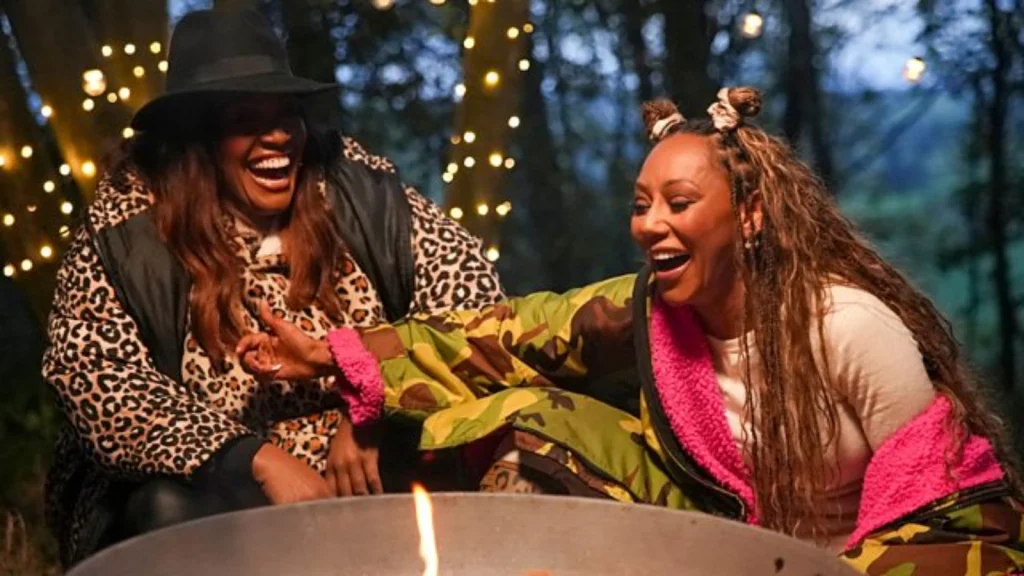
In Alison Hammond’s Big Weekend episode 4, viewers gain an intimate look into the life of Melanie Brown, the global icon better known as Mel B. The episode moves beyond the fierce persona of Scary Spice to reveal a woman rebuilding her life from the ground up. It follows her journey from the isolation of a tumultuous marriage back to her roots in Northern England. Here, surrounded by family and nature, she confronts her past. This exploration reveals a story of resilience, fame, and the long road to healing. It shows a side of the superstar few have ever seen before.
Mel B’s story resonates deeply in an era of intense public scrutiny of celebrities. Her narrative is a powerful example of surviving life in the public eye. After achieving phenomenal success with the Spice Girls, she faced immense personal hardship. This included a high-profile divorce filled with allegations of abuse, which she has openly discussed. Her journey of returning home, financially depleted and emotionally scarred, provides a raw look at the realities behind the glamour of fame. It underscores the difficult process of reclaiming one’s identity after trauma, a struggle many face away from the cameras.
The scope of Alison Hammond’s Big Weekend episode 4 is both broad and deeply personal. The program chronicles Mel’s new, quieter life on a farm near Leeds. It also revisits the dizzying heights of her pop stardom with the Spice Girls. The episode carefully peels back the layers of her public image. Host Alison Hammond gently guides conversations that uncover the dynamics within the band. Furthermore, it delves into the painful estrangement from her family and the subsequent, delicate process of reconciliation. This dual focus provides a holistic view of her life.
This journey is presented with the help of television personality Alison Hammond, who spends a weekend getting to know the real Mel B. From the start, Mel is portrayed as the “self-confessed gobby northerner” who became a global phenomenon. She rose to fame with the Spice Girls, conquered American television, and even earned an MBE for her charity work. The episode acknowledges the stark contrast between her public achievements and her private struggles. This context is crucial for understanding the woman she is today. It sets the stage for a story not just about fame, but about survival.
A significant portion of the narrative focuses on the fallout from her marriage to Stephen Belafonte. The program touches upon the divorce, which was accompanied by allegations of abuse that Belafonte denies. This period left her bankrupt and emotionally devastated. Now, having found love again with her partner Rory, she is actively rebuilding her life. This backdrop of trauma and recovery is central to the episode. It explains her return to Leeds and her efforts to reconnect with the family she lost contact with for years.

Scan smarter. Create faster. Free.
Download QR & Barcode Studio — Create and scan unlimited QR codes & barcodes.
No paywalls. No limits. 100% Free.

Her new life represents a sanctuary, a deliberate step away from the chaos that once defined her existence. Now living in the middle of a forest, she finds solace in the rhythms of country life. This starkly contrasts with the global stages she once commanded. The transition from pop icon to farm tender is a powerful visual metaphor for her internal journey. It is here, among her animals and family, that she has begun to find peace and rediscover the strength that always defined her.
From Global Stage to Countryside: Mel B’s New Beginning
Mel B’s current reality is a world away from the international spotlight. She now resides on a sprawling property near her hometown of Leeds, a place she describes as being “in the middle of nowhere.” Her daily routine involves a hands-on approach to farm life. She personally tends to her goats and chickens, a grounding ritual that stands in sharp contrast to her past life. One chicken, she reveals, is named Sharon. She humorously explains this is because, growing up in Leeds, women wearing white stilettos were often called Sharon.
This new chapter is a work in progress. When she first moved in, the only piece of furniture in the entire house was the iconic Union Jack sofa from a Spice Girls tour. She admits she was lucky to have taken it, as it was all she had. Since then, she has slowly made the house a home, ordering a dining table and other essentials. This gradual rebuilding of her physical space mirrors her emotional and financial recovery. It is a tangible representation of her effort to create a stable and secure environment for herself.
The farm is more than just a home; it is a symbol of her reclaimed independence. Surrounded by her animals, including her dog Cookie, she has built a life that is authentically hers. This existence allows her to connect with a simpler way of being, far from the pressures of her former life. It is in this peaceful setting that she feels safe and happy within herself. The sounds of her goat calling her name have replaced the roar of stadium crowds, a trade-off she seems to embrace fully.
Reflecting on Spice Girls Fame in Alison Hammond’s Big Weekend episode 4
The episode delves deeply into Mel B’s experiences during the height of Spice Girls mania. She explains that being in the “eye of the storm” was surprisingly calm. The five members were often insulated from the global frenzy they were creating. Instead, they were simply five young women processing their incredible success together. However, Mel B also reveals a shared anxiety. They sometimes feared they would get “found out,” as they were breaking the established mold for pop groups and creating their own path.
Each member of the group had a distinct role, which Mel believes was key to their success. She saw herself as the driving force, the one always pushing with a “We can do this!” attitude. Geri Halliwell, she recalls, was the visionary, always brimming with ideas. Emma Bunton was the maternal figure, the “feeder” who looked after everyone. Victoria Beckham was the pragmatic professional, focused on punctuality, presentation, and ensuring everyone was paid on time. Finally, Mel C was the dedicated athlete, always in the gym by six in the morning.
The episode also addresses the more difficult moments, particularly Geri’s departure from the band. Mel reveals that Geri left on her birthday, a fact that clearly still holds an emotional charge. At the time, the entire group was upset. With the clarity of hindsight, however, she expresses understanding for Geri’s decision. She acknowledges the immense pressure Geri was under, citing her public struggles with an eating disorder as a key factor in her need to escape. This reflection shows a maturity and empathy forged over time.
The current relationship between the five women is complex. They communicate via a WhatsApp group, but Mel admits she sometimes gets kicked out. Her excitement often leads her to announce reunion tours before they are confirmed, to the frustration of the others. Her relationship with Geri remains particularly complicated. She states simply, “we just don’t talk.” She compares their dynamic to that of sisters who might get on one minute and not the next, suggesting a bond that is both deep and occasionally fraught with tension.
Rebuilding Bonds and Confronting the Past
A poignant part of Alison Hammond’s Big Weekend episode 4 is the reunion with her mother, Andrea. Their relationship provides a powerful lens through which to view Mel’s journey of healing. Andrea describes her daughter as strong, yet sometimes brutal in her honesty, a quintessential “Northern woman.” This foundation of candor was shattered during Mel’s marriage. For eight years, the mother and daughter did not speak, a period Andrea describes as “horrible.” The daily phone calls Mel used to make dwindled and then stopped entirely.
The estrangement was the result of what Mel describes as coercive control. Andrea recalls receiving a call from Stephen Belafonte, who told her she would not be seeing her daughter or grandchild again. The line then went dead. During this time, Mel was being isolated from her family, led to believe they did not want to speak with her. She was a prisoner in her own life. She lost her voice, both literally and figuratively, unable to reach out to the people who loved her most.
Their reunion finally came when Mel’s father was on his deathbed. She escaped her situation and flew back to the UK, nervous about seeing her family after so many years. She carried an immense burden of guilt and shame. Andrea’s description of seeing her daughter for the first time is heartbreaking. She saw Mel as a “broken doll.” The reunion was bittersweet, shadowed by grief but offering the first step toward healing their fractured bond. Living with her mother became her lifeline.
The process of confronting her past was agonizing. Mel had to admit to herself, and then to her mother, the full extent of what she had endured. This was incredibly difficult for the woman the world knew as Scary Spice. She felt deep embarrassment that her private life was so starkly different from her “girl power” image. The episode highlights that abuse impacts the entire family, not just the direct victim. Their relationship today is still healing, a testament to their resilience and love.
From Bedsit to Global Icon: A Return to Blackpool
To understand Mel B’s journey, the show takes her back to where her professional career began: Blackpool. At just 15 years old, she moved there to work as a dancer. She recounts the harsh realities of the dance world at the time. The performers were subjected to a weekly weigh-in. If their weight fluctuated, their wages were docked because the costumes were made to precise measurements. This early experience instilled a fierce discipline and a professional toughness that would serve her well.
With Alison Hammond, she revisits the street where she lived in a small bedsit. After knocking on a few doors, they find the exact building. The current residents graciously allow them to see her old room on the top floor. The emotional impact of returning is palpable. She stands in the tiny space, remembering the fire alarm she set off with her toaster. The visit provides a powerful visual of how far she has come, from a cramped bedsit to a sprawling farmhouse. The moment is a touching reflection on her incredible journey.
The trip down memory lane continues with a visit to the Horseshoe Bar, the venue where she first performed. The stage, which once seemed so grand, now appears much smaller. She recalls dancing for audiences who were eating fish and chips, her father watching from the crowd with a horrified expression at her skimpy, feathered costume. Despite the humble setting, she remembers feeling immense pride. At that moment, performing on that small stage, she truly believed she had made it.
This return to her roots is transformative. Seeing her back in the environment where it all started, Mel appears carefree and joyful. It was a time before the immense pressures of global fame and personal trauma. The experience underscores her innate passion for performing. It was never just about the money or the fame; it was about the electric feeling of being on stage. This visit serves as a powerful reminder of the ambitious, hopeful teenager who dared to dream big, long before the world knew her as Scary Spice.
Finding Power in the Quiet Revolution
Mel B’s story isn’t just another celebrity comeback narrative—it’s a masterclass in radical self-preservation. In a world that celebrates the loud, the flashy, and the perpetually “on,” she’s chosen something far more subversive: the quiet revolution of healing.
Her journey from the chaos of global superstardom to the gentle rhythms of farm life represents something profound about reclaiming authentic power. The woman who once commanded stadium crowds now finds strength in the simple act of naming her chickens and tending to goats who call her name. This isn’t a retreat from life—it’s a bold reimagining of what success can look like when stripped of external validation.
What makes Mel’s transformation so compelling is its unflinching honesty about the cost of fame and the courage required to rebuild. Her willingness to trade the Union Jack sofa—once a symbol of her pop royalty—for a life where furniture arrives one piece at a time speaks to a deeper truth: sometimes the most revolutionary act is choosing to start over completely. The “broken doll” her mother saw has methodically assembled herself into something stronger, more authentic, and infinitely more peaceful.
Her reconciliation with her family illuminates perhaps the most crucial element of her healing journey. The eight-year silence with her mother wasn’t just personal tragedy—it was a masterclass in how abuse isolates victims from their support systems. Their reunion, born from tragedy but nurtured through patient love, offers hope to anyone who’s ever felt too ashamed to come home. It proves that bridges can be rebuilt, even when they’ve been burned by trauma and time.
The return to Blackpool provides the perfect metaphor for her entire journey. Standing in that tiny bedsit, seeing the stage that once seemed so grand now appear small, she demonstrates something essential about perspective. The ambitious teenager who danced for fish-and-chips crowds contained the same fire that would later survive global fame and personal devastation. That core strength was always there—it just needed to be rediscovered beneath layers of trauma and public expectation.
For anyone watching Mel B’s story unfold, the message is clear: there’s no shame in choosing peace over chaos, simplicity over complexity, or authenticity over performance. Her journey proves that sometimes the most powerful thing you can do is disappear from the world’s expectations and reappear as yourself.
In an age of social media performance and perpetual hustle culture, Mel B’s quiet revolution offers a different template entirely. She’s shown that healing isn’t about bouncing back—it’s about building something entirely new from the pieces that remain. Her story reminds us that strength isn’t always about conquering the world; sometimes it’s about having the courage to tend your own garden until you remember who you were before the world told you who to be.
FAQ Alison Hammond’s Big Weekend episode 4 – Mel B
Q: Who is Mel B and why is she significant?
A: Mel B, born Melanie Brown, is a global icon best known as Scary Spice from the legendary girl group the Spice Girls. Additionally, she conquered American television, earned an MBE for charity work, and became a household name. However, beyond her fierce public persona lies a compelling story of resilience, trauma recovery, and personal transformation that resonates with millions worldwide.
Q: What was Mel B’s role within the Spice Girls dynamic?
A: Mel B served as the driving force behind the Spice Girls, constantly pushing forward with a “We can do this!” attitude. Furthermore, she describes herself as the motivational engine while each member had distinct roles. Geri was the visionary with endless ideas, Emma the maternal “feeder,” Victoria the pragmatic professional, and Mel C the dedicated athlete, creating a perfectly balanced team dynamic.
Q: What happened during Mel B’s marriage to Stephen Belafonte?
A: Mel B’s marriage to Stephen Belafonte involved allegations of abuse, which he denies, ultimately leading to a devastating divorce. Consequently, she became financially bankrupt and emotionally scarred. The marriage resulted in eight years of isolation from her family through what she describes as coercive control, leaving her feeling like a prisoner in her own life, unable to reach out to those who loved her most.
Q: How did the abusive relationship affect her family connections?
A: The abusive relationship completely severed Mel B’s connection with her mother Andrea for eight years. Moreover, Stephen Belafonte allegedly called her mother, stating she would never see her daughter or grandchild again before hanging up. During this period, Mel believed her family didn’t want to speak with her, while they were desperately trying to maintain contact, illustrating how abuse isolates victims from their support systems.
Q: Where does Mel B live now and what is her current situation?
A: Currently, Mel B resides on a sprawling farm property near Leeds, describing it as being “in the middle of nowhere.” Additionally, she’s found love again with her partner Rory and is actively rebuilding her life. The transition from global stages to countryside represents a powerful visual metaphor for her internal journey, where she’s discovered peace among her animals and family in this forest sanctuary.
Q: What does Mel B’s daily routine look like on the farm?
A: Mel B’s daily routine involves hands-on farm life, personally tending to her goats and chickens in a grounding ritual. Notably, she’s even named one chicken Sharon, humorously explaining that growing up in Leeds, women wearing white stilettos were often called Sharon. Furthermore, the sounds of her goats calling her name have replaced stadium crowds, a trade-off she embraces while feeling safe and authentically herself.
Q: How does Mel B reflect on her Spice Girls fame today?
A: Mel B reflects on Spice Girls fame with mature perspective, explaining that being in the “eye of the storm” was surprisingly calm. However, she reveals they sometimes feared getting “found out” since they were breaking established pop group molds. Additionally, she now understands Geri’s departure better, acknowledging the immense pressure Geri faced, particularly with her eating disorder struggles, showing empathy forged through her own difficult experiences.
Q: What is Mel B’s current relationship with the other Spice Girls?
A: The five Spice Girls maintain a WhatsApp group, though Mel admits she sometimes gets kicked out for prematurely announcing reunion tours. However, her relationship with Geri remains particularly complicated, stating simply “we just don’t talk.” Nevertheless, she compares their dynamic to sisters who might get along one minute and clash the next, suggesting a deep but occasionally fraught bond that continues to evolve.
Q: How did returning to Blackpool impact Mel B’s healing journey?
A: Returning to Blackpool proved transformative for Mel B’s healing journey, as she revisited her tiny bedsit and the Horseshoe Bar where she first performed. Consequently, seeing the stage that once seemed grand now appear small provided essential perspective on her incredible journey. Moreover, this return reminded her of the ambitious, hopeful teenager who dared to dream big, reconnecting her with the core strength that survived both global fame and personal devastation.
Q: What lessons can others learn from Mel B’s transformation story?
A: Mel B’s story demonstrates that healing isn’t about bouncing back but building something entirely new from remaining pieces. Furthermore, her quiet revolution shows there’s no shame in choosing peace over chaos, authenticity over performance. Additionally, her journey proves that sometimes the most powerful action is disappearing from world expectations and reappearing as yourself, offering hope to anyone rebuilding their lives after trauma or abuse.