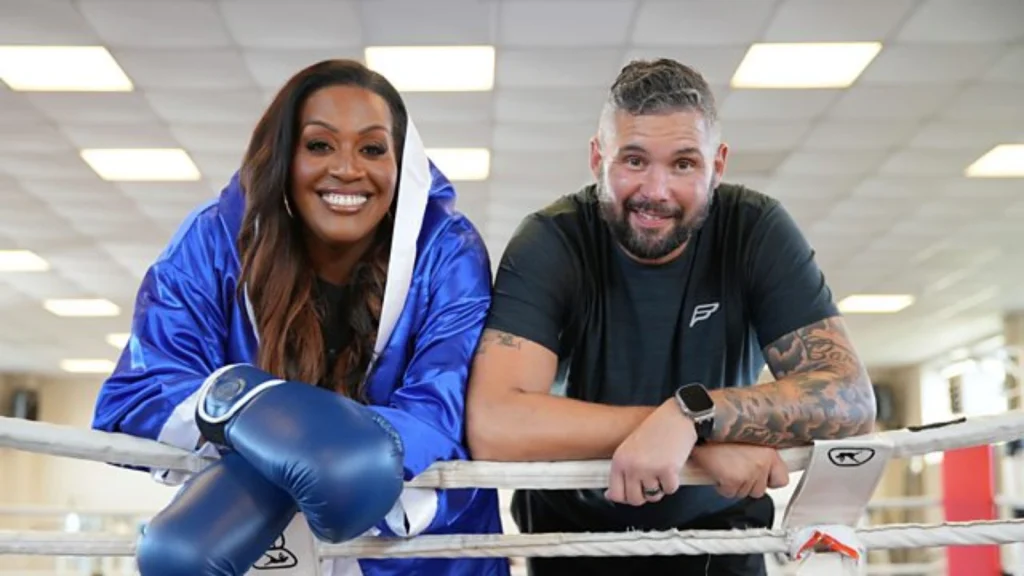
In Alison Hammond’s Big Weekend episode 6, viewers are offered a uniquely intimate portrait of retired world champion boxer Tony Bellew, a man navigating the quiet aftermath of a brutally loud career. The episode peels back the layers of the public persona, revealing the devoted family man, the restless retiree, and the product of a tough Liverpool upbringing who fought his way to global stardom. Far from the glitz and glamour one might expect, the program immediately grounds the superstar in a state of domestic chaos.
Bellew and his wife, Rachael, are in the midst of a massive home renovation, living out of a single makeshift room. This setting becomes a powerful metaphor for his life: a grand exterior still under construction, with the real, unvarnished activity happening in a small, intense space.
This candid look, facilitated by host Alison Hammond, explores the core of what drives a fighter. It delves into the sacrifices required not just from the athlete, but from their entire family. We learn that for every moment of glory in the ring, there were months of strain at home. Rachael Bellew speaks of effectively being a single parent to their four sons, managing the household so Tony could entirely focus on his violent craft.
The episode presents a compelling narrative about the duality of success, where immense financial reward coexists with the profound physical and psychological toll of a life spent in combat. The journey of Tony Bellew is shown as one of grit, ambition, and a relentless desire to provide, a story that began on the tough streets of Liverpool.
The program effectively uses Bellew’s own words to chart his path from a boy seeking his father’s approval to a champion securing his family’s future. Alison Hammond’s Big Weekend episode 6 moves beyond a simple celebrity profile. Instead, it examines the complex transition from a life of high-stakes violence to one of quiet retirement. It questions what happens when a man, who defines himself by his ability to fight, can no longer step into the ring. Through honest conversations, the episode uncovers his boredom, his health concerns, and the lingering temptation of one more fight, providing a raw look at the price of becoming a champion.

Scan smarter. Create faster. Free.
Download QR & Barcode Studio — Create and scan unlimited QR codes & barcodes.
No paywalls. No limits. 100% Free.

As a foundation, the narrative establishes that Bellew’s primary motivation was never just personal glory. Growing up, his main goal was to impress his father, a former fighter himself who lacked the specific temperament for professional boxing. Tony wanted to achieve what his father could not. This desire fueled his early career, pushing him through the amateur ranks and into the professional world. Now, he reflects that his father is immensely proud, with Tony being his “pride and joy.” This relationship forms the emotional bedrock of his ambition, a need to validate himself in the eyes of his first hero. This theme of family as the ultimate motivator is central to understanding the man behind the gloves.
His relationship with his wife, Rachael, provides a different, equally crucial perspective. Their dynamic is portrayed as a mix of loving bickering and deep, unspoken understanding. Rachael openly discusses the immense sacrifices she made. She describes how she had to handle everything at home, ensuring a smooth environment so he could train, effectively missing out on having a husband present during their children’s formative years. He acknowledges her central role, understanding that his success was a shared endeavor built on her strength and resilience. She jokingly refers to him as her “fifth child,” a comment that speaks volumes about the level of support he requires even outside the ring.
Their four sons—Cobey, Corey, Carter, and Carson—are the ultimate reason for his struggles. The decision to give them all names starting with ‘C’ was an organic one that eventually became a theme they had to continue. For Bellew, the shift in his career’s purpose is clear. After achieving his dream of becoming a world champion, the motivation pivoted from glory to financial security. Every punch thrown in the latter half of his career was to ensure his children would have a life of opportunity, a stark contrast to his own challenging upbringing in the Wavertree area of Liverpool.
Alison Hammond’s Big Weekend episode 6 – Tony Bellew
The Foundation: Family, Motivation, and a Tough Upbringing
Tony Bellew’s story is inextricably linked to his roots. He grew up in Wavertree, which he describes as a “really tough neighbourhood” where survival was not guaranteed. He recalls that many of the boys he grew up with ended up in jail or dead because opportunities were scarce. While he admits to getting into mischief like smashing windows, he was saved from a more dangerous path by the discipline of the boxing gym. This environment shaped his worldview, instilling in him a toughness and a profound appreciation for the life he would later build. His mother, Gail, still lives in the same childhood home, a testament to the family’s deep connection to their community.
His mother’s influence provided a crucial balance to his aggressive nature. Bellew describes himself as having a temper, but one he is very good at keeping in check. He attributes this thoughtful, patient side to his mother, whom he calls a “thinker.” In contrast, his father was “action,” providing the initial spark for his boxing journey. This combination of parental traits created a fighter who was not just a brute force but also a strategist, capable of controlling his emotions when it mattered most. His mother recalls him being a “happy baby” who once had to have all the glass doors in the house removed because he would headbutt them, an early sign of his “glutton for punishment” nature.
The theme of family sacrifice is arguably the most powerful element explored. When Alison Hammond tours his trophy room, his wife Rachael reflects on what the championship belts truly represent. For her, they are symbols of immense hardship. She explains that people see the glamorous life but don’t understand the cost: the strict diets, the grueling training, and his absence from the family. She did everything for the kids while he was away, a sacrifice he also recognizes. The belts represent not just his achievement, but the collective endurance of his entire family.
Forging a Champion: The Rotunda Gym and the Dream of Goodison Park
The heart of Tony Bellew’s origin story as a fighter lies within the walls of the Rotunda ABC. He calls the gym his “home away from home,” unequivocally stating, “It saved my life, 100%.” For Bellew and many other kids from challenging backgrounds, the gym was more than a place to train; it was a sanctuary. It provided an alternative to the streets, instilling discipline, confidence, and a sense of community. He believes these boxing gyms are vital because they “literally save lives,” creating “charming, well-mannered gentleman” out of kids who arrive with no confidence. It was here that he channeled his aggression and honed the skills that would take him to the top.
His ultimate boxing hero was Muhammad Ali. Bellew speaks with reverence for the legend, revealing that his own father once served as Ali’s bodyguard. This personal connection makes his admiration even deeper. The dream was never just to be a champion; it was to win the specific belt that Ali held, the green and gold WBC title. He admits he was never as interested in the other world titles because the WBC belt was the one held by all the greats he idolized, including Mike Tyson and Sugar Ray Leonard. This singular focus on a specific, historic prize drove him with incredible determination.
This dream culminated in one of the most significant nights of his life: fighting for the WBC title at Goodison Park, the home of his beloved Everton Football Club. As Alison Hammond’s Big Weekend shows, the stadium is sacred ground for him. Bellew confesses that his first dream was always to play for Everton. Since that was not his path, the next best thing was to have a ring placed in the middle of the pitch and fight for his dream belt. The walk to the ring that night was the culmination of everything he had ever worked for, a moment where his two greatest passions, Everton and boxing, converged in a spectacular fashion.
The Price of Glory: Health, Wealth, and the Aftermath of a Brutal Career
While the glory is undeniable, the physical cost of Bellew’s career has been severe. He is candid about the chronic pain he now lives with. “My hands are smashed to bits,” he states, revealing that a surgeon once predicted he would have full-blown arthritis by his current age. More troubling, however, is the neurological toll. He speaks openly about the impact of repeated head trauma on his memory.
Based on an estimate that a world-class fighter takes 50,000 punches to the head per year, he calculates he has taken over a million in his career. “I am forgetful,” he admits, accepting that more serious consequences, like “the shakes,” could be in his future. He says it with a chilling sense of resignation, viewing it as an inevitable price for the life he chose.
The financial rewards, however, have been life-altering. The turning point came with his two fights against David Haye. The build-up to the first fight was described as “toxic,” particularly after Haye made comments about Bellew’s children visiting him in the hospital. While this enraged him, Bellew says he quickly realized Haye had exposed his own weakness by resorting to such personal attacks.
Against all odds, with even his own promoter, Eddie Hearn, doubting he could win, Bellew was victorious. He recalls going to a cash machine afterward and being stunned by the “life-changing money” in his account, realizing he had secured his family’s future forever. At that point, he says, his motivation officially shifted from the dream of glory to the business of providing.
This duality of immense wealth and declining health defines his retirement. He finds himself “bored” without the discipline and thrill of preparing for a fight. The structure that dominated his life for over two decades is gone, leaving a void. He is a multi-millionaire living in a massive home, yet he seems restless and adrift. The episode paints a poignant picture of a man who has achieved everything he set out to do but is now grappling with the quiet reality of the aftermath. His body is a constant reminder of his brutal profession, even as his bank account reflects its incredible rewards.
The Final Bell? Tony Bellew on Retirement and a Possible Return in Alison Hammond’s Big Weekend episode 6
The question of a potential return to the ring looms over Tony Bellew, a topic explored in detail during Alison Hammond’s Big Weekend episode 6. His final professional fight was a loss to Oleksandr Usyk, a bout he reveals he actually came out of a brief retirement to take. This history of being drawn back into the sport makes his current stance on retirement particularly interesting. When Alison Hammond presses him on whether he will fight again, his answers are telling. “Hopefully not,” he says initially, before adding the crucial qualifier: “but everyone’s got a price.”
This statement encapsulates the central conflict for many retired fighters. While he insists he has no desire to step through the ropes again, acknowledging his hands hurt and the risks are too great, he refuses to close the door completely. “I would never say never,” he concedes, admitting that the financial allure of a major fight is a powerful motivator. He is a man who has already secured his family’s future, yet the instinct of a prizefighter, always looking for the next purse, remains. It is a conflict between the man who wants a peaceful life and the warrior who knows his name still carries immense value.
He is clearly aware of the dangers. His frank discussion about his memory loss and the certainty of future health problems underscores his understanding of what another fight could cost him. Yet, the muscle memory of his profession, where every man has a price that can be met, is deeply ingrained. He seems to be in a constant negotiation with himself. The conversation leaves the viewer with a sense of ambiguity. While he claims the chances of a return are “slim to none,” his refusal to give a definitive “no” suggests that for the right offer, the final bell on the career of Tony Bellew may not have rung just yet.
The Champion’s Paradox: When Victory’s Price Becomes Life’s Greatest Fight
Tony Bellew’s story, as captured in Alison Hammond’s intimate portrait, isn’t really about boxing at all—it’s about the beautiful, brutal mathematics of ambition. For every championship belt hanging in his trophy room, there’s an invisible ledger documenting what was traded away: time with his children, his wife’s sacrifices, pieces of his memory, and the gradual surrender of his body to a sport that gave him everything while taking nearly as much in return.
What makes Bellew’s narrative so compelling isn’t his rise to world champion status, but rather his unflinching honesty about the aftermath. Here’s a man who achieved the specific dream he set out to accomplish—winning Muhammad Ali’s old WBC title at Goodison Park, no less—and yet finds himself restless in retirement, his hands “smashed to bits,” his memory fractured by a million punches, still unable to definitively close the door on a return to the ring. It’s a reminder that success rarely looks like we imagine it will when we’re hungry and climbing.
The real revelation lies in understanding that Bellew’s greatest victories weren’t won in front of roaring crowds at Goodison Park, but in the quiet moments—choosing the discipline of the Rotunda gym over the streets of Wavertree, channeling his father’s “action” with his mother’s thoughtful nature, and ultimately shifting his motivation from personal glory to family security. These were the fights that truly mattered, the ones that transformed a boy seeking his father’s approval into a man whose four sons will never face the limited opportunities that once defined his own childhood.
Perhaps most striking is how Bellew’s journey illuminates a universal truth about high achievement: the people who love us often pay the steepest price for our dreams. Rachael Bellew’s perspective—seeing those championship belts as symbols of hardship rather than triumph—offers a sobering counternarrative to our cultural obsession with individual success. Her willingness to be a “single parent” so Tony could pursue greatness reminds us that behind every champion stands a network of people making their own sacrifices, often without recognition or choice in the matter.
The question that haunts Bellew’s retirement—”everyone’s got a price”—speaks to something deeper than the lure of one more payday. It’s about the difficulty of walking away from the thing that defined you, even when continuing could destroy you. For athletes, this transition is particularly stark, but it’s a challenge that awaits anyone who has built their identity around intense, all-consuming pursuits.
As we watch Bellew navigate his makeshift living situation during home renovations—a metaphor for a life still under construction—we’re reminded that there’s no blueprint for life after achievement. The same drive that propelled him to championship glory now leaves him searching for purpose in the quiet spaces between what was and what might still be.
The real victory, perhaps, lies not in his refusal to say “never” to another fight, but in his ability to articulate the true cost of greatness with such brutal honesty. In doing so, Tony Bellew offers something more valuable than any championship belt: a clear-eyed view of what it really means to chase your dreams—and what happens when you finally catch them.
FAQ Alison Hammond’s Big Weekend episode 6 – Tony Bellew
Q: Who is Tony Bellew and what is he known for?
A: Tony Bellew is a retired world champion boxer from Liverpool who captured the WBC cruiserweight title. Additionally, he gained widespread recognition through his appearance on Alison Hammond’s Big Weekend, which revealed his journey from tough Wavertree streets to global boxing stardom while highlighting his role as a devoted family man.
Q: What was Tony Bellew’s childhood like in Liverpool?
A: Bellew grew up in Wavertree, which he describes as a “really tough neighbourhood” where survival wasn’t guaranteed. Furthermore, many boys he knew ended up in jail or dead due to limited opportunities. However, boxing provided his escape route, channeling his natural aggression into disciplined training rather than street trouble.
Q: How did the Rotunda ABC gym impact Tony Bellew’s life?
A: The Rotunda ABC served as Bellew’s “home away from home” and unquestionably saved his life. Moreover, the gym transformed kids with no confidence into “charming, well-mannered gentlemen” through discipline and community. Consequently, Bellew credits these boxing gyms with literally saving lives by providing alternatives to dangerous street life.
Q: What originally motivated Tony Bellew to pursue boxing?
A: Bellew’s primary motivation stemmed from wanting to impress his father, a former fighter who lacked the temperament for professional boxing. Essentially, Tony sought to achieve what his father couldn’t accomplish. Subsequently, this desire for paternal approval fueled his amateur career and professional ambitions until his father became immensely proud of his achievements.
Q: How did Tony Bellew’s family sacrifice for his boxing career?
A: Rachael Bellew effectively became a single parent to their four sons, managing everything at home while Tony focused entirely on training. Additionally, she handled strict diets, grueling schedules, and his absence during their children’s formative years. Remarkably, she views his championship belts as symbols of immense hardship rather than just triumph.
Q: Why was fighting at Goodison Park so significant for Tony Bellew?
A: Goodison Park represents sacred ground for the devoted Everton fan, where his two greatest passions converged spectacularly. Initially, Bellew dreamed of playing for Everton, but boxing provided the next best opportunity. Therefore, fighting for the WBC title at his beloved club’s stadium became the ultimate culmination of everything he’d worked toward.
Q: What physical toll has boxing taken on Tony Bellew?
A: Bellew’s hands are “smashed to bits” with predicted full-blown arthritis, while neurological damage affects his memory significantly. Furthermore, he estimates taking over one million punches to the head throughout his career. Consequently, he accepts that more serious consequences like “the shakes” may develop, viewing this as an inevitable price for his chosen profession.
Q: How did the David Haye fights transform Tony Bellew’s career?
A: The David Haye fights provided “life-changing money” that secured his family’s future forever, despite his own promoter doubting victory chances. Moreover, Haye’s personal attacks about Bellew’s children actually exposed weaknesses rather than creating advantages. Subsequently, Bellew’s motivation officially shifted from pursuing glory to conducting business and providing financial security.
Q: What does Tony Bellew do in retirement?
A: Bellew finds himself “bored” without the discipline and structure that dominated over two decades of his life. Currently, he’s navigating home renovations while living in makeshift conditions, which metaphorically represents his life still under construction. Nevertheless, he remains a multi-millionaire grappling with restlessness despite achieving everything he originally set out to accomplish.
Q: Will Tony Bellew return to professional boxing?
A: Bellew maintains that “everyone’s got a price” while claiming chances are “slim to none” for a comeback. Although he acknowledges the dangers and physical limitations, he refuses to definitively close the door. Ultimately, the warrior instinct remains strong, creating constant internal negotiation between wanting peaceful retirement and recognizing his name’s continued market value.