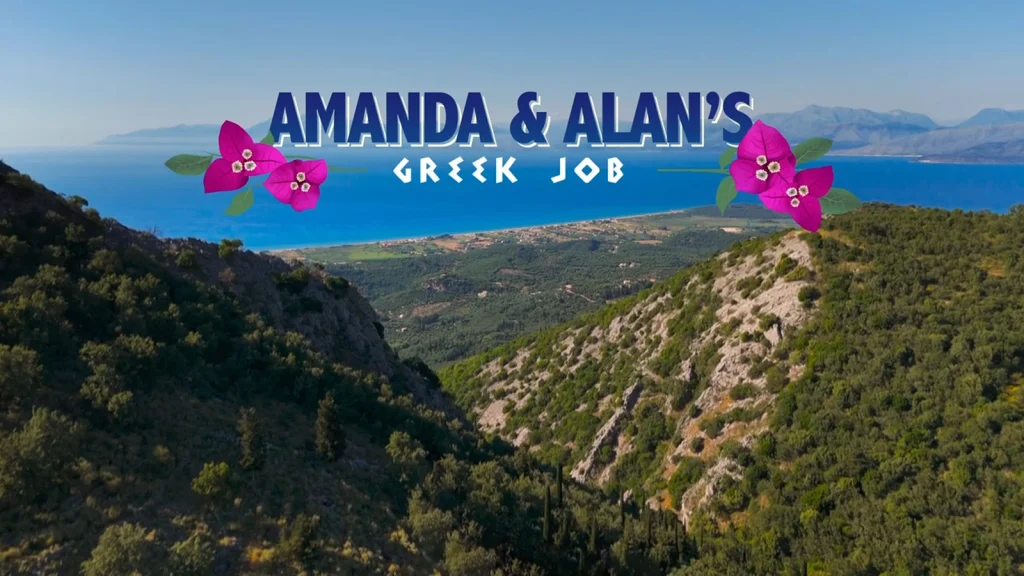
In Amanda & Alan’s Greek Job episode 3, the ambitious renovation project on the sun-drenched island of Corfu reaches a creative peak as the duo tackles their first-ever children’s bedroom. This specific stage of the Greek property transformation requires a delicate balance between playful imagination and functional design. Following their successful completion of the living and dining areas, the team shifts focus to a space intended for the younger members of a family. The project is not merely about aesthetics but about capturing the unique spirit of the island through a specialized lens. amanda holden and Alan Carr decide to draw deep inspiration from the natural world, specifically looking to the historical and literary influence of the Durrell family.
The significance of this renovation stage lies in its departure from standard adult-oriented interiors toward a more immersive environment. Utilizing a traditional Greek property as the canvas, the pair seeks to integrate local flora and fauna into the very fabric of the room. This approach elevates the Greek renovation from a simple construction task to a thematic tribute to Corfiot history. By choosing Gerald Durrell as their muse, they tap into a well-known legacy that has defined the international perception of corfu for decades. The scope of the work includes structural changes, such as ripping out old ceilings, alongside highly customized furniture builds and artistic wall treatments.
As the work progresses in Amanda & Alan’s Greek Job episode 3, the narrative of the house evolves from a dusty construction site into a vibrant home. The background of the building itself, a traditional Corfiot structure, provides both challenges and opportunities for the restoration. Thick stone walls and high ceilings offer a grand scale, but they also demand expert intervention to ensure safety and longevity. Alan Carr and his partner must navigate these architectural hurdles while maintaining their lighthearted approach to the Property Rescue. Their journey through this episode reveals the complexities of working within a foreign environment where local expertise and traditional methods are essential.
The transition from planning to execution involves a series of hands-on tasks that test the limits of the duo’s DIY skills. While amanda holden takes charge of the furniture design and upholstery, her partner explores the more artistic and community-focused aspects of the island. This dual-track progression ensures that the Greek Job remains grounded in both the physical reality of the build and the cultural context of the location. They move through the episode with a rhythmic energy, shifting between the intense dust of the building site and the tranquil, often humorous, moments of island life.
Specifically, the project moves from the initial “Herculean task” of demolition toward the finer details of interior decoration. This shift represents a pivotal moment in the series where the house begins to take on its final, welcoming character. The inclusion of family members, such as Amanda’s mother Judy, adds a personal layer to the Home Makeover process. It highlights the collaborative nature of such an intensive project and the emotional investment required to transform a ruin into a holiday home. Furthermore, the episode explores the island beyond the construction site, providing a comprehensive view of life during a high-stakes Greek renovation.

Scan smarter. Create faster. Free.
Download QR & Barcode Studio — Create and scan unlimited QR codes & barcodes.
No paywalls. No limits. 100% Free.

Ultimately, Amanda & Alan’s Greek Job episode 3 serves as a masterclass in thematic design and resourceful space management. The pair proves that even with limited square footage, creative thinking can result in a space that feels both expansive and intimate. Their dedication to authenticity, from the choice of fabric to the specific species of insects depicted on the walls, sets this project apart. As they move toward the final reveal, the anticipation builds, reflecting the hard work and passion poured into the island home. The following sections will detail the specific steps taken to achieve this ambitious vision.
Amanda & Alan’s Greek Job episode 3
Designing The Nature-Inspired Children’s Bedroom For Amanda & Alan’s Greek Job episode 3
The conceptual phase of the children’s bedroom began with a clear directive to avoid the “twee” or patronizing designs often found in such spaces. Instead, the team sought an immersive environment that reflected the “Gerald Durrell kind of feel,” focusing on the diverse flora and fauna of corfu. The goal was to make occupants feel as though they were stepping directly into the island’s forests when entering the room. This required a sophisticated color palette dominated by greens and earthy tones, which would complement the original stone walls being exposed by the builders.
To maximize the utility of the “tiny box room,” the design team moved away from traditional twin beds in favor of a more spatial solution. This decision was informed by a desire to leave as much floor space as possible for activities like coloring or playing games. By utilizing an L-shaped configuration for the sleeping quarters, they could incorporate significant storage underneath the elevated platform. This structural choice was essential for turning a cramped area into a functional “family holiday home” that could accommodate multiple children without feeling cluttered or restrictive.
Furthermore, the design prioritized the sensory experience of the child, particularly from the perspective of the bottom bunk. amanda holden noted that children often spend their time looking up at “saggy” mattress bases, which she aimed to rectify through upholstery. By adding a decorative, flora-inspired fabric panel to the underside of the top bunk, the team ensured that every angle of the room offered something aesthetic to look at. This attention to detail exemplifies the “Midas touch” they hoped to bring to their first-ever children’s bedroom project.
Exploring The Lasting Legacy Of Gerald Durrell On The Island Of Corfu
In Amanda & Alan’s Greek Job episode 3, the search for authentic inspiration leads the pair to Mouse Island, a location central to the Durrell family’s childhood. To gain a deeper understanding of the man who “put Corfu on the map,” they meet with Gerald’s widow, Lee Durrell. This meeting provides a rare opportunity to connect with the island’s history through personal anecdotes and historical context. Lee shares how Gerald and his siblings, including Margo, Larry, and Leslie, spent their formative years exploring the rugged beauty of the island’s coastline and interior.
The visit to Mouse Island is particularly poignant as Lee reveals it was one of Gerald’s favorite places in the world and the site where his ashes were scattered. This connection to the landscape explains Gerald’s lifelong devotion to the “little brown jobs”—the small, obscure, and often neglected animals that other conservationists ignored. His belief that every animal had a right to exist became a guiding principle for the bedroom design. The team aimed to capture this imagination and vision, ensuring the room felt like a contemporary tribute to a naturalist born in the modern era.
By immersing themselves in the world of “My Family and Other Animals,” the duo gathered specific details to include in their Home Makeover. They learned about the 200 species of birds, small mammals, and reptiles that Gerald fell in love with during the 1930s. This research directly influenced the selection of motifs for the room’s mural and upholstery. Instead of generic creatures, they chose to feature specific Corfiot wildlife, such as the Cleopatra butterfly and the red dragonfly, ensuring the Greek renovation remained tethered to its specific geographic location.
Constructing The Bespoke L-Shaped Bunk Bed For The Greek Property
The physical centerpiece of the room is a custom-made, L-shaped bunk bed designed to “float” unsupported against the wall. To achieve this, amanda holden collaborated with a local carpenter named Dimitri in his workshop in Agios Georgios. The construction utilized a “skeleton” framework sandwiched between two sheets of MDF, a technique that provided immense strength without the need for excessively thick timber. This structural integrity was paramount, as the bed needed to be safe and secure for use in a high-end Greek property.
Installation of the bed required the expertise of professional builders to ensure the platform was drilled into support battens within the wall. The process was physically demanding, with Alan Carr and his partner assisting in lifting the “really heavy” components into place. This stage of the Greek Job highlighted the technical challenges of bespoke furniture in older buildings where walls may not be perfectly square. Despite the difficulty, the team successfully secured the platform, creating a “massive” sleeping area that doubled as a sofa-like space for lounging.
Once the structure was in place, the focus shifted to the “aesthetic” finishing touches that would define the Home Makeover. This involved the creation of an upholstered foam panel to soften the underside of the top bunk. Working alongside her mother, Judy, Amanda struggled with the “cack-handed” nature of stapling thick fabric around foam and board. However, the resulting “apple turnover” style corners provided the professional finish required for the project. This collaborative effort ensured that the bed was not just a piece of furniture but a fully integrated part of the room’s design.
Volunteering At The Corfu Donkey Sanctuary During The Greek Job
While the construction continued at the house, Alan Carr took a break from the dust to volunteer at the donkey sanctuary. This facility was established to provide old working animals with a “dignified retirement,” a cause that resonated with the team’s love for wildlife. However, the reality of the work was far from the idyllic vision of feeding carrots to gentle creatures. Instead, Alan was immediately put on “poo duty,” tasking him with clearing the enclosures to maintain the health and comfort of the rescued donkeys.
Despite the “disgusting” nature of the task, the experience provided a therapeutic contrast to the high-pressure environment of the Greek renovation. Alan noted that being around the animals felt like “therapy for the soul,” offering a sense of peace amidst the chaos of the build. His interactions with the sanctuary staff and the donkeys themselves underscored the importance of animal welfare on the island. This segment of the episode highlighted the “unloved” creatures that Gerald Durrell would have championed, further connecting the pair to the local culture.
The volunteer work at the donkey sanctuary also served to ground the celebrity duo in the everyday realities of Corfiot life. It demonstrated that their commitment to the island extended beyond property rescue and into community service. By “getting back on the horse” and performing manual labor for the benefit of the animals, Alan showcased a genuine connection to the local environment. This experience, though filled with humor and “dung,” reinforced the thematic foundations of the children’s bedroom project.
Escaping To Aqualand For A Chaotic Break From The Greek Renovation
To relieve the stress of the ongoing restoration, the pair swapped their “boiler suits for swimsuits” and headed to Aqualand. As one of Europe’s largest water parks, it offered a chance for the friends to “relive some childhood memories” and embrace their inner children. This excursion was intended as a “much-deserved break” from the rigors of the Greek Job, but it quickly devolved into the signature chaos associated with the duo. From navigating “nerve-racking” slides to dealing with the wardrobe choices of “thigh-high summer,” the trip was anything but relaxing.
The experience at the water park mirrored the playful energy they hoped to instill in the children’s bedroom. Alan and Amanda tackled various rides, including the “Black Hole” and the “Catapult,” with varying degrees of success and terror. At one point, Alan “tipped up” and hit his face, leading him to declare that he would not go on any more rides. Despite the minor mishaps, the visit provided a necessary emotional outlet, allowing them to return to the Property Rescue with renewed vigor.
Furthermore, the trip to Aqualand highlighted the island’s status as a premier family holiday destination. By experiencing the local attractions firsthand, the pair gained a better understanding of what families visiting Corfu might look for in a holiday home. This perspective was invaluable as they moved into the final stages of the children’s bedroom design. The chaotic joy of the water park was a literal manifestation of the “fun and playful” atmosphere they wanted to create within the stone walls of their traditional Corfiot house.
Painting The Floral Mural For Amanda & Alan’s Greek Job episode 3
The final artistic element of the room was a large-scale wall mural designed to “pay homage to Gerald Durrell.” For this task, the team recruited Sophie, a local mural painter known for her ability to make new art look “quite old” and full of character. The design featured trailing olive branches, the yellow Cleopatra butterfly, and the “critically endangered” red dragonfly. This specific choice of insects was intended to celebrate the unique biodiversity of corfu, turning a blank plaster wall into a vibrant ecosystem.
The process of painting the mural in Amanda & Alan’s Greek Job episode 3 involved a “faded effect” created by rubbing paint off with wet wipes. This technique allowed the art to blend seamlessly with the aged feel of the traditional house. However, when Alan Carr was “let loose with a paint brush,” the professional artist’s strict side emerged. His attempt at a dragonfly was compared to a “pair of breasts” or a creature wearing “high-heeled boots,” prompting Sophie and Amanda to secretly “fix it” while he was away having tea.
Despite the humorous setbacks, the completed mural achieved the “immersive” goal of the project. It avoided being “patronizing” by focusing on genuine Corfiot nature rather than generic cartoon characters. The mural served as a visual narrative of Gerald Durrell’s love for the island, providing the children who would stay there with a sense of wonder. It transformed the room into a space where one could “count the butterflies” until falling asleep, perfectly capping off the Home Makeover for this episode.
Navigating The Perils Of Dating And Restoration In Amanda & Alan’s Greek Job episode 3
In a departure from the construction site, Alan Carr embarked on a quest to find his “very own Greek god.” This subplot involved a blind date arranged by their builder, Stamatis, at a tranquil cove in Agni Bay. The evening began with a series of minor disasters, including a shaving mishap that left Alan with “tissue stuck to his face” and a missed water taxi. These incidents highlighted the comedic tension that often accompanies a high-stakes Greek renovation, where personal life and professional work frequently collide.
The date with Ivor, a man who also rescues dogs, provided a moment of connection over shared values and a “vibe.” While the romantic spark may not have been permanent, the encounter allowed Alan to “get back on the horse” and enjoy the island’s social scene. The setting of Agni Bay, with its “millionaire yachts” and exclusive hotels, showcased a different side of corfu than the dusty village of Kokkini. This contrast enriched the overall narrative of the Greek Job, showing the diverse experiences available on the island.
Ultimately, the episode concludes with a sense of triumph as the children’s bedroom is revealed. The combination of the L-shaped bunk bed, the bespoke upholstery, and the Durrell-inspired mural creates a “grown-up kid’s bedroom” that is both clever and beautiful. The team proved that they could handle the complexities of a Home Makeover while navigating personal challenges and local traditions. As they move forward to the next room, the lessons learned in Amanda & Alan’s Greek Job episode 3 will undoubtedly inform the rest of their ambitious island project.
Structural Realities And The Demolition Of Traditional Corfiot Ceilings
The transformation of the Greek property in Amanda & Alan’s Greek Job episode 3 required more than just surface-level changes; it demanded significant structural intervention. Before any of the “Midas touch” could be applied to the interiors, the team had to address the decaying infrastructure of the old house. This began with the “Herculean task” of ripping out the old ceiling in the children’s bedroom. Under the guidance of their builder, Stamatis, the duo faced the physical reality of the Greek renovation, which involved clouds of ancient dust and the potential for hidden pests.
The demolition process was fraught with anxiety, particularly for amanda holden, who expressed concerns about finding “snakes in the roof.” While Stamatis assured them that the area was safe, the sheer scale of the void revealed once the ceiling was removed was “absolutely massive.” This new vertical space offered a dramatic improvement to the room’s proportions, allowing the L-shaped bunk bed to fit without making the area feel claustrophobic. It was a pivotal moment in the Property Rescue where the building’s hidden potential was finally exposed.
However, the work was physically taxing and required the use of full-body white jumpsuits to protect against the “disgusting” debris. Alan Carr noted the irony of getting “lovely white jumpsuits just dirty again” so soon after starting a new phase of work. This stage of the Greek Job served as a reminder that behind every beautiful Home Makeover is a foundation of grime and hard labor. The successful removal of the ceiling paved the way for the plasterers to create a clean canvas for the upcoming mural and furniture installation.
Mastering The Craft Of Upholstery With The Holden Matriarchs
A significant portion of the interior finish in the children’s bedroom involved specialized “flora-inspired” upholstery. This task was spearheaded by amanda holden, who sought to “soften the underside” of the top bunk to create a more aesthetic view for the child below. To assist with this “bodge job,” she recruited her mother, Judy, who was visiting the island on holiday. This collaboration brought a “matriarchal” energy to the Greek renovation, as the two women worked together to master the staple gun and foam padding.
The process revealed a humorous power struggle between the mother and daughter, with Amanda accusing Judy of being “cack-handed” and Judy countering that Amanda was “bossier” than she was. They struggled to achieve the perfect “apple turnover” triangle fold on the corners of the fabric, a hallmark of professional upholstery. Despite the “lumpy” initial attempts, they eventually produced a panel that added a layer of “grown-up” sophistication to the bunk bed. This effort was a key part of the Home Makeover, ensuring the room felt “cosy” and high-end.
The use of specific fabric patterns was a “nod to nature,” aligning with the overall theme inspired by Gerald Durrell. By choosing a design that featured local plant life, the pair ensured that even the most functional parts of the room contributed to the “immersive” experience. This attention to detail in the Greek Job highlighted the duo’s commitment to quality, even when performing tasks they were “not particularly crafty” at. The finished panel was eventually nailed into place, completing the visual look of the custom furniture.
Lighting And Electrical Integration In The Modernized Holiday Home
As the children’s bedroom neared completion, the focus shifted to the technical “finishing touches” that would make the space livable. This included the installation of modern lighting systems by local electricians, a crucial step in any Greek renovation. The goal was to provide enough light for reading and playing without detracting from the “atmospheric” feel of the stone-walled room. These updates were essential for turning a “traditional Corfiot house” into a functional “family holiday home” that met modern standards.
The integration of electricity had to be handled carefully to avoid damaging the newly plastered walls and the delicate mural. This required coordination between the electricians, the builders, and the artistic team. In Amanda & Alan’s Greek Job episode 3, the duo oversaw these installations, ensuring that the light fixtures complemented the “greens” and “earthy tones” of the room’s palette. This stage of the build demonstrated the complexity of managing multiple trades in a foreign language and a different regulatory environment.
Furthermore, the lighting was designed to highlight specific features of the room, such as the L-shaped bunk bed and the insect motifs on the wall. By placing lights strategically, the team could create shadows and highlights that enhanced the “immersive” nature of the space. This was the final step in the Home Makeover process before the room could be staged for the final reveal. The successful installation of these systems marked the transition from a construction site back into a welcoming domestic environment.
Final Staging And The Aesthetic Completion Of The Project
The penultimate stage of the bedroom project involved “storing” and “staging” the room with toys, books, and accessories that reflected Gerald Durrell’s interests. This was the moment where the “imagination” and “vision” of the pair truly came to life. They chose items that encouraged exploration and a love for the natural world, such as binoculars and nature guides. These touches ensured that the room was not just a place to sleep, but a place for a “younger member of the family” to learn and grow.
During the final cleanup, Alan Carr and Amanda took a moment to reflect on their handiwork, with Alan even testing the bed by “crawling in” for a mock siesta. They noted that the room felt “clever” because it managed to fit two beds and storage into a “tiny box room” without sacrificing floor space. The use of “grown-up” colors and professional-grade art prevented the room from feeling “patronizing,” making it suitable for “kids of all ages.” This balance was a significant achievement for their first children’s bedroom.
The reveal also featured a “real lizard” that appeared to have “come alive from the mural” to match the pink and green panelling. This serendipitous moment felt like a seal of approval from the island itself, validating their nature-inspired design. The pair concluded that they had “pulled it off,” successfully bringing the “Midas touch” to a challenging corner of the house. The completed room stood as a testament to their hard work, creativity, and deep respect for the legacy of corfu and its most famous inhabitants.
Reflections On The Journey And Future Plans For The Greek Job
As Amanda & Alan’s Greek Job episode 3 draws to a close, the duo looks forward to the next phases of their ambitious restoration. The successful completion of the children’s bedroom has given them the confidence to take on even more complex areas of the house, such as the kitchen. They have learned that a “Property Rescue” in a foreign country requires a mix of “Herculean” effort, local collaboration, and a good sense of humor. Their journey has been as much about personal growth and community connection as it has been about interior design.
The experience of working with local experts like Sophie the artist and Stamatis the builder has been invaluable. It has allowed them to produce a Home Makeover that is authentically Corfiot, rather than a generic international style. By “paying homage” to the island’s history through the Durrell family, they have created a home that feels deeply rooted in its location. This commitment to authenticity will continue to be a guiding principle as they move through the remaining rooms of the traditional house.
In the upcoming episodes, the pair will face new challenges, including the “wrath of the Greek grandmothers” and the technical difficulties of a kitchen install. However, the foundation they have built in the first three episodes—both physically in the house and emotionally as a team—will serve them well. The Greek renovation continues to be a “Herculean task,” but with each room completed, the dream of a perfect holiday home becomes a reality. Their story remains a compelling example of what can be achieved with passion, creativity, and a willingness to get one’s hands dirty.
FAQ Amanda & Alan’s Greek Job episode 3
Q: What is the main focus of Amanda & Alan’s Greek Job episode 3?
A: Episode 3 centers on the creation of a nature-inspired children’s bedroom within their Corfu property renovation. The duo draws inspiration from Gerald Durrell’s legacy, incorporating Corfiot flora and fauna into an immersive design. Additionally, they tackle structural challenges including ceiling demolition and the construction of a custom L-shaped bunk bed. This episode marks a departure from adult-oriented spaces toward a thematic tribute celebrating the island’s natural heritage.
Q: Why did Amanda and Alan choose Gerald Durrell as their design inspiration?
A: Gerald Durrell put Corfu on the international map through his writings about the island’s wildlife and his childhood experiences. His philosophy that every animal deserves protection, particularly the overlooked “little brown jobs,” resonated with their vision for an authentic children’s space. Furthermore, they met with his widow Lee Durrell at Mouse Island to gain deeper insights. This connection ensured their renovation remained tethered to the island’s specific geographic and cultural identity rather than generic themes.
Q: How did they maximize space in the tiny box room?
A: The team abandoned traditional twin beds in favor of an L-shaped bunk bed configuration that freed up valuable floor space. This innovative design incorporated significant storage underneath the elevated platform while maintaining a massive sleeping area. Consequently, children could enjoy activities like coloring and playing games without feeling restricted. The floating bed structure, built by local carpenter Dimitri, was drilled into wall support battens to ensure safety and stability within the traditional Corfiot property.
Q: What wildlife species are featured in the bedroom mural?
A: The wall mural showcases authentic Corfiot species including the yellow Cleopatra butterfly and the critically endangered red dragonfly, alongside trailing olive branches. Local artist Sophie employed a faded painting technique using wet wipes to create an aged, characterful appearance. These specific creatures represent the 200 species Gerald Durrell fell in love with during the 1930s. This careful selection avoided patronizing cartoon characters, instead creating a genuine educational experience that celebrates regional biodiversity.
Q: What structural work was required before decorating could begin?
A: The renovation demanded a Herculean demolition effort, starting with the complete removal of the old ceiling under builder Stamatis’s guidance. This process revealed an absolutely massive void that dramatically improved the room’s proportions and prevented the space from feeling claustrophobic. Workers wore protective jumpsuits against ancient dust and potential debris. Subsequently, plasterers created a clean canvas for the upcoming artistic work, demonstrating that beautiful home makeovers require a foundation of intensive manual labor.
Q: How did Amanda achieve the sophisticated upholstery finish?
A: Working alongside her mother Judy, Amanda created flora-inspired upholstered panels to soften the underside of the top bunk. They mastered the challenging apple turnover corner technique using staple guns and foam padding. The fabric pattern featured local plant life, ensuring every angle offered aesthetic value while children looked upward. Despite admitting they were not particularly crafty, their collaboration produced a grown-up finish that prevented the view from below from being simply a saggy mattress base.
Q: What activities did Alan participate in outside the renovation site?
A: Alan volunteered at the Corfu Donkey Sanctuary, performing poo duty to help retired working animals enjoy dignified retirement. He described the experience as therapy for the soul despite the disgusting nature of the work. Additionally, he embarked on a blind date with dog rescuer Ivor at Agni Bay, arranged by builder Stamatis. The pair also visited Aqualand, one of Europe’s largest water parks, to relieve renovation stress and relive childhood memories through nerve-racking slides.
Q: What color palette was chosen for the children’s bedroom?
A: The design team selected sophisticated greens and earthy tones that complemented the exposed original stone walls. This palette avoided twee or patronizing aesthetics common in children’s spaces, instead creating an immersive forest atmosphere. Strategic lighting installation highlighted these colors while maintaining an atmospheric quality suitable for reading and playing. The grown-up color scheme ensured the room appealed to kids of all ages while reflecting the natural landscape of Corfu’s diverse ecosystem.
Q: How did the team ensure the bedroom felt authentically Corfiot?
A: They collaborated extensively with local experts including carpenter Dimitri, artist Sophie, and builder Stamatis to achieve genuine regional character. Rather than importing generic international styles, they researched specific island wildlife and incorporated it into every design element. The staging included nature guides and binoculars that encouraged exploration consistent with Durrell’s philosophy. Moreover, the use of traditional construction methods within the thick stone walls honored the building’s heritage while creating a functional family holiday home.
Q: What makes this children’s bedroom design unique compared to typical projects?
A: The room successfully balances playful imagination with sophisticated design principles, avoiding patronizing elements through authentic natural history themes. The custom floating L-shaped bed demonstrates clever space management that maintains floor area for activities. Furthermore, the attention to details like upholstered underside panels and historically accurate wildlife motifs elevates it beyond standard renovations. The project proves that limited square footage can feel both expansive and intimate when creative thinking combines with deep respect for local culture and environmental heritage.