Japan’s Master of Restoration episode 1: Within every museum lies a secret world. Beyond the pristine displays, there are archives filled with silent histories. These rooms hold dormant treasures, objects waiting for their chance to speak again. Therefore, the premiere episode of Japan’s Master of Restoration takes us deep into such a place. Titled “Dormant Treasures,” it begins with a heartfelt plea from a museum in Osaka. They possess artifacts of incredible value. However, time has rendered them too fragile to be seen. They need a special kind of miracle. They need the masters of restoration.
The museum’s call goes out to the legendary Mayuyama family. For generations, their name has been synonymous with the highest level of artistic preservation. They are not merely technicians; they are custodians of cultural memory. Consequently, when an institution entrusts an artifact to them, it is an act of profound faith. The Mayuyamas understand the soul of an object. They listen to its silent stories of creation and survival. This particular challenge involves two unique pieces. Each one presents a distinct and complex puzzle. The delicate process of restoration is their only path back to the light.
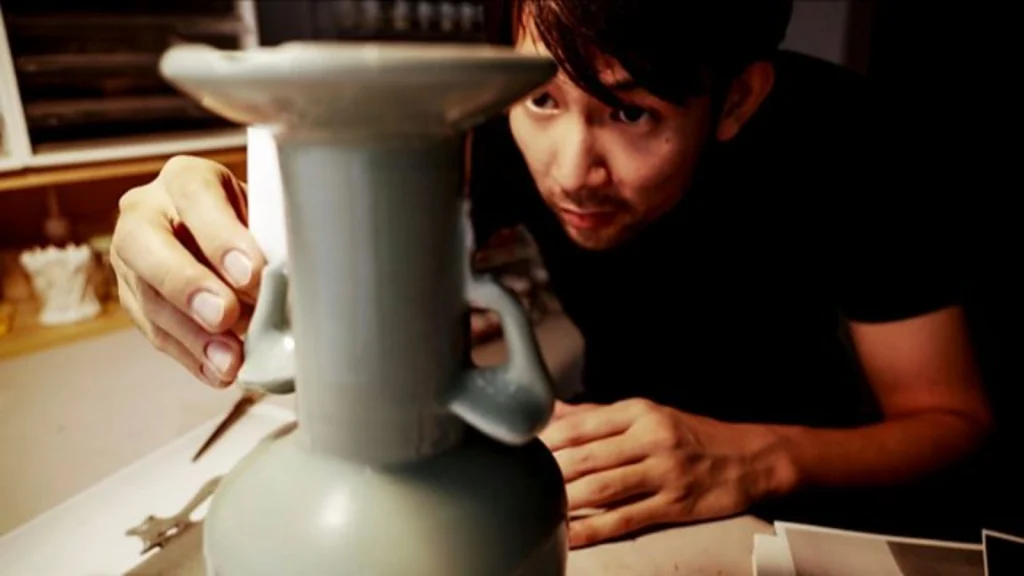
First, the team turns its attention to an exquisite celadon vase. This piece traveled from China to Japan some 800 years ago. Its glaze shimmers with a jade-like depth, reminiscent of a still, serene sea. The vase is a breathtaking example of craftsmanship from the Song Dynasty. In fact, it represents a pinnacle of ceramic art. Unfortunately, the passage of centuries has left its mark. The vase is now a fragile shadow of its former self, its beauty compromised by damage. The restoration required is incredibly delicate. It is a process that demands near-surgical precision and a profound understanding of ancient materials.
This restoration is like trying to heal a wound in time itself. One wrong move could shatter eight centuries of history forever. The Mayuyamas approach the vase with a quiet reverence. They study its form, its color, and its unique character. Furthermore, they must craft a solution that is both structurally sound and aesthetically invisible. The goal is not to make it look brand new. Instead, the aim is to honor its age and its incredible journey. The team’s work becomes a silent conversation with the original artist. They seek to revive the creator’s intent while respecting the object’s long life.
Next, they confront a completely different kind of treasure. It is a 16th-century Totoya Chawan, a humble tea bowl. This object embodies the Japanese aesthetic of wabi-sabi. It celebrates the beauty found in imperfection and simplicity. Used in the traditional tea ceremony, this bowl is not about flawless symmetry. On the contrary, its value lies in its rustic texture and unassuming form. It has been held by countless hands over hundreds of years. Each subtle flaw and sign of wear contributes to its unique story. To restore it is to engage with a deep philosophy.

Scan smarter. Create faster. Free.
Download QR & Barcode Studio — Create and scan unlimited QR codes & barcodes.
No paywalls. No limits. 100% Free.

The challenge with the Chawan is profoundly different from the vase. While the celadon vase represents imperial perfection, the tea bowl represents earthy humility. Its restoration must not erase its history of use. Any repair must honor the spirit of the tea ceremony itself. Therefore, the Mayuyamas must consider the balance between mending and preserving its character. This task is less about technical perfection and more about artistic sensitivity. The restoration must feel like a natural part of the bowl’s continuing journey. It is a testament to the idea that true beauty often lies in the marks left by time.
Japan’s Master of Restoration episode 1
Ultimately, this work goes far beyond simple repair. The philosophy behind this craft is central to understanding Japan’s Master of Restoration. True restoration in Japan often involves celebrating an object’s history, including its scars. Think of kintsugi, the famous art of mending pottery with gold. This technique highlights the cracks, suggesting that the breakage is part of the object’s life story. It doesn’t hide the damage; it illuminates it. This deep, respectful approach is what defines a true master. It is a delicate dance between preservation and transformation, a skill that is both technical and deeply spiritual.
The soul of this series is found in this very philosophy. We witness a process that is meditative and intensely focused. The Mayuyamas breathe life back into these forgotten objects. They allow them to share their tales once more with a new generation. Each decision is weighed with immense care. Every touch is guided by decades of experience and a powerful respect for the past. This level of restoration is a quiet art form. It ensures that the whispers of history do not fade into silence. It is a powerful act of cultural preservation.
In “Dormant Treasures,” we are invited on an emotional journey. We see two remarkable artifacts poised between oblivion and rebirth. Can the Mayuyamas awaken these sleeping pieces of history? The episode unfolds like a gentle, compelling story. It speaks of patience, reverence, and the quiet magic of human hands. It is a profound look into the heart of Japanese craftsmanship. Witness this incredible process for yourself in the first episode of Japan’s Master of Restoration. You will never look at a museum piece the same way again.
Japan’s Master of Restoration episode 1 review
Japan’s Master of Restoration episode 1 introduces a remarkable restorer known as the Godhand. This master can supposedly fix any piece of pottery, no matter how shattered it is. His story began in the shadows of post-World War II Japan. For the first time, he allowed his unique techniques to be filmed. His work demonstrates an unparalleled level of skill. Therefore, it provides a rare glimpse into a hidden world of artistry.
The episode focuses on dormant treasures from the Fujita Art Museum. This institution houses nine Japanese national treasures. The client, Fujita Kiyoshi, runs the museum. He seeks help for priceless artifacts slumbering in the museum’s storehouse. These objects, though damaged, hold immense cultural value. Their restoration is a matter of preserving significant cultural heritage. Without this intervention, their stories would remain lost to time.
This episode delves into the meticulous process of artifact repair. It follows two specific items of Japanese art. The first is a celadon flower vase from China, created 800 years ago. The second is a revered Totoya Chawan tea bowl. Both pieces require extensive work to return them to a state of wholeness. The challenge lies not just in mending, but in understanding the soul of each object. Japan’s Master of Restoration episode 1 showcases this deep connection.
The restoration highlights two distinct philosophies. One common method is kintsugi. This technique mends broken sections with gold, celebrating the object’s history of damage and repair. The Totoya Chawan, for instance, showed previous kintsugi work. However, the master restorer, Mayuyama, practices a different method called Tomonaoshi. This core philosophy seeks to fix objects so they appear new and untouched by damage. It requires skill at an unrivaled level.
The historical context of these artifacts is central to their restoration. The Totoya Chawan tea bowls are highly esteemed within the Japanese tea ceremony. They were especially loved by the influential tea master Sen no Rikyu. Sen So-oku, an advisor for the project and heir to a school of tea ceremony, is a descendant of Sen no Rikyu himself. His involvement underscores the profound cultural importance of the restoration and the tea ceremony objects.
The episode carefully documents the state of the artifacts before work begins. The celadon flower vase, which could rival a national treasure if undamaged, was missing a key feature: a phoenix. Worse, a previous repair had used fragments from an entirely different piece of celadon pottery. The Totoya Chawan tea bowl was also heavily damaged. Old lacquer repairs covered its breaks, and a large, visually disruptive golden kintsugi triangle marked one side. Both pieces were covered in old wounds, demanding a complete renewal.
The Intricate Process of Deconstruction
Before restoration could begin, the team had to undo centuries of previous repairs. This deconstruction is a delicate and challenging phase of artifact repair. Mayuyama’s son, Yu, who has a decade of professional experience, started the process. He first scraped away the gold from the Totoya Chawan’s kintsugi triangle. This revealed that the removed material was a mixture of lacquer and stone powder, used to fill the missing section.
Next, the team submerged the tea bowl in a releasing agent. This chemical bath aimed to dissolve any remaining lacquer holding the fragments together. However, some materials proved incredibly stubborn. The restorer had to wage a battle against the old repairs. Applying force carelessly could shatter the tea bowl into pieces once more. Mayuyama’s 40 years of experience provided him with a practiced confidence for this tense work.
The celadon vase presented its own set of challenges. Parts of the lacquer used to join its fragments refused to dissolve completely. This left black specks on the break points of the ancient pottery. The only solution was to scrape them out speck by speck. This painstaking work took two full weeks. Only after their complete removal was the normally concealed cross-section laid bare. This revealed how white porcelain was covered with a thick blue glaze, creating the unique beauty of celadon.
The Tomonaoshi Philosophy in Japan’s Master of Restoration episode 1
At the heart of the workshop’s practice is Tomonaoshi. Unlike kintsugi, which accentuates repairs, Tomonaoshi aims to make them invisible. The goal is to restore an object to its original, seemingly undamaged state. Mayuyama’s father, Manji, pioneered this technique. Originally a lacquer specialist, he incorporated his unique methods into pottery restoration. However, in the post-war period, his skills remained largely a secret. Mayuyama studied under his father, eventually surpassing his master’s skill.
This philosophy means that even objects shattered into many pieces can be fully restored. The process requires an almost magical level of artistry and technical precision. Once the old repairs were removed from the tea bowl, a large triangular section was entirely missing. No original material remained in the space. The team had to recreate this section from scratch. Their work had to blend seamlessly with the original form and texture of the bowl.
The process for the vase involved similar principles. After extensive discussion with the clients, the team decided to recreate the missing phoenix. They took inspiration from a national treasure to inform the design. The goal was to make the new addition blend in with its surroundings perfectly. This approach to restoration respects the object’s original aesthetic, aiming for a holistic and visually unified result. It is a testament to a deep reverence for the artifact.
The Art of Seamless Reconstruction
Rebuilding the artifacts required a mastery of multiple disciplines. For tiny cracks, Mayuyama used a clear resin that hardens over time. First, he carefully warmed a fragment. Then, he applied the resin, which was pulled deep into the fissures through capillary action. This technique seemingly erased the cracks entirely. Once all fragments were stabilized, he began the complex process of assembly. This foundational work is crucial for the integrity of the final piece.
Recreating the missing triangular section of the Totoya Chawan demanded immense skill. Mayuyama’s son prepared the base. Then, Mayuyama himself applied the color. One of the techniques that earned him the “Godhand” moniker was his intense attention to color matching. He also painstakingly recreated the indentations of the original wave pattern by hand. For the final touch, he used a pin to add tiny, precise indentations, perfectly mimicking the original texture.
The final stage for the celadon vase was the most difficult: sculpting the face of the phoenix. Yu first made the base of the relief from plaster. Then, Mayuyama took over for the fine details. He alternated between a pin and a chisel as he sculpted. The eyes were the final, life-giving touch. Finally, he prepared and applied the celadon glaze. He perfectly matched the color and even recreated the signature transparency of celadon using a special powder with bubbles sealed inside. This material precisely mimics the consistency of the ancient glaze.
The Eternal Dance Between Time and Timelessness
Watching Japan’s Master of Restoration unfold is like witnessing archaeology in reverse—instead of uncovering the past, we see it being carefully reconstructed, breath by breath, touch by touch. The Mayuyama family’s work transcends mere repair; they practice a form of temporal alchemy, transforming fragments of history into bridges between centuries.
What strikes most profoundly about this inaugural episode is how it reframes our relationship with impermanence. In a world obsessed with the new and disposable, the Mayuyamas remind us that true value often lies not in pristine perfection, but in the courage to preserve what time threatens to erase. Their Tomonaoshi philosophy—making damage invisible while honoring the object’s journey—offers a master class in respectful intervention. Unlike the golden scars of kintsugi that celebrate brokenness, Tomonaoshi whispers rather than proclaims, allowing artifacts to speak in their original voice once more.
The episode’s dual focus on the celadon vase and Totoya Chawan reveals something essential about Japanese aesthetics: the recognition that different objects demand different forms of reverence. The imperial vase, with its jade-like perfection, called for technical precision that could rival its original Song Dynasty creators. The humble tea bowl, steeped in wabi-sabi philosophy, required an entirely different sensitivity—one that understood how countless hands had shaped its character over centuries. Mayuyama’s ability to shift between these restoration philosophies demonstrates not just technical mastery, but cultural fluency of the highest order.
Perhaps most remarkably, this work challenges our modern assumptions about authenticity. In an age where we often equate “original” with “untouched,” the Mayuyamas show us that true authenticity sometimes requires intervention. Their invisible repairs don’t diminish these artifacts’ historical value—they amplify it, allowing future generations to experience these objects as their creators intended. The recreated phoenix on the celadon vase isn’t a forgery; it’s a resurrection.
For anyone who has ever held a family heirloom, wondered at a museum display, or simply appreciated the weight of history in everyday objects, Japan’s Master of Restoration offers profound lessons. It suggests that preservation isn’t passive—it’s an active form of love, requiring both technical skill and spiritual understanding. The Mayuyamas don’t just fix things; they listen to them, understand their needs, and respond with the kind of patience our hurried world rarely affords.
As we move deeper into this series, we’re invited to reconsider what it means to care for the past while serving the future. In the quiet concentration of the restoration workshop, surrounded by centuries-old artifacts waiting for their second chance at life, we discover that some of humanity’s most important work happens not in boardrooms or laboratories, but in the gentle, practiced hands of those who refuse to let history slip away into silence.
The dormant treasures have awakened. Now, it’s our turn to listen to what they have to say.
FAQ Japan’s Master of Restoration episode 1
Q: What is Japan’s Master of Restoration and what makes it unique?
A: Japan’s Master of Restoration is a documentary series showcasing the legendary Mayuyama family’s extraordinary skill in artifact preservation. Furthermore, the show uniquely focuses on the Tomonaoshi philosophy, which aims to make repairs completely invisible rather than celebrating damage like traditional kintsugi techniques.
Q: Who are the Mayuyama family and why are they called masters?
A: The Mayuyama family represents generations of Japan’s finest restoration artisans, with the current master known as the “Godhand” for his unparalleled pottery repair skills. Additionally, their reputation stems from decades of preserving cultural treasures with techniques so precise that repairs become virtually undetectable to the naked eye.
Q: What artifacts are featured in the first episode?
A: Episode one features two remarkable pieces: an 800-year-old celadon vase from China’s Song Dynasty and a 16th-century Totoya Chawan tea bowl. Moreover, both artifacts came from the Fujita Art Museum’s collection and required extensive restoration after centuries of damage and previous repair attempts.
Q: What is the Tomonaoshi philosophy and how does it differ from kintsugi?
A: Tomonaoshi seeks to restore objects to their original, seemingly undamaged state through invisible repairs. Conversely, kintsugi celebrates breakage by highlighting cracks with gold, making the repair history visible. Therefore, Tomonaoshi requires extraordinary technical precision to achieve seamless restoration results.
Q: Why is the celadon vase considered so valuable?
A: The celadon vase represents a pinnacle of Song Dynasty ceramic artistry, featuring a jade-like glaze that creates breathtaking visual depth. Additionally, its 800-year journey from China to Japan makes it historically significant, while its potential to rival national treasure status underscores its immense cultural value.
Q: What makes the Totoya Chawan tea bowl special in Japanese culture?
A: Totoya Chawan tea bowls embody the wabi-sabi aesthetic, celebrating beauty in imperfection and simplicity within Japanese tea ceremony traditions. Furthermore, these bowls were especially cherished by the influential tea master Sen no Rikyu, making them culturally invaluable artifacts of Japanese artistic heritage.
Q: What restoration challenges did the artifacts present?
A: The celadon vase was missing its phoenix feature and had previous repairs using incorrect ceramic fragments. Meanwhile, the tea bowl suffered from old lacquer repairs and disruptive golden kintsugi work that needed complete removal before proper restoration could begin.
Q: How long does the restoration process typically take?
A: The restoration timeline varies significantly based on artifact complexity and damage extent. Notably, just removing old lacquer specks from the celadon vase required two full weeks of painstaking work, while the complete reconstruction involves months of meticulous attention to detail.
Q: What techniques does Mayuyama use to achieve invisible repairs?
A: Mayuyama employs clear resins that penetrate cracks through capillary action, precise color matching techniques, and hand-recreated textures using pins and chisels. Additionally, he recreates original glazes using special powders with sealed bubbles to perfectly mimic ancient ceramic consistency and transparency.
Q: Why is this type of restoration important for cultural preservation?
A: This restoration work prevents invaluable cultural artifacts from being lost to time while allowing future generations to experience them as originally intended. Consequently, the Mayuyama family’s efforts ensure that centuries of artistic heritage and cultural memory continue to inspire and educate through their silent but powerful stories.