The Repair Shop 2025 episode 18: There is a unique magic that lives within the objects we keep. They are more than just wood, metal, or paper; they are vessels of memory, holding the echoes of laughter, the weight of history, and the warmth of love. Nowhere is this magic more apparent than in the quiet, bustling barn of The Repair Shop. In what promises to be a deeply moving instalment, The Repair Shop 2025 episode 18 welcomes four such treasures, each one a silent storyteller waiting for an expert’s touch to help it speak once more. These are not just repair jobs; they are acts of resurrection.
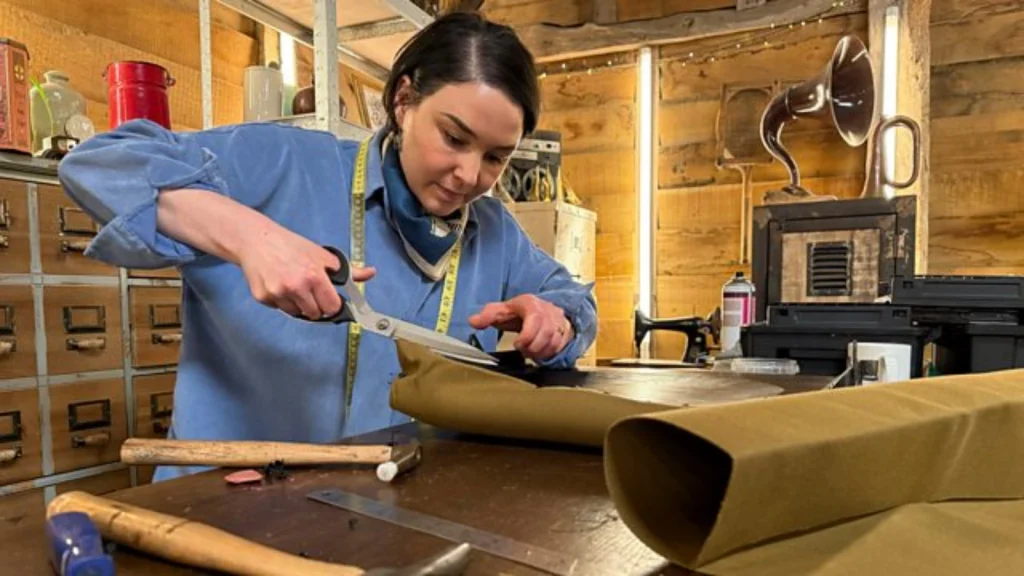
Stepping into the barn feels like entering a sanctuary for the forgotten. The air smells of beeswax, old leather, and the faint, metallic tang of solder. It’s a place where time seems to slow down, allowing the past to breathe. Here, a team of Britain’s most passionate and skilled craftspeople don’t just see broken objects. Instead, they see the hands that held them, the eyes that cherished them, and the stories that are woven into their very fabric. They understand that mending a crack or polishing a surface is about healing a connection to a family’s history.
This episode is a perfect illustration of that profound philosophy. We will witness the journey of four incredibly diverse items, each carrying a universe of personal meaning. From the roar of a legendary football stadium to the silent devotion of a wartime love affair, the barn’s experts are tasked with navigating a rich tapestry of human experience. They must become not only restorers but also historians, detectives, and custodians of deeply personal legacies, ensuring these stories are not lost to the decay of time.
Have you ever held something that felt charged with a life of its own? Perhaps it was a grandparent’s watch or a dog-eared book passed down through generations. These objects possess an invisible energy, a link to those who came before us. They remind us that our own story is part of a much larger, ongoing narrative. The work done in the barn honours this connection, polishing these links between past and present until they shine brightly once more for all to see.
The experts themselves are the quiet heroes of this process. Their incredible skill is matched only by their empathy. They listen intently as owners share the history of their beloved items, understanding that the emotional value far outweighs any monetary worth. They know that restoring a child’s toy or a piece of wedding jewellery is about restoring a feeling, a moment, a piece of someone’s heart. Their work is a delicate dance between technical mastery and profound respect for the soul of the object.

Scan smarter. Create faster. Free.
Download QR & Barcode Studio — Create and scan unlimited QR codes & barcodes.
No paywalls. No limits. 100% Free.

Ultimately, this episode invites us to consider the items we choose to keep. It’s a reminder that these family heirlooms are not just clutter but cornerstones of our identity. As we follow the transformation of these four cherished possessions, we are prompted to look at our own lives and the treasures we hold dear. The barn’s doors are open, ready to reveal how craftsmanship and care can turn what is broken into something beautiful and whole again.
The Repair Shop 2025 episode 18
More Than Just a Game: Restoring Highbury’s Hallowed Seats
First through the doors is Londoner Michael Wise, and he carries with him the sound of a hundred thousand cheering fans. His treasures are two battered, faded wooden seats, but they are far more than simple antique furniture. They are relics from a cathedral of football: Arsenal’s iconic Highbury stadium. With a story steeped in nostalgia, these seats once belonged to his grandfather, a devoted season ticket holder in the magnificent art deco west stand. They have been silent witnesses to decades of sporting history, supporting three generations of his family.
The seats arrive looking like weary veterans after a long and glorious campaign. The wood is scuffed and tired, the metal frame showing its age. They hold the memories of last-minute goals, agonizing defeats, and the unwavering camaraderie of the fans. Michael shares how his grandfather, and later his father, sat in these very spots, their hopes rising and falling with the rhythm of the game. For Michael, restoring them is about preserving that unbroken chain of passion, a tangible link to the men who taught him to love the club.
The challenge falls to two of the barn’s finest: upholsterer Sonnaz Nooranvary and metalwork expert Dominic Chinea. They immediately see the soul within the battered frames. Dom gets to work on the near-century-old metal, carefully treating it to remove the rust while preserving its aged character. Meanwhile, Sonnaz assesses the wooden slats, which require a gentle but firm hand to bring back their lustre. Their shared goal is not to make the seats look brand new, but to honour their journey and the countless hours they have served.
The masterstroke of this restoration is the creation of a new oak base. This clever design by Dom transforms the seats from stadium fixtures into a proud piece of freestanding furniture. It’s a solution that allows them to be admired as historical artefacts while also being strong enough to be sat on once more. When Michael returns for the reveal, the result is breathtaking. The seats stand with a renewed dignity, the wood glowing warmly under the barn lights. As he takes a seat, he is not just sitting on a chair; he is sitting with his father and grandfather, the roar of Highbury echoing in his heart.
A Locket of Love: Reuniting a Wartime Romance
Next, a story of love, loss, and enduring hope arrives in a small, fragile package. Fliss from Ashton-under-Lyne entrusts master goldsmith Richard Talman with a tiny, broken locket that once belonged to her grandparents, Bert and Winifred. This is no ordinary piece of jewellery. It is a piece of potent war memorabilia, carried by her grandmother throughout the Second World War. Inside, it held a photograph of her beloved Bert in his uniform, a constant, precious reminder of the man she was waiting for.
The locket is a symbol of a love that defied the chaos of a world at war. Fliss explains how her grandmother, Winifred, would have held it close, its cool metal a small comfort against the fear and uncertainty of the time. It was her tangible connection to Bert, a promise of his safe return. However, time has been unkind to the delicate treasure. The hinge is broken, separating the two halves, and the precious photographs inside are faded and at risk. The locket, like the couple it represents, is waiting to be made whole again.
Richard understands the immense emotional weight of his task. The repair is incredibly delicate, like performing surgery on a butterfly’s wing. A broken hinge on a locket is like a broken heart; it requires a precise and gentle touch to mend. Furthermore, the precious portraits of Bert and Winifred need their own specialist. Richard calls upon paper conservator Angelina Bakalarou to work her magic on the tiny images. Her job is to carefully stabilize and clean the photos, ensuring these glimpses of the past are preserved for the future.
The restoration becomes a beautiful collaboration. While Angelina painstakingly conserves the portraits, Richard focuses on the intricate mechanics of the hinge, his jeweller’s tools moving with surgical precision. The final, nerve-wracking task is to reunite the two elements—the mended locket and the preserved photos. When Fliss returns, the transformation is deeply emotional. The locket is whole again, with Bert and Winifred’s youthful faces gazing at each other once more. Richard has not just repaired an object; he has rekindled a symbol of enduring love, allowing Fliss to wear her grandparents’ incredible story close to her heart.
The Ledger of a Nation: Charting Ireland’s Story
Some objects tell the story of a single family, while others chronicle the life of an entire community and even a nation. Aidan Fries from County Donegal brings such an object to the barn: an enormous, heavy ledger from his family’s shop and post office. This is no mere accounting book. Its pages, which chart daily life from 1909 onwards, serve as an unintentional record of Ireland’s turbulent journey through the 20th century, including its fight for independence. It is a historical document of immense significance.
The ledger arrives in a truly sorry state. It is a casualty of time and damp, its spine crumbling and its pages warped by mould. It feels fragile, as if the stories within are about to crumble into dust. Aidan explains how this book was the heart of his village’s commerce. Its entries track the sale of everything from stamps and sugar to the daily transactions of local farmers. Between these mundane lines, however, lies the story of a changing Ireland. The book is a silent witness to a pivotal era, and its decay feels like a loss for the whole community.
The monumental task of saving this piece of history falls to bookbinder Chris Shaw. He approaches the ledger with a reverence usually reserved for ancient manuscripts. For him, this is more than a simple bookbinding project; it is an act of cultural preservation. The process is painstaking and methodical. Each page must be carefully separated, cleaned of mould, and meticulously repaired. The crumbling spine, the book’s very backbone, has to be completely rebuilt to give it the strength to survive for another century.
Chris even enlists the help of Dom Chinea for a special finishing touch. Dom crafts a set of custom-made brass alphabet tabs, just like the ones the ledger would have originally had, to restore its full functionality. The final transformation is nothing short of miraculous. The leather cover is nourished and supple, the pages are clean and stable, and the new spine is strong and dignified. When Aidan sees it, he is overwhelmed. Chris has saved more than a book; he has preserved a vital piece of his family’s and his country’s heritage, ensuring the ledger can once again tell its powerful story.
Faith in Miniature: Rebuilding a Grandfather’s Dream
The final item to enter the barn is a truly enchanting creation, a testament to one man’s passion and creativity. Sarah Gardner brings in a miniature chapel, lovingly built by hand in the 1970s by her grandfather, Llewellyn Pluck. This beautiful little building was once the centerpiece of a magical model village he created in his Somerset garden. It was a place of wonder for Sarah as a child, but decades of neglect and exposure to the elements have left it in a heartbreaking state of disrepair.
The chapel arrives as a shadow of its former self. The tiny, handmade roof tiles are rotting, the wooden framework is damaged, and the plaster walls are crumbling away. It’s a poignant symbol of a dream left to fade. Sarah speaks with immense affection about her grandfather Llewellyn, a man who poured his heart and soul into creating his miniature world. For her, restoring the chapel is about honouring his memory and recapturing the magic that he brought into her life. This restoration is a direct link back to his love and ingenuity.
The challenge is a two-person job, requiring the skills of both woodworker Will Kirk and ceramics expert Kirsten Ramsay. Will tackles the structural issues, carefully repairing the delicate framework and painstakingly replacing the rotten roof tiles, ensuring each one matches the original design. However, the biggest hurdle falls to Kirsten. She must restore the crumbling plaster walls using the same innovative, homespun technique that Llewellyn himself pioneered over fifty years ago. She essentially has to become an archaeological detective, reverse-engineering his unique method to do his work justice.
Kirsten’s journey to replicate the technique is a fascinating story in itself. She experiments with different mixtures, trying to discover the secret ingredient that gave Llewellyn’s plaster its unique texture and durability. It’s a restoration that is as much about process as it is about the final product. The result of their combined efforts is a triumph. The miniature chapel is returned to its former glory, its structure sound and its walls perfectly restored. When Sarah sees it, she is transported back to her childhood. Her grandfather’s magical creation, a symbol of his boundless creativity, has been beautifully reborn.
Each restoration in The Repair Shop 2025 episode 18 serves as a powerful reminder that the objects we cherish are imbued with the stories of our lives. From a stadium seat to a tiny locket, a village ledger to a model chapel, the dedicated experts in the barn do more than just mend and fix. They reconnect people with their past, heal old wounds, and ensure that the legacies of love, passion, and history are preserved for generations to come. It’s a testament to the idea that the most valuable things in life aren’t things at all, but the memories they hold.
When Craftsmanship Becomes a Bridge to the Past
What makes The Repair Shop 2025 episode 18 so quietly powerful isn’t just the artistry of the restorations—it’s the emotional archaeology taking place behind every careful brushstroke and hinge repair. These treasured items may seem like inanimate relics, but in the hands of the show’s craftspeople, they’re revealed for what they truly are: emotional heirlooms, storytelling artifacts, and vessels of belonging.
Across this episode, we’ve seen memories reawakened in wood, metal, paper, and plaster. Michael’s Highbury stadium seats aren’t just sports memorabilia—they’re stadium pews in a family’s religion of football. Fliss’s wartime locket doesn’t just clasp shut—it seals decades of love, longing, and resilience into a single, intimate keepsake. The ledger from County Donegal doesn’t merely tally figures—it reads like a nation’s diary, inked with the heartbeat of a community through revolution and rebirth. And the miniature chapel, lovingly restored, becomes a monument not only to a grandfather’s ingenuity, but to the magic that once animated a child’s world.
Each of these stories invites us to pause and reflect on our own relationships with the past. What do we hold onto? What stories lie dormant in the attic, the drawer, the back of a cupboard—waiting not just for repair, but for recognition?
The magic of The Repair Shop isn’t found in flawless finishes or museum-worthy perfection. It lives in the intention: the deep listening, the reverence for memory, and the gentle belief that what once was cherished can be cherished again. This is not restoration for restoration’s sake. It’s a quiet, deliberate rebellion against forgetfulness. A reminder that meaning doesn’t fade with age—it waits.
There’s something deeply human about the urge to mend what’s broken, especially when it connects us to people and times that shaped us. The expert hands in the barn remind us that restoration is not a backward-looking act—it’s a bridge forward. Each item, made whole again, is reintroduced to the world not just as an object, but as a witness. It says: This mattered. It still does.
So perhaps the call-to-action isn’t about rushing to get your own heirlooms fixed. Perhaps it’s simpler and more profound. Maybe it’s about slowing down and seeing what you’ve already held onto. That battered photo frame. That faded recipe card. That handmade model train. What stories are waiting in your own home to be remembered, honored, or passed along?
Because in the end, The Repair Shop 2025 episode 18 teaches us that restoration is not just a craft. It’s an act of love. And in a world that often moves too fast, taking the time to restore something meaningful might just be the most human thing we can do.
FAQ The Repair Shop 2025 episode 18
Q: What is the main theme of The Repair Shop 2025 episode 18?
A: The episode centers on emotional restoration, showcasing how expert craftsmanship revives personal and historical memories embedded within cherished objects, from stadium seats to family lockets.
Q: Which items were restored in this episode?
A: Four distinct items were restored: Arsenal Highbury stadium seats, a WWII-era locket, a century-old Irish ledger, and a miniature chapel built by hand in the 1970s.
Q: Why are the Arsenal Highbury seats significant?
A: The seats once belonged to the owner’s grandfather and represent three generations of fandom. Their restoration honored deep family ties and football heritage.
Q: How was the wartime locket restored?
A: Goldsmith Richard Talman repaired the hinge, while conservator Angelina Bakalarou restored the photos inside. Together, they revived a symbol of wartime love and resilience.
Q: What makes the Irish ledger historically valuable?
A: The ledger captures daily life in rural Ireland from 1909 onward, including during independence movements, making it a rare community and national historical document.
Q: What challenges did the team face restoring the miniature chapel?
A: Restoring the chapel involved replicating its unique plastering technique and replacing decayed roof tiles, requiring detective work and careful craftsmanship by Will and Kirsten.
Q: Who are the craftspeople featured in this episode?
A: The experts include Sonnaz Nooranvary, Dominic Chinea, Richard Talman, Chris Shaw, Angelina Bakalarou, Will Kirk, and Kirsten Ramsay—each known for mastery in their field.
Q: How does The Repair Shop differ from typical restoration shows?
A: Unlike many shows focused on monetary value, The Repair Shop emphasizes emotional storytelling, familial connections, and the preservation of personal and cultural heritage.
Q: What emotional impact do the restorations have on the owners?
A: Owners often react with tears, gratitude, and reflection. Restorations reconnect them with lost loved ones, evoke childhood memories, and reaffirm their family legacy.
Q: Where can I watch The Repair Shop 2025 episode 18?
A: The episode airs on BBC One and is available for streaming via BBC iPlayer. Check regional listings for availability and broadcast times.