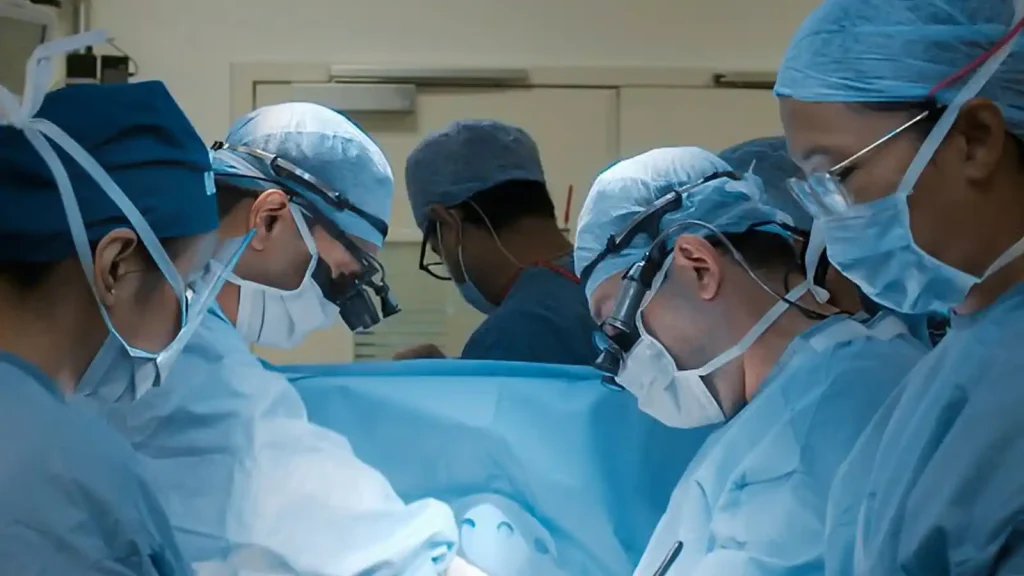
Surgeons: At the Edge of Life episode 10 – Rebuild and Renew
Life-changing surgical interventions unfold at two Scottish hospitals in this compelling episode that showcases medical expertise at its finest. These remarkable procedures not only save lives but also restore essential human functions, demonstrating the extraordinary capabilities of modern surgical teams.
At St. John’s Hospital in Livingston, a delicate dance between preservation and elimination takes place. Consultant ear, nose, and throat surgeon Ashley Hay has dedicated his career to tackling some of the most challenging cancer cases imaginable. His specialty lies in the intricate realm of head and neck tumors, where millimeters can mean the difference between success and devastating functional loss. For this particularly complex case, Hay collaborates with consultant plastic surgeon Patrick Addison, combining their specialized expertise to address a multifaceted challenge.
Their patient faces the dual threat of a life-threatening tumor embedded in her cheek and the potential loss of her ability to smile—a fundamental expression that connects us to others. The surgical team’s ambitious goal extends beyond mere survival; they aim to preserve this essential aspect of human connection. The operation requires not only removing the cancerous tissue but also the painstaking reconstruction of the facial nerve, the critical pathway that enables facial expressions.
Meanwhile, at Edinburgh’s Western General Hospital, a different type of reconstruction unfolds. Consultant urological surgeon Voula Granitsiotis prepares for a procedure that represents both an ending and a beginning for her patient. The complete removal of a bladder—a radical cystectomy—is a life-altering operation that necessitates creating an entirely new system for urinary function. This highly technical surgery will fundamentally change her patient’s daily existence, trading a diseased organ for a chance at renewed health.

Scan smarter. Create faster. Free.
Download QR & Barcode Studio — Create and scan unlimited QR codes & barcodes.
No paywalls. No limits. 100% Free.

Both surgical teams navigate a landscape where advanced medical technology meets artistic precision. In the operating theater, these surgeons must think like scientists, engineers, and sculptors simultaneously. Every incision, suture, and graft must serve both functional and aesthetic purposes, especially in facial reconstruction where appearance and expression intertwine.
For Hay and Addison, the facial nerve reconstruction presents particular challenges. Unlike many bodily tissues, nerves heal slowly and incompletely. Furthermore, the face’s complex network of muscles and sensory pathways requires meticulous attention to detail. The surgeons must carefully map the damaged nerve, identify healthy tissue for potential grafting, and create connections that will potentially allow signals to once again flow from brain to facial muscles.
The psychological impact of these surgeries cannot be overstated. A smile is not merely a physical action but a fundamental means of human communication. Similarly, bladder function affects not just physical health but also independence, dignity, and social confidence. Therefore, the surgical teams carry the weight of both medical outcomes and quality of life considerations with every decision they make.
In Granitsiotis’s operating room, the bladder removal represents one of urology’s most complex interventions. After extracting the diseased organ, she must create a new pathway for urine to exit the body. This may involve fashioning a replacement bladder from intestinal tissue or establishing an external collection system. Each option carries its own benefits and challenges, requiring thoughtful discussion with patients before surgery and precise execution during the procedure.
Modern surgical approaches have transformed these once-devastating diagnoses. Advances in microsurgery allow for nerve repair at the cellular level, while improvements in reconstructive techniques provide more natural-looking and functional results than ever before. Additionally, enhanced imaging technologies enable surgeons to visualize tumors and anatomical structures with unprecedented clarity, allowing for more precise surgical planning.
Surgeons: At the Edge of Life episode 10
Nevertheless, despite technological advances, the human element remains irreplaceable. The steady hands, sharp eyes, and experienced judgment of surgeons like Hay, Addison, and Granitsiotis determine the ultimate success of these procedures. Their years of training and practice enable them to navigate unexpected findings, adapt techniques to individual patients, and make split-second decisions when complications arise.
For patients, these surgeries represent watershed moments—clear dividing lines between before and after. Recovery often involves not just physical healing but also adaptation to new realities and sometimes learning entirely new ways of performing basic bodily functions. The journey continues long after they leave the operating room, with rehabilitation specialists, physiotherapists, and other healthcare professionals playing crucial roles in maximizing surgical outcomes.
Behind each surgical case lies a human story—fears confronted, hopes embraced, and the courage to place one’s life and future in the hands of another. This episode of “Surgeons: At the Edge of Life” offers viewers a glimpse into these intimate moments where medical science and human experience intersect, revealing the remarkable resilience of both patients and the dedicated surgical teams who serve them.
Through these extraordinary procedures at St. John’s Hospital and the Western General Hospital, viewers witness the transformative power of surgical innovation and human expertise coming together to rebuild bodies and renew lives.
Rebuilding Bodies, Renewing Lives: The Artistry of Surgical Innovation
In the delicate interplay between medical science and human resilience, the surgeons featured in this episode demonstrate an extraordinary commitment to both healing and preservation. Their work transcends mere technical proficiency; it represents a profound dedication to restoring wholeness in all its dimensions.
Throughout these surgical journeys, we witness how modern medicine has evolved beyond simply extending life. Indeed, the quality of that life—the ability to smile, to maintain dignity, to engage fully in human connection—stands equally at the forefront of surgical innovation. Furthermore, these procedures highlight the remarkable partnership between technological advancement and human expertise.
The facial nerve reconstruction performed by Hay and Addison serves as a powerful metaphor for medicine’s highest calling. Like master artisans, they painstakingly rebuild the pathways of expression, recognizing that a smile represents much more than muscle movement. Similarly, Granitsiotis’s bladder reconstruction embodies medicine’s transformative potential, creating new beginnings from challenging endings.
What ultimately emerges from these surgical theaters is not just technical achievement but human transformation. Each careful incision, each meticulously placed suture, contributes to a larger narrative of renewal. The surgeons function as both scientists and storytellers, helping to rewrite narratives that might otherwise end in limitation or loss.
Recovery, however, extends well beyond the operating room. For patients, these surgeries mark the beginning of a new chapter rather than the conclusion of their medical journey. Moreover, the collaborative nature of modern surgical care—involving rehabilitation specialists, physiotherapists, and psychological support—underscores medicine’s holistic evolution.
Perhaps most compelling is the courage evident on both sides of the surgical table. The patients entrust not just their bodies but their future selves to these medical teams. Meanwhile, the surgeons shoulder the profound responsibility of navigating between preservation and intervention with steady hands and clear vision.
As viewers, we are privileged witnesses to these intimate moments of transformation. Through these extraordinary procedures at St. John’s Hospital and the Western General Hospital, we glimpse the remarkable intersection of surgical precision and human compassion. In this sacred space, bodies are rebuilt and lives renewed—a testament to medicine’s most noble aspiration: to heal in the fullest sense of the word.
FAQ Surgeons: At the Edge of Life episode 10
Q: What types of surgical procedures are featured in the “Surgeons: At the Edge of Life” episode 10?
A: Episode 10, titled “Rebuild and Renew,” showcases two remarkable reconstructive procedures at Scottish hospitals. The first procedure involves the removal of a cheek tumor and reconstruction of the facial nerve at St. John’s Hospital in Livingston, performed by consultant ENT surgeon Ashley Hay and plastic surgeon Patrick Addison. Additionally, the episode features a complete bladder removal (radical cystectomy) at Edinburgh’s Western General Hospital, performed by consultant urological surgeon Voula Granitsiotis. Both surgeries demonstrate the extraordinary intersection of life-saving intervention and quality-of-life preservation.
Q: Why is facial nerve reconstruction particularly challenging for surgeons?
A: Facial nerve reconstruction presents unique challenges because nerves heal much slower and less completely than many other tissues in the body. Furthermore, the face contains an intricate network of muscles and sensory pathways requiring exceptional precision. Surgeons must meticulously map damaged nerves, identify viable tissue for grafting, and create connections that will potentially restore the neural pathways from brain to facial muscles. Moreover, the reconstruction must serve both functional purposes (enabling expressions) and aesthetic considerations, making it a procedure that demands both scientific expertise and artistic sensibility.
Q: What options exist for patients after complete bladder removal?
A: Following a radical cystectomy (complete bladder removal), surgeons must create alternative pathways for urine to exit the body. One option involves fashioning a neobladder from segments of the patient’s intestinal tissue, which can function similarly to a natural bladder. Alternatively, surgeons might establish an external collection system, such as an ileal conduit or urostomy. Each approach carries specific benefits and challenges that require thorough discussion between surgeon and patient. Consequently, the decision depends on factors including the patient’s overall health, cancer staging, lifestyle considerations, and personal preferences.
Q: How do technological advances impact modern reconstructive surgery?
A: Modern reconstructive surgery has been revolutionized by numerous technological advances. Microsurgical techniques now enable nerve repair at the cellular level, while improved imaging technologies allow surgeons to visualize anatomical structures with unprecedented clarity before and during operations. Additionally, computer-assisted surgical planning helps optimize procedural approaches, and specialized instruments provide greater precision for delicate maneuvers. These technological innovations, when combined with surgical expertise, have transformed once-devastating diagnoses by making possible more natural-looking and better-functioning reconstructions than ever before.
Q: What psychological impacts do these reconstructive surgeries have on patients?
A: The psychological impact of reconstructive surgeries extends far beyond physical healing. For facial reconstruction patients, the ability to smile represents a fundamental means of human connection and emotional expression. Similarly, bladder function directly affects a person’s sense of independence, dignity, and social confidence. Therefore, successful reconstructive surgeries can dramatically improve quality of life and psychological wellbeing. However, patients often face a significant adjustment period as they adapt to new realities and sometimes must learn entirely new ways of performing basic bodily functions, which requires considerable resilience and support.
Q: What role does the rehabilitation process play after these complex surgeries?
A: Rehabilitation plays a crucial role in maximizing surgical outcomes and represents an essential continuation of the healing journey. After facial nerve reconstruction, specialized physiotherapy helps patients relearn facial movements and expressions through targeted exercises. Following bladder removal, patients work with continence specialists to master new urinary management systems. Throughout this process, a multidisciplinary team including rehabilitation specialists, physiotherapists, occupational therapists, and psychological support professionals collaborate to address both physical and emotional aspects of recovery. Consequently, rehabilitation is not merely an afterthought but an integral component of comprehensive surgical care.
Q: How do surgeons balance preservation and intervention during complex tumor removals?
A: Surgeons face a delicate balancing act between removing sufficient tissue to eliminate cancer and preserving essential structures that affect function and appearance. This surgical tightrope requires meticulous planning using advanced imaging techniques to map tumor boundaries precisely. During the procedure, surgeons may employ real-time tissue analysis to confirm complete tumor removal while identifying critical structures for preservation. Furthermore, this balance often necessitates close collaboration between different surgical specialists, as demonstrated by ENT surgeon Ashley Hay working alongside plastic surgeon Patrick Addison. Through this thoughtful approach, modern surgical teams aim to achieve both oncological success and optimal functional outcomes.
Q: What qualities make these specialized surgeons successful at such complex procedures?
A: Successful specialized surgeons possess a rare combination of technical skill, scientific knowledge, and artistic sensibility. They demonstrate exceptional manual dexterity and spatial awareness, developed through years of rigorous training and practice. Beyond technical proficiency, these surgeons exhibit remarkable adaptability, enabling them to navigate unexpected findings and make split-second decisions when complications arise. Additionally, they maintain unwavering focus during lengthy, intricate procedures while simultaneously seeing the bigger picture of patient wellbeing. Perhaps most importantly, they combine clinical expertise with profound empathy, understanding that behind each surgical case lies a human story filled with hopes, fears, and the courage to trust another with their future.